Experimental Research (Explained in 3 Minutes)
Summary
TLDRExperimental research is a method where researchers manipulate variables to test cause-and-effect relationships in a controlled environment. By isolating and controlling variables, this approach provides strong evidence for causality, making it valuable in fields like psychology, medicine, and natural sciences. However, it can lack ecological validity and be resource-intensive, limiting its applicability to real-world scenarios. Examples include testing new study techniques or fertilizers on plant growth. Despite these challenges, experimental research remains one of the most reliable ways to test hypotheses and understand how factors interact.
Takeaways
- 😀 Experimental research involves manipulating one or more variables to observe their effects on other variables, aiming to establish cause-and-effect relationships.
- 😀 Researchers control external factors to ensure that the observed effects are due to the manipulated variables, not other influences.
- 😀 This method is commonly used in fields like psychology, medicine, and the natural sciences where understanding the interaction of various factors is crucial.
- 😀 An example of experimental research is testing a new study technique's impact on students' test scores, with one group using the new technique and the other using traditional methods.
- 😀 Another example involves testing the effect of different fertilizers on plant growth, where the researcher manipulates the type of fertilizer used.
- 😀 Experimental research allows researchers to directly test hypotheses in a controlled environment, making it a precise way to test cause-and-effect relationships.
- 😀 One strength of experimental research is its ability to provide strong evidence for causality through direct manipulation of variables.
- 😀 Experimental research also excels in its control over variables, reducing the influence of external factors and making results more reliable.
- 😀 However, experimental research may lack ecological validity because it often occurs in controlled, artificial settings, which may not reflect real-world conditions.
- 😀 Another criticism of experimental research is that it can be resource-intensive, requiring significant time, money, and effort to design and execute properly.
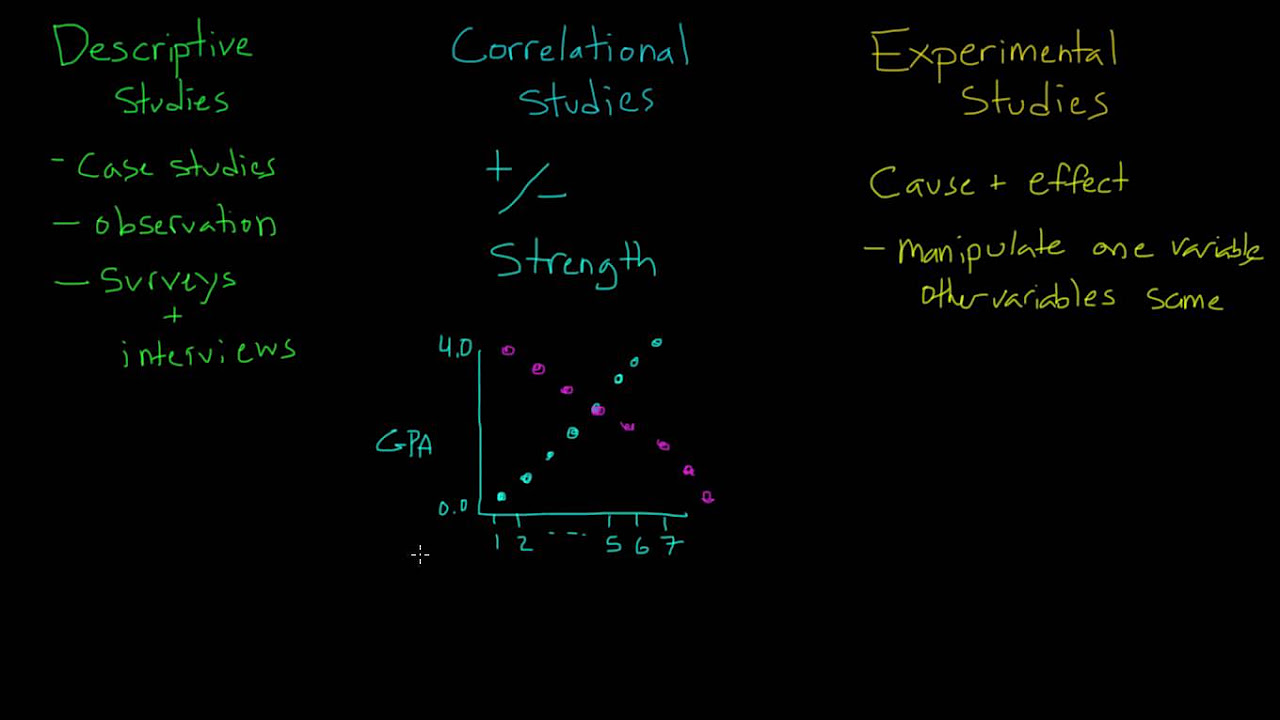
- 😀 Experimental research is often contrasted with descriptive research, which focuses on observing and recording phenomena without manipulating variables.
Q & A
What is experimental research?
-Experimental research is a method where researchers manipulate one or more variables to observe the effect on other variables while controlling external factors. Its goal is to establish cause-and-effect relationships by testing hypotheses in a controlled environment.
Why is experimental research particularly useful in fields like psychology, medicine, and the natural sciences?
-Experimental research is especially useful in these fields because it allows researchers to understand how different factors interact and influence each other, which is critical for determining cause-and-effect relationships in complex systems.
What is an independent variable in experimental research?
-An independent variable is the factor that the researcher manipulates to observe its effect on the dependent variable. It is the presumed cause in the cause-and-effect relationship.
What is a dependent variable in experimental research?
-A dependent variable is the factor that is measured to see how it is influenced by the manipulation of the independent variable. It is the outcome or effect in the cause-and-effect relationship.
Can you provide an example of experimental research in education?
-In education, a researcher could test whether a new study technique improves student test scores. Students are divided into two groups: one group uses the new technique, and the other uses traditional methods. After a period, both groups take the same test, and the scores are compared.
How can experimental research be applied to agriculture?
-In agriculture, a researcher might test the effect of different types of fertilizers on plant growth. Identical seeds are planted in similar soil, with different fertilizers applied to each group. The growth and health of the plants are measured to determine which fertilizer yields the best results.
What is a key strength of experimental research?
-A key strength of experimental research is its ability to provide strong evidence for causality. By directly manipulating variables, researchers can establish cause-and-effect relationships with a high degree of confidence.
How does experimental research control external factors?
-Experimental research controls external factors by carefully setting up the conditions under which the study takes place, allowing researchers to isolate the effects of the independent variable. This reduces the influence of unrelated variables that could skew results.
What is a criticism of experimental research regarding ecological validity?
-A criticism of experimental research is that it may lack ecological validity. Since experiments often take place in controlled, artificial settings, the results might not always apply to real-world situations, where conditions are more complex and less controlled.
What are the resource-related criticisms of experimental research?
-Experimental research can be resource-intensive. It may require significant investment in equipment, participants, and data collection, making it time-consuming, expensive, and less accessible for certain types of studies.
Outlines

此内容仅限付费用户访问。 请升级后访问。
立即升级Mindmap

此内容仅限付费用户访问。 请升级后访问。
立即升级Keywords

此内容仅限付费用户访问。 请升级后访问。
立即升级Highlights

此内容仅限付费用户访问。 请升级后访问。
立即升级Transcripts

此内容仅限付费用户访问。 请升级后访问。
立即升级



5.0 / 5 (0 votes)

