interaksi makhluk hidup dengan lingkungannya | IPA Kelas 7
Summary
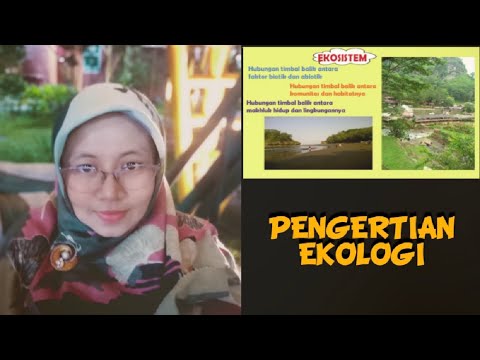
TLDRIn this educational video, the host introduces the concept of ecosystems and the interaction between living organisms and their environment. The video explores biotic components (such as producers, consumers, and decomposers) and abiotic components (like water, soil, and sunlight) that make up an ecosystem. It also explains ecological units such as individuals, populations, communities, habitats, ecosystems, and the biosphere. Viewers learn about how each unit interacts within its environment, emphasizing the balance and interdependence within nature. The video encourages active learning, prompting viewers to like, comment, and subscribe for future educational content.
Takeaways
- 🌱 The environment is a unified system that includes physical conditions, natural resources, flora, and fauna both on land and in water.
- 🌿 Ecosystems consist of interactions between living (biotic) and non-living (abiotic) components.
- 🍀 Biotic components include all living organisms such as plants, animals, humans, and microorganisms like bacteria and fungi.
- ☀️ Producers (autotrophs) are organisms that can make their own food through photosynthesis, e.g., corn and rice plants.
- 🍖 Consumers (heterotrophs) rely on other organisms for food and are categorized as carnivores, herbivores, or omnivores.
- 🪱 Decomposers break down dead organisms into minerals and nutrients, helping maintain ecosystem balance; examples include worms, bacteria, and fungi.
- 💧 Abiotic components are non-living elements like water, soil, air, and sunlight, which determine what organisms can survive in an ecosystem.
- 👤 Individual refers to a single organism, e.g., one tiger or one grass plant.
- 👥 Population is a group of individuals of the same species living in the same area, e.g., a population of tigers.
- 🌳 Communities consist of multiple populations of different species living together, e.g., a forest community.
- 🏞️ Habitat is the natural physical environment where an organism lives, such as a grassy field for goats or a river for crocodiles.
- 🌐 An ecosystem is the interaction of communities with their abiotic environment, forming a system where energy and matter flow, e.g., rivers, beaches, or gardens.
- 🌎 The biosphere encompasses all ecosystems on Earth, representing the largest ecological unit.
Q & A
What is the definition of 'environment' according to the video?
-The environment is described as a unified system that includes physical conditions, natural resources, and all living things such as flora and fauna in the land, soil, and water.
What are the two main components of the environment?
-The environment is divided into biotic components (living organisms) and abiotic components (non-living elements).
What is an ecosystem?
-An ecosystem is a system where living organisms (biotic components) interact with each other and with non-living components (abiotic components) in a specific habitat, forming a balanced ecological system.
What are biotic components, and what examples were given?
-Biotic components are all living organisms in an ecosystem, including humans, animals, plants, and microscopic organisms like bacteria and decomposers. Examples include jaguar, grass, and cacti.
How are biotic components categorized based on their feeding method?
-Biotic components are categorized into producers (autotrophs), consumers (heterotrophs), and decomposers. Producers make their own food, consumers rely on other organisms for food, and decomposers break down dead organisms into nutrients.
What is the difference between producers, consumers, and decomposers?
-Producers (autotrophs) create their own food via photosynthesis, consumers (heterotrophs) eat other organisms, and decomposers like fungi and bacteria recycle nutrients from dead organisms back into the ecosystem.
What are abiotic components, and why are they important?
-Abiotic components are non-living elements of an ecosystem, such as water, soil, air, and sunlight. They are crucial because they determine which organisms can survive in a particular environment.
What are the hierarchical units of an ecosystem from smallest to largest?
-The units are: individual (one organism), population (group of the same species), community (different populations in one area), habitat (physical environment of organisms), ecosystem (community plus abiotic environment), and biosphere (all ecosystems on Earth).
What is a population in ecological terms?
-A population is a group of organisms of the same species living in the same area at the same time, such as a herd of deer or a group of grass plants.
Can you give an example of a community in an ecosystem?
-A community consists of multiple populations living together in one area, such as various plants, animals, and microorganisms coexisting in a forest.
How does the ecosystem maintain balance?
-Balance is maintained through interactions among producers, consumers, and decomposers, along with the influence of abiotic factors. Decomposers recycle nutrients, allowing new life to grow and keeping the ecosystem stable.
What is a biosphere?
-The biosphere is the largest ecological unit, consisting of all ecosystems on Earth, where all living organisms interact with each other and with their physical environment.
Outlines

Esta sección está disponible solo para usuarios con suscripción. Por favor, mejora tu plan para acceder a esta parte.
Mejorar ahoraMindmap

Esta sección está disponible solo para usuarios con suscripción. Por favor, mejora tu plan para acceder a esta parte.
Mejorar ahoraKeywords

Esta sección está disponible solo para usuarios con suscripción. Por favor, mejora tu plan para acceder a esta parte.
Mejorar ahoraHighlights

Esta sección está disponible solo para usuarios con suscripción. Por favor, mejora tu plan para acceder a esta parte.
Mejorar ahoraTranscripts

Esta sección está disponible solo para usuarios con suscripción. Por favor, mejora tu plan para acceder a esta parte.
Mejorar ahora



5.0 / 5 (0 votes)

