The Most Successful Human Milestones Explained in 25 Minutes
Summary
TLDRThis video explores key milestones in human history, from the discovery of fire and the invention of writing to the rise of computers, space exploration, and artificial intelligence. It highlights transformative innovations that shaped society, such as the wheel, bronze and iron tools, and the scientific revolution. The impact of major advancements like the internet and AI are also discussed, illustrating how these developments revolutionized communication, commerce, and knowledge. The video showcases how these breakthroughs have continuously shaped humanity's progress and future potential, offering a glimpse into a world where technology and innovation continue to redefine human experience.
Takeaways
- 😀 Early humans began harnessing fire around 1.5 to 1.8 million years ago, using it for warmth, light, protection, and cooking, which revolutionized nutrition and socialization.
- 😀 Writing systems emerged around 3100 BCE, with the Sumerians creating cuneiform, transforming human communication and recordkeeping, and laying the foundation for complex societies.
- 😀 The invention of the wheel around 3500 BCE revolutionized transportation and technology, influencing everything from agriculture to modern machinery.
- 😀 The Bronze Age, beginning around 3300 BCE, marked the widespread use of bronze for tools and weapons, fueling trade networks, urbanization, and advancements in military and agriculture.
- 😀 The Iron Age, starting around 1200 BCE, introduced stronger, more abundant materials, improving tools and weapons, and facilitating the rise of powerful empires and increased trade.
- 😀 The Silk Road, established around 130 BCE, facilitated the exchange of goods, ideas, and cultures between East and West, enriching art, science, and religion while promoting global trade.
- 😀 The Renaissance (14th to 17th centuries) was a period of renewed interest in art, science, and humanism, sparking innovations that influenced modern education, politics, and technology.
- 😀 The Scientific Revolution (16th to 18th centuries) reshaped humanity's understanding of the natural world through observation, experimentation, and reason, laying the groundwork for modern science.
- 😀 The Industrial Revolution (18th to 19th centuries) transformed economies and societies by introducing new manufacturing methods, machinery, and transportation systems, significantly improving living standards while also creating challenges.
- 😀 The development of electricity in the 18th and 19th centuries revolutionized daily life, powering homes, industries, and technological innovations, with notable contributions from figures like Volta, Faraday, Edison, and Tesla.
Q & A
What was the first recorded evidence of humans controlling fire, and when did it occur?
-The first recorded evidence of humans controlling fire dates back to around 1.5 to 1.8 million years ago with Homo erectus. Evidence includes charred bones and plant material found at archaeological sites like Wonderwerk Cave in South Africa.
How did the development of writing contribute to the advancement of human civilization?
-The invention of writing around 3100 BCE in Mesopotamia revolutionized human communication by allowing the preservation of knowledge across generations. It supported governance, religion, commerce, and the documentation of cultural achievements, enabling the development of complex societies.
What was the initial purpose of the wheel, and how did its function evolve over time?
-The wheel was initially used for pottery, with the potter's wheel emerging around 3500 BCE. Over time, it evolved into a tool for transportation, appearing on carts and wagons, and later advancing with spoked wheels for faster and lighter movement, especially in chariots.
What were the primary benefits of fire for early humans?
-Fire provided warmth, protection, and light, allowing early humans to survive in colder climates. It also made food safer and more digestible by killing pathogens, improving nutrition and energy efficiency. Additionally, fire fostered socialization, language development, and cultural practices.
How did the Bronze Age impact human civilization?
-The Bronze Age, beginning around 3300 BCE, saw the widespread use of bronze for tools and weapons. It revolutionized agriculture, warfare, and trade, leading to surplus food production, population growth, and the rise of centralized governments. It laid the foundation for further technological and societal advances.
What marked the transition from the Bronze Age to the Iron Age?
-The transition from the Bronze Age to the Iron Age, around 1200 BCE, was marked by the adoption of iron as a stronger, more abundant material. Iron tools and weapons were developed, improving agriculture and warfare, and enabling the rise of powerful empires.
How did the Silk Road impact cultural exchange?
-The Silk Road facilitated cultural exchange by connecting East Asia with the Mediterranean. Goods like silk, spices, and porcelain were exchanged for gold, wool, and horses. It also enabled the spread of religious ideas, technologies like paper-making and gunpowder, and knowledge across continents.
What was the key technological innovation of the Scientific Revolution?
-The Scientific Revolution, spanning the 16th to 18th centuries, was characterized by the development of the scientific method, emphasizing observation, experimentation, and reason. Key figures like Galileo and Newton advanced the understanding of natural phenomena, which laid the groundwork for modern science.
How did the Industrial Revolution change society?
-The Industrial Revolution, beginning in the late 18th century, shifted societies from agricultural to industrial economies. Innovations like the steam engine and power loom revolutionized manufacturing and transportation, leading to urbanization, economic growth, and improved living standards, though it also brought challenges like environmental degradation and social inequality.
What role did space exploration play in technological and global advancements?
-Space exploration, beginning with the launch of Sputnik 1 in 1957 and the Apollo 11 mission in 1969, significantly advanced technology. It contributed to innovations in telecommunications, materials science, and computing. It also fostered global collaboration through projects like the International Space Station and inspired efforts to explore Mars and beyond.
Outlines

此内容仅限付费用户访问。 请升级后访问。
立即升级Mindmap

此内容仅限付费用户访问。 请升级后访问。
立即升级Keywords

此内容仅限付费用户访问。 请升级后访问。
立即升级Highlights

此内容仅限付费用户访问。 请升级后访问。
立即升级Transcripts

此内容仅限付费用户访问。 请升级后访问。
立即升级浏览更多相关视频

A HISTORIA DA TECNOLOGIA

A HISTÓRIA DA HUMANIDADE em 15 MINUTOS

कंप्यूटर का आविष्कार कब और किसने किया ? HISTORY AND INVENTION OF COMPUTER.
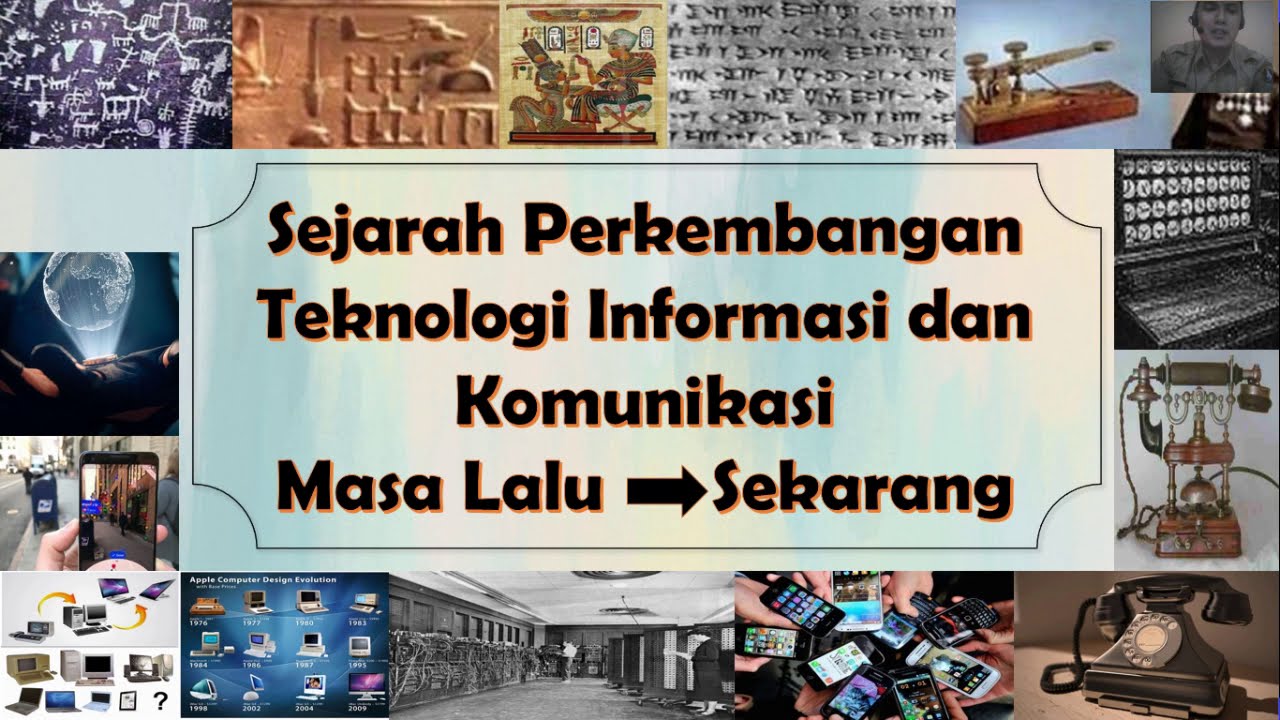
SEJARAH PERKEMBANGAN TEKNOLOGI INFORMASI DAN KOMUNIKASI (TIK)

Inteligência Artificial Explicada em Apenas 11 Minutos | O Que É Inteligência Artificial?

Sejarah Perkembangan Komputer
5.0 / 5 (0 votes)

