ATURAN SINUS DAN COSINUS DALAM SEGITIGA - TRIGONOMETRI DASAR
Summary
TLDRThis educational video explains the sine and cosine laws in trigonometry, aimed at high school students. The speaker breaks down both rules, detailing when to apply them and presenting the relevant formulas. The sine law is used for angles and their opposite sides, while the cosine law is applied for scenarios involving known sides and angles. Through a series of practical examples, the speaker demonstrates how to use these laws to solve for unknown sides and angles in triangles. The video is a comprehensive guide to mastering these essential trigonometric concepts.
Takeaways
- 😀 The video explains the sine and cosine rules, which are important concepts in trigonometry for high school students (class 10).
- 😀 The sine rule is used when elements of a triangle like sides and opposite angles are known. The formula is a/sinA = b/sinB = c/sinC.
- 😀 The cosine rule is applicable when two sides and the included angle (the angle between the two sides) are known. It also applies when all three sides are given.
- 😀 The sine rule formula is: a/sinA = b/sinB = c/sinC. This helps find unknown sides or angles in a triangle.
- 😀 The cosine rule formula is: a² = b² + c² - 2bc cosA. This is useful when you know two sides and the included angle.
- 😀 The sine rule is used when no two sides are adjacent to the angle you need to find, or when the triangle has two sides and one non-included angle.
- 😀 The cosine rule is used when two sides and the included angle are known, or when three sides are known, to find angles.
- 😀 In a triangle, when sides a, b, and c are known, you can calculate the cosine of an angle using the rearranged cosine rule formula: cosA = (b² + c² - a²) / (2bc).
- 😀 The video provides step-by-step examples to illustrate how to apply the sine and cosine rules to find missing angles and sides in triangles.
- 😀 The script emphasizes the importance of understanding when to use the sine rule versus the cosine rule, helping students to choose the right formula for each situation.
Q & A
1. What is the main topic discussed in the video?
-The main topic of the video is the Law of Sines and the Law of Cosines, which are part of 10th-grade high school trigonometry.
2. When should the Law of Sines be used?
-The Law of Sines is used when the known elements include angle-side-angle (ASA), side-angle-side (non-included angle), or two angles and one side (AAS). In general, it is used when the given information does not involve two sides with their included angle or all three sides.
3. What is the formula for the Law of Sines?
-The formula for the Law of Sines is a/sin A = b/sin B = c/sin C, where each side of a triangle is divided by the sine of its opposite angle.
4. When should the Law of Cosines be applied?
-The Law of Cosines is applied when two sides and their included angle (SAS) are known, or when all three sides (SSS) are known.
5. What is the general formula for the Law of Cosines?
-The general formula is a² = b² + c² − 2bc cos A. Similar formulas apply for the other sides: b² = a² + c² − 2ac cos B and c² = a² + b² − 2ab cos C.
6. How can the Law of Cosines be rearranged to find the cosine of an angle?
-It can be rearranged as cos A = (b² + c² − a²) / (2bc), which is useful when all three sides are known and an angle needs to be determined.
7. In the first example, why was the Law of Sines used instead of the Law of Cosines?
-Because the given information included one angle and two sides that were not enclosing the angle, which does not satisfy the conditions for the Law of Cosines. Therefore, the Law of Sines was appropriate.
8. How was sin C calculated in the first problem?
-Using the Law of Sines, the equation 6√2/sin C = 12/sin 45° was formed. After simplification, sin C = 1/2, leading to C = 30°.
9. Why was the Law of Cosines used in the second example?
-Because two sides and their included angle (60°) were known, which matches the condition for applying the Law of Cosines.
10. How was sin A found in the third example when only side lengths were given?
-First, the Law of Cosines was used to find cos A. Then, using the Pythagorean identity sin² A + cos² A = 1, sin A was calculated from the known value of cos A.
11. What strategy is suggested for remembering when to use each rule?
-Memorize that the Law of Cosines is used only when given SAS or SSS. For all other cases, use the Law of Sines.
12. How were trigonometric ratios like sine and cosine derived from tangent or cosine values in the fifth example?
-Right triangle relationships were used. From tan A = 4/3, a reference triangle with sides 4, 3, and 5 was constructed to find sin A = 4/5. From cos B = 12/13, a triangle with sides 12, 5, and 13 was used to find sin B = 5/13.
Outlines

This section is available to paid users only. Please upgrade to access this part.
Upgrade NowMindmap

This section is available to paid users only. Please upgrade to access this part.
Upgrade NowKeywords

This section is available to paid users only. Please upgrade to access this part.
Upgrade NowHighlights

This section is available to paid users only. Please upgrade to access this part.
Upgrade NowTranscripts

This section is available to paid users only. Please upgrade to access this part.
Upgrade NowBrowse More Related Video
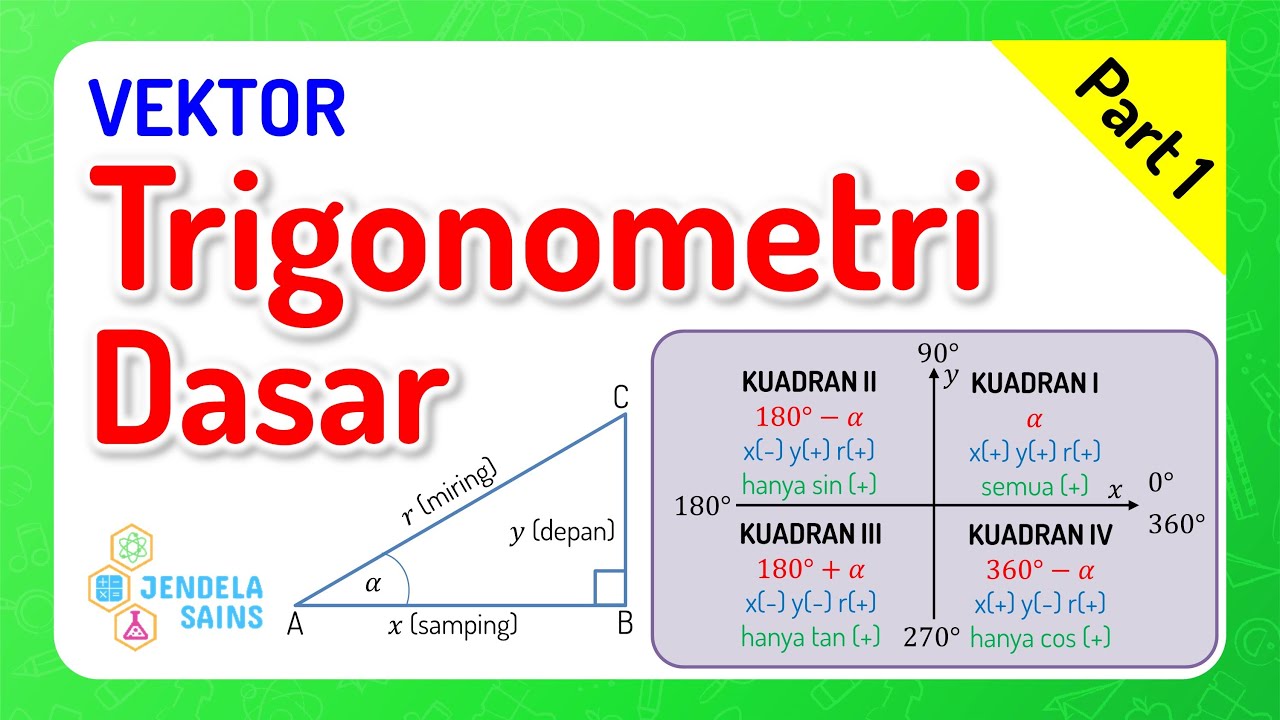
Vektor Fisika • Part 1: Pengantar Trigonometri Dasar
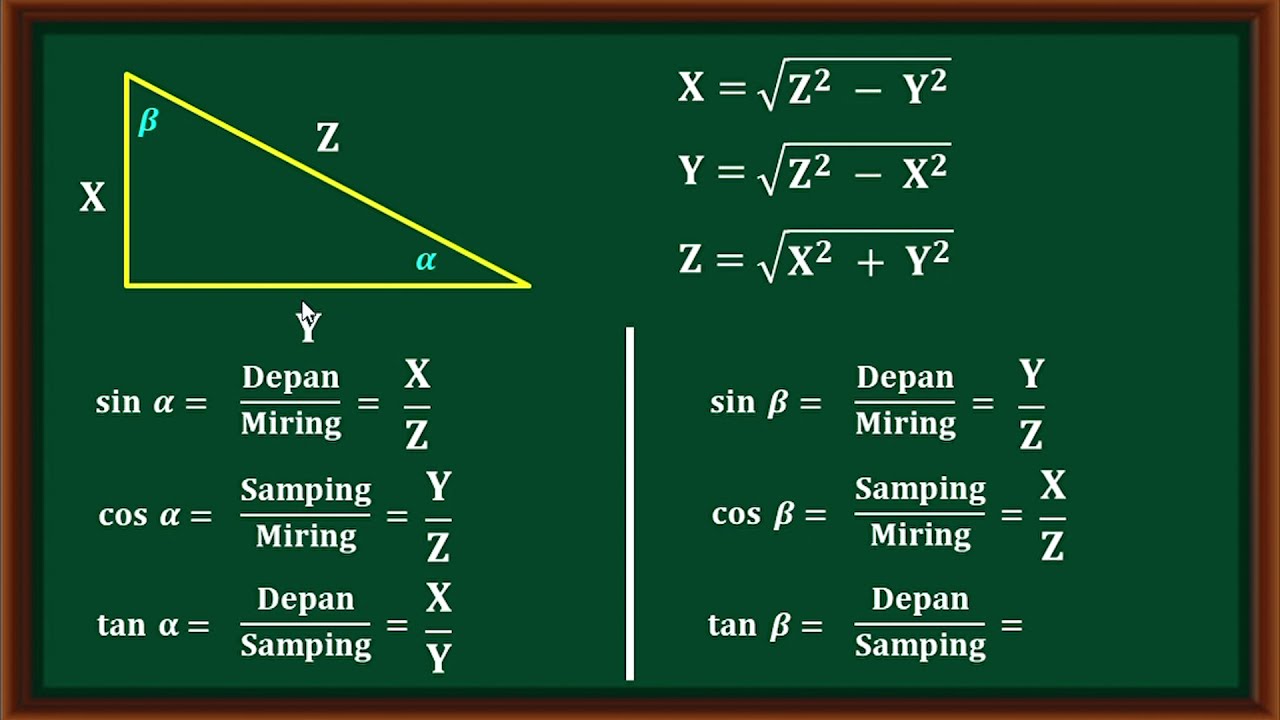
Materi dan soal pembahasan Perbandingan trigonometri dari suatu sudut pada segitiga siku-siku.
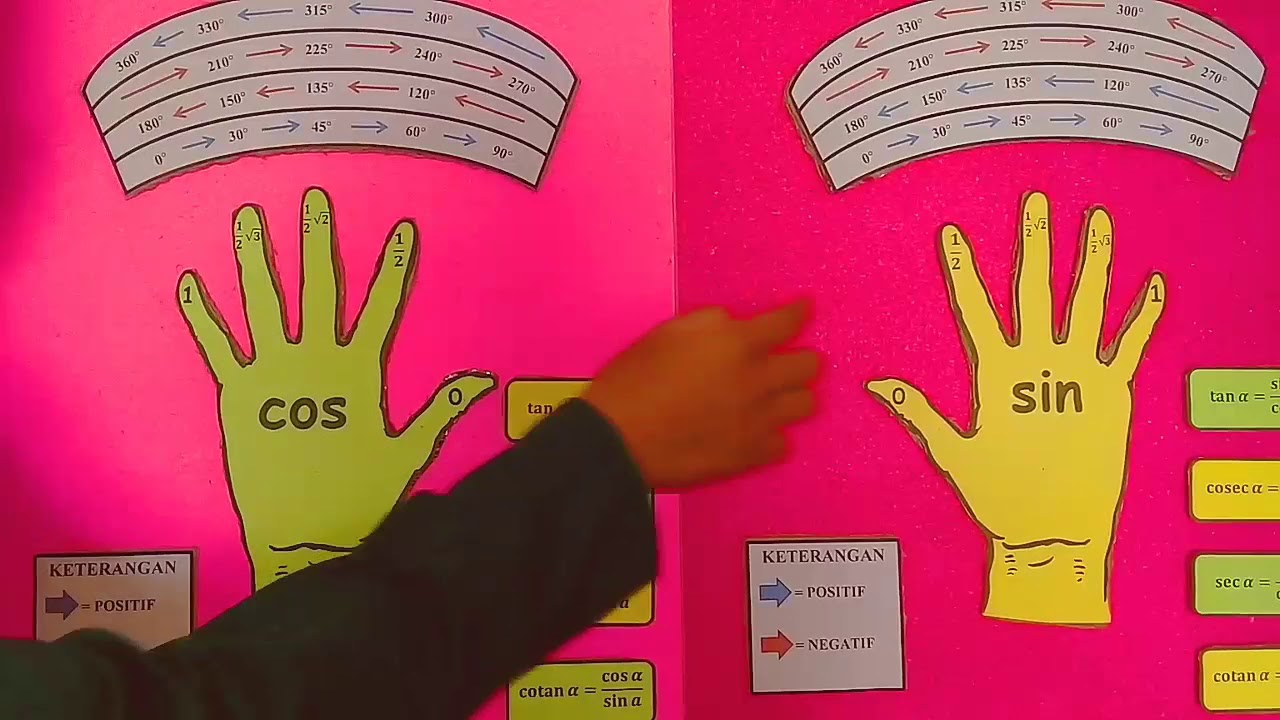
Media Pembelajaran Trigonometri || Jari Trigonometri (Jargonometri)

Pemanfaatan Perbandingan Trigonometri Hal 110-114 Bab 4 Kelas 10 SMA SMK Kurikulum Merdeka

Aturan Sinus dan Cosinus | Matematika SMA
CARA MENGHITUNG SUDUT TRIGONOMETRI‼️
5.0 / 5 (0 votes)
