Pemantapan Mutu Internal
Summary
TLDRThis video script highlights the critical role of internal quality control (PMI) in medical laboratories to ensure the accuracy and reliability of test results. It emphasizes the importance of systematic checks, including using tools like Levy-Jennings charts and Westgard rules, to detect and prevent errors. The script also covers the necessity of using high-quality controls and following strict protocols to protect patient safety. By adhering to these practices, laboratory professionals ensure the highest standards of care, making accurate diagnostic results essential for proper treatment.
Takeaways
- 😀 PMI (Pemantapan Mutu Internal) is the foundation of laboratory testing, ensuring the accuracy and reliability of lab results before handling patient samples.
- 😀 Without PMI, a laboratory is like a ship without a rudder— it might appear to be working, but results could be misdirected, leading to incorrect diagnoses and treatment.
- 😀 PMI is not just a one-time task; it is an ongoing process to detect errors early, monitor the stability of equipment and reagents, and ensure the safety of patients.
- 😀 The quality control materials used in PMI must meet specific criteria, including stability, similar composition to patient samples, and a known target value.
- 😀 Labs can either use commercial quality control materials, which are expensive but precise, or create their own using leftover patient serum, though this requires ensuring consistency and stability.
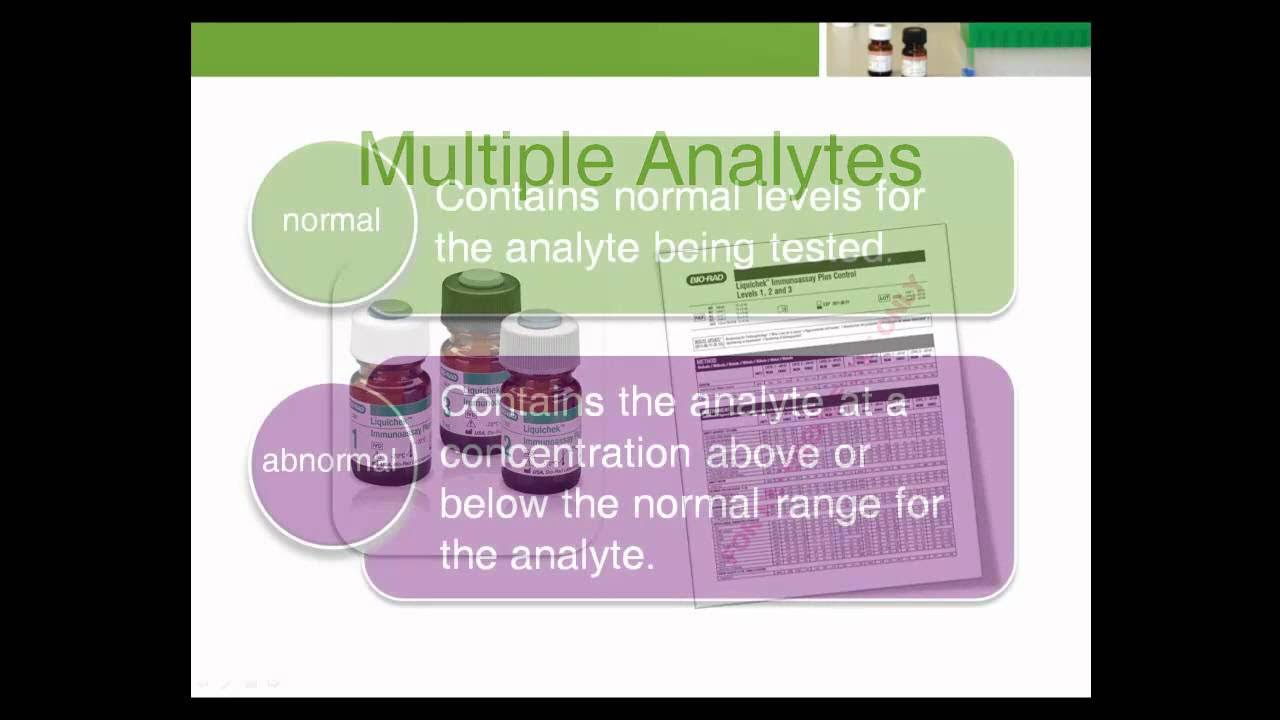
- 😀 To cover a range of possible patient conditions, quality control materials should be available in multiple concentration levels— low, normal, and high.
- 😀 Running quality controls should be a daily ritual, ideally before starting work, after equipment calibration, reagent replacement, or equipment maintenance.
- 😀 A professional trick is to distribute control tests throughout the process, not just at the beginning, to catch errors that may emerge in the middle of testing.
- 😀 The **Levy Jennings chart** helps visualize the stability of equipment and reagents by showing random data points around a centerline, with shifts or trends indicating potential problems.
- 😀 The **Westgard rules** are used to evaluate control chart data, making objective decisions on whether results should be accepted or rejected.
- 😀 When the system is out of control, remain calm and follow the protocol: identify the issue, verify results, check equipment and reagents, and document every step. If results are questionable, do not release them—patient safety comes first.
Q & A
What is the purpose of Internal Quality Control (PMI) in a medical laboratory?
-PMI ensures that the laboratory's equipment, reagents, and processes are functioning correctly before analyzing patient samples. It guarantees that results are accurate, reliable, and that the system is stable, preventing errors that could harm patients.
Why is PMI considered the 'heart' of the laboratory?
-PMI is crucial because it ensures the quality of lab results. Without it, the lab would be like a ship without a rudder, appearing to operate but likely producing inaccurate results. This could lead to incorrect diagnoses and dangerous medical decisions.
How does PMI help in ensuring patient safety?
-PMI detects errors early, ensures that lab equipment and reagents are stable, and verifies that the testing process is accurate. This helps prevent the release of incorrect results that could affect patient health, thus ensuring safety.
What are the key criteria for the control materials used in PMI?
-Control materials must be stable during storage, their composition should resemble patient samples, their target values must be known, they should be homogeneous, and available in various concentration levels to cover a range of clinical conditions.
Why is it important to use multiple concentration levels for control materials?
-Using multiple concentration levels (low, normal, and high) ensures that the lab equipment can accurately measure across a wide range of patient conditions, from healthy to clinically abnormal levels.
What is the ideal time to run quality control checks in the laboratory?
-Quality control checks should be run every morning before starting work and any time there are changes, such as after calibrating equipment, replacing reagents, or repairing devices. It's like a preflight checklist for a plane.
How can you improve the effectiveness of quality control checks in the lab?
-Instead of placing control samples at the start of the process, it is advised to spread them across different stages—beginning, middle, and end—to catch errors that may occur at any point during testing.
What tools are used for detecting anomalies in lab results?
-Levy Jennings graphs and Westgard rules are key tools used in the lab to detect anomalies in test results. The Levy Jennings graph visualizes the stability of equipment over time, while Westgard rules offer statistical guidelines to accept or reject control results.
What does a healthy Levy Jennings graph look like?
-A healthy Levy Jennings graph shows random distribution of data points around the central line, indicating that the lab equipment is stable and functioning correctly. No unusual patterns should appear.
What should a laboratory do if the control results go out of range?
-If control results are out of range, the lab should stay calm and follow a systematic protocol: identify the issue, verify with fresh control materials, check the equipment and reagents, and document everything. If the issue persists, all patient results from that time should be withheld until the problem is resolved.
Outlines

このセクションは有料ユーザー限定です。 アクセスするには、アップグレードをお願いします。
今すぐアップグレードMindmap

このセクションは有料ユーザー限定です。 アクセスするには、アップグレードをお願いします。
今すぐアップグレードKeywords

このセクションは有料ユーザー限定です。 アクセスするには、アップグレードをお願いします。
今すぐアップグレードHighlights

このセクションは有料ユーザー限定です。 アクセスするには、アップグレードをお願いします。
今すぐアップグレードTranscripts

このセクションは有料ユーザー限定です。 アクセスするには、アップグレードをお願いします。
今すぐアップグレード関連動画をさらに表示

Introducción a las buenas prácticas de laboratorio

PEMANTAPAN MUTU INTERNAL PADA PEMERIKSAAN SERUM KONTROL PARAMETER GLUKOSA MENGGUNAKAN FOTOMETER
Chapter 1 Quality Control Basics

Konsep dan Jenis Reliabilitas

Chapter 5 Choosing a Quality Control Product

FIKI 2011 Peran Sistem Informasi Laboratorium oleh Novianto Wahyudi part 1 mp4
5.0 / 5 (0 votes)

