Spinach Chromatography Part 2, Column Chromatography
Summary
TLDRIn this video, Brant Kujawski demonstrates a detailed organic chemistry lab experiment on separating spinach pigments using column chromatography and TLC. The process involves preparing a pipette column with cotton, sand, and silica gel, carefully loading the crude pigment extract, and eluting pigments with solvents of varying polarity. Viewers learn how β-carotene, gray pigments, and green pigments (chlorophylls and xanthophylls) separate based on polarity, while safety precautions and careful handling techniques with flammable solvents and delicate columns are emphasized. The video provides a clear, step-by-step guide to visualizing and collecting distinct pigment fractions from a natural extract.
Takeaways
- 🧪 The experiment focuses on separating and analyzing spinach pigments using column chromatography and TLC.
- 🧴 A glass pipette is used as the chromatography column, with cotton wool placed at the tip to support the stationary phase.
- ⛏️ Sand is added at the bottom and top of the column to support and protect the silica gel layer.
- ⚠️ Silica gel is the stationary phase; it is dusty, so avoid inhaling it during preparation.
- 💧 Hexane is first added to wet the column and prepare it for the crude pigment solution; hexane is volatile and flammable, so handle with care.
- 🥄 The crude pigment solution is dissolved in hexane and gently pipetted onto the column; compressed air is used carefully to move the solution along.
- 🌈 A 90/10 hexane to acetone solution is used to elute pigments, with beta-carotene (yellow band) moving fastest because it is the least polar.
- -
- 🎨 After beta-carotene elutes, subsequent pigments like gray and green bands are separated using the same solvent system, and finally pure acetone is used to elute remaining green pigments.
- -
- 🌿 Xanthophyll pigments (yellow) elute later than beta-carotene because they are more polar due to oxygen-containing groups.
- -
- 🔬 Careful monitoring of color bands and solvent addition is crucial to successfully separate and collect individual pigments without drying out the column.
Q & A
What is the main purpose of the experiment described in the video?
-The experiment aims to separate and analyze pigments from spinach using column chromatography and thin-layer chromatography (TLC).
Why is cotton wool used at the tip of the pipette column?
-Cotton wool acts as a support to prevent the silica gel and sand from falling out of the pipette, while allowing the solvent and pigments to flow through.
What role does sand play in the column setup?
-Sand is used both at the bottom and top of the silica gel layer to support and protect the stationary phase, ensuring even flow and preventing disruption of the gel.
Why is silica gel referred to as the stationary phase?
-Silica gel is the stationary phase because it remains fixed in the column while the solvent and pigments pass through, allowing separation based on polarity.
Why must hexane be handled carefully in this experiment?
-Hexane is a volatile and flammable solvent, so it requires careful handling to avoid inhalation and fire hazards.
What is the purpose of adding hexane to the crude pigment solution before applying it to the column?
-Adding hexane helps dissolve the crude pigment solution so it can be evenly applied to the column for effective separation.
How is compressed air used in the column chromatography process?
-Gentle compressed air is applied to help move the pigment solution down the column without disturbing the stationary phase or drying out the column.
Which pigment moves fastest through the column and why?
-Beta-carotene moves fastest because it is the least polar pigment, so it interacts less with the polar silica gel and elutes ahead of other pigments.
Why are different solvents used during the elution process?
-Different solvents of varying polarity are used to selectively elute pigments: a hexane/acetone mix separates less polar pigments, while pure acetone elutes more polar green pigments.
What distinguishes xanthophyll pigments from beta-carotene in this experiment?
-Xanthophyll pigments are oxygenated (contain -OH groups), making them more polar than beta-carotene, so they elute later in the column.
How can one visually identify different pigments as they elute from the column?
-Different pigments appear as distinct colored bands: beta-carotene as yellow, other photosynthetic pigments as gray, and green pigments, allowing collection in separate containers.
Why is it important not to let the column dry out during the experiment?
-If the column dries out, the stationary phase can crack or shift, which disrupts pigment separation and may cause poor resolution of the pigments.
Outlines

Esta sección está disponible solo para usuarios con suscripción. Por favor, mejora tu plan para acceder a esta parte.
Mejorar ahoraMindmap

Esta sección está disponible solo para usuarios con suscripción. Por favor, mejora tu plan para acceder a esta parte.
Mejorar ahoraKeywords

Esta sección está disponible solo para usuarios con suscripción. Por favor, mejora tu plan para acceder a esta parte.
Mejorar ahoraHighlights

Esta sección está disponible solo para usuarios con suscripción. Por favor, mejora tu plan para acceder a esta parte.
Mejorar ahoraTranscripts

Esta sección está disponible solo para usuarios con suscripción. Por favor, mejora tu plan para acceder a esta parte.
Mejorar ahora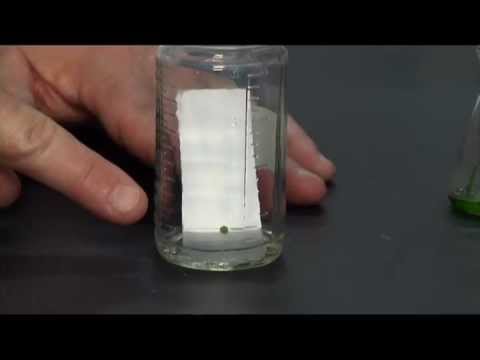


5.0 / 5 (0 votes)

