Modul Venturi Meter
Summary
TLDRIn this practical demonstration, Anggadita Safarudin Harsanto explains the use of the Venturi apparatus to determine the discharge coefficient in fluid flow experiments. The video covers objectives, necessary equipment and materials, and a step-by-step procedure including calibration, adjusting flow rates, and recording piezometer readings. Detailed calculations for velocity, pressure differences, coefficients, and theoretical discharge are presented, alongside instructions for plotting graphs and analyzing errors. The tutorial emphasizes careful measurement, proper data recording, and converting units to international standards, guiding students to accurately perform eight trials and interpret their results, making it a comprehensive and practical learning resource for civil engineering students.
Takeaways
- 😀 The purpose of the experiment is to determine the discharge coefficient (Cd) of a Venturi apparatus using Bernoulli's principle.
- 😀 The main equipment used includes a Venturi Apparatus, a hydraulic table, and piezometers, with water as the working fluid.
- 😀 The experiment requires proper setup: ensuring electrical connection, turning on the hydraulic table, and opening valves in the correct sequence.
- 😀 Calibration of the piezometers is essential; water levels must be aligned to ensure accurate readings.
- 😀 Eight separate measurements are taken with different flow rates, using piezometer D as the primary reference point due to its lowest water level.
- 😀 Data collected includes flow rate (Q), piezometer heights (H1 and H2), and pipe diameters, all converted to SI units for calculations.
- 😀 Key calculations involve determining cross-sectional areas, flow velocities, pressure differences, constant k, discharge coefficient (C), theoretical flow rate, and percent error.
- 😀 The percent error formula ensures the measured values are compared to theoretical values, typically yielding acceptable errors under 10%.
- 😀 Graphical representation is required: √(H1-H2) vs Q, discharge coefficient C vs Q, and Venturi length vs dimensionless pressure (ADB), with proper labels and titles.
- 😀 Proper data recording, step-by-step procedure adherence, and careful adjustment of valves are crucial for accurate results and minimizing experimental error.
- 😀 The experiment emphasizes understanding Bernoulli’s principle in practical flow measurement and the importance of meticulous observation and calculation.
Q & A
What is the main purpose of the Venturimeter practical experiment?
-The main purpose is to determine the coefficient of discharge (Cd) for the Venturimeter by measuring flow rates and pressure differences.
What equipment is required for this practical experiment?
-The equipment includes the Venturi apparatus and a hydraulic table to supply water flow to the Venturimeter.
Which material is primarily used in this experiment?
-Water is used as the working fluid in the experiment.
What is the first step in the experiment procedure?
-The first step is to ensure the apparatus is connected to electricity so it can be powered on.
How is the hydraulic table started and stopped?
-It is started by pressing the black button and stopped by pressing the red button.
How is the piezometer calibrated before taking measurements?
-The piezometer is calibrated by adjusting it so that the liquid level is horizontal and at the same reference height.
How many data points are typically collected during the experiment?
-Eight sets of measurements are collected at different flow rates to obtain comprehensive data.
Which piezometer reading is recommended as a reference when adjusting the flow rate?
-The D piezometer is recommended as the reference because its reading is usually the lowest and most sensitive to flow changes.
What are the key calculations performed during the experiment?
-Key calculations include cross-sectional area, velocity at specific points, actual discharge, dimensionless pressure difference (ADB), constant K, coefficient of discharge (Cd), theoretical discharge, and percentage error.
How is the percentage error between theoretical and actual discharge calculated?
-Percentage error is calculated by taking the absolute difference between theoretical and actual discharge, dividing by the theoretical value, and multiplying by 100%.
What units are conversions required for during calculations?
-Flow rate is converted from liters per second to cubic meters per second, and piezometer height and diameters are converted from millimeters to meters.
What types of graphs are generated from the experimental data?
-Three types of graphs are typically plotted: 1) square root of H1 minus H2 versus flow rate, 2) coefficient of discharge (Cd) versus actual flow rate, and 3) Venturi pipe length versus dimensionless pressure difference (ADB).
What is the suggested procedure for finishing the experiment?
-Close the upper and lower valves to stop water flow, turn off the hydraulic table using the red button, and restore the apparatus to its original condition while cleaning the equipment.
Outlines

Dieser Bereich ist nur für Premium-Benutzer verfügbar. Bitte führen Sie ein Upgrade durch, um auf diesen Abschnitt zuzugreifen.
Upgrade durchführenMindmap

Dieser Bereich ist nur für Premium-Benutzer verfügbar. Bitte führen Sie ein Upgrade durch, um auf diesen Abschnitt zuzugreifen.
Upgrade durchführenKeywords

Dieser Bereich ist nur für Premium-Benutzer verfügbar. Bitte führen Sie ein Upgrade durch, um auf diesen Abschnitt zuzugreifen.
Upgrade durchführenHighlights

Dieser Bereich ist nur für Premium-Benutzer verfügbar. Bitte führen Sie ein Upgrade durch, um auf diesen Abschnitt zuzugreifen.
Upgrade durchführenTranscripts

Dieser Bereich ist nur für Premium-Benutzer verfügbar. Bitte führen Sie ein Upgrade durch, um auf diesen Abschnitt zuzugreifen.
Upgrade durchführenWeitere ähnliche Videos ansehen
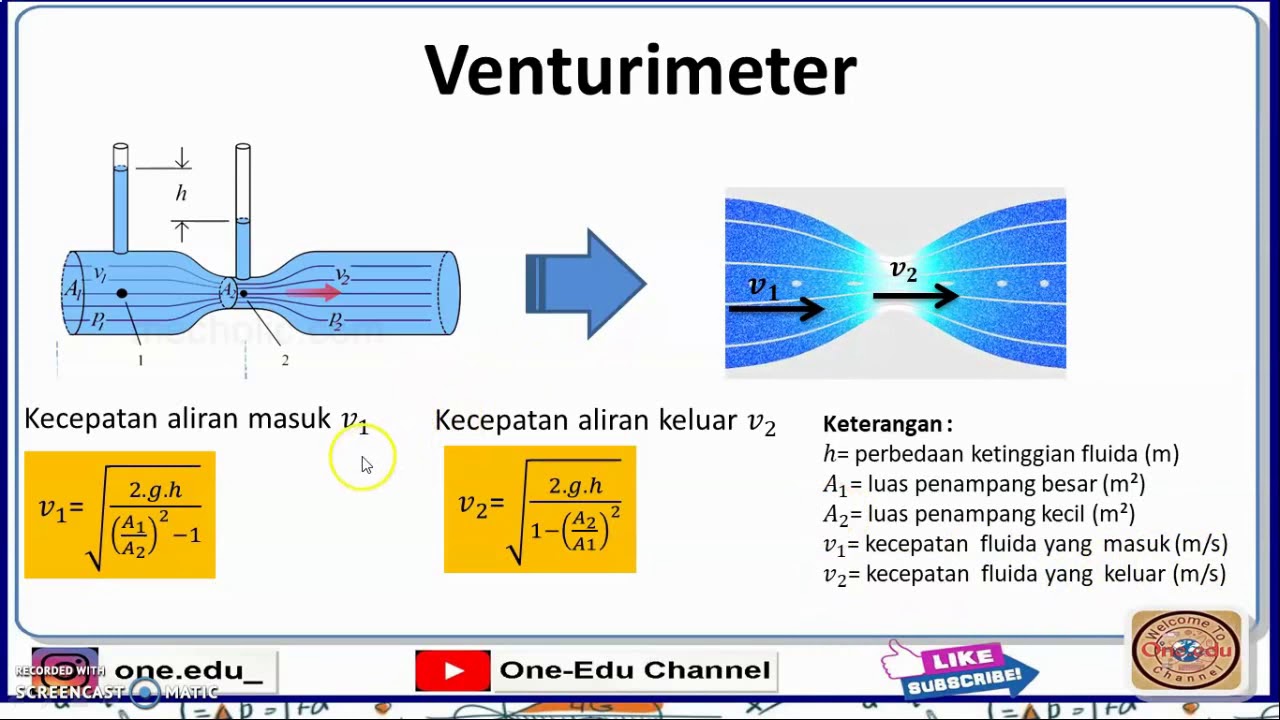
FISIKA KELAS XI: PENERAPAN HUKUM BERNOULLI PADA PIPA VENTURIMETER

Reynolds Experiment | Fluid Mechanics
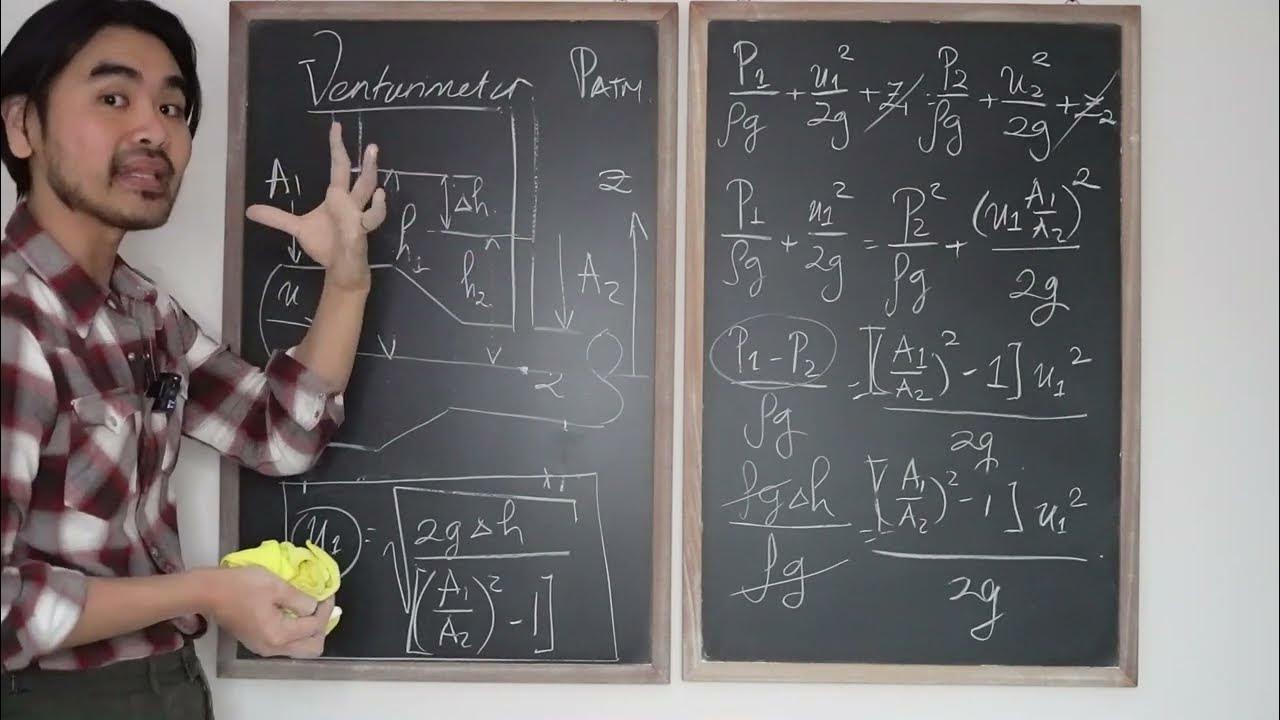
Mekanika Fluida FM01 (Lecture3: 6/8). Venturimeter - Aplikasi persamaan Bernoulli
Reynolds, Venturi, Efecto Magnus y Cohetes - MECÁNICA DE FLUIDOS I

Fluida Dinamis - Konsep Bernoulli - Simple Konsep - Fisika Kelas 11
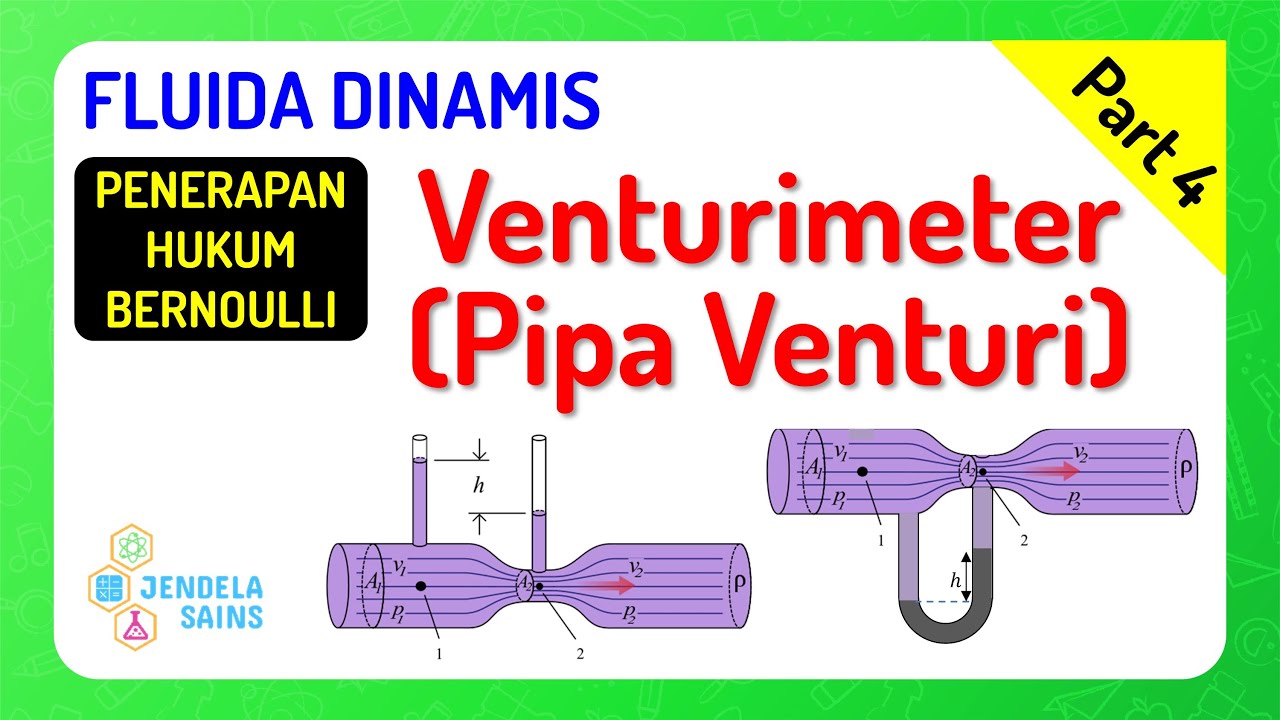
Fluida Dinamis • Part 4: Venturimeter / Pipa Venturi
5.0 / 5 (0 votes)

