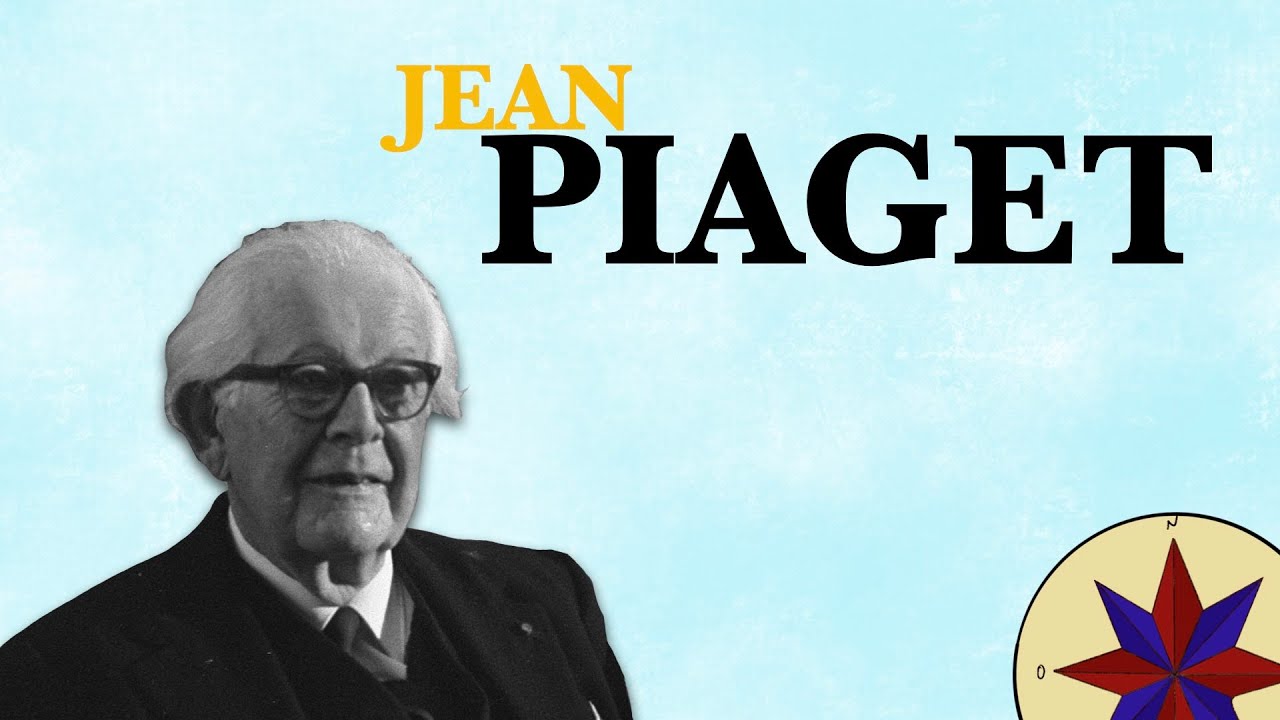
Série Educadores - Jean Piaget Parte 1
Summary
TLDRThis video script explores the life and contributions of Jean Piaget, a Swiss biologist, psychologist, and epistemologist. Known for his groundbreaking work in developmental psychology, Piaget’s theories on how children acquire knowledge revolutionized education. His research highlighted the importance of recognizing cognitive development stages and understanding how children process the world differently from adults. Through his work, Piaget emphasized the need for educational systems to foster active learning, cooperation, and intellectual autonomy. His theories have had a lasting impact on modern education, making him one of the most influential figures in the field of child development and pedagogy.
Takeaways
- 😀 Jean Piaget, born in Switzerland in 1896, was a biologist, psychologist, sociologist, and epistemologist who dedicated his life to understanding human knowledge and development.
- 😀 As a biologist, Piaget emphasized that humans are living organisms who grow, develop, and interact with their environment, which shapes their knowledge acquisition.
- 😀 Piaget’s main contribution as an epistemologist was studying how children construct knowledge and progress from simple to complex understanding through interaction with the world.
- 😀 His approach, called genetic epistemology, sought to explain how humans reach universal knowledge by observing children’s problem-solving and reasoning processes.
- 😀 Piaget developed the clinical method, engaging children in discussions, problem-solving, and games to observe how they think and understand the world.
- 😀 He distinguished clearly between the thinking of children and adults, emphasizing that education must respect these differences and adapt accordingly.
- 😀 Piaget proposed four stages of cognitive development: sensorimotor, preoperational, concrete operational, and formal operational, each reflecting different capacities for reasoning and understanding.
- 😀 Learning, according to Piaget, is rooted in development; children cannot simply copy knowledge—they actively construct it through exploration, manipulation, and problem-solving.
- 😀 Piaget highlighted the importance of autonomy, cooperation, and social interaction in learning, encouraging children to develop self-discipline and perspective-taking skills.
- 😀 His educational philosophy influenced modern pedagogical practices, including school reforms in Curitiba, Brazil, where Piagetian principles guide active learning and teacher facilitation.
- 😀 Piaget’s legacy demonstrates that intelligence can be nurtured in all individuals, showing that educational interventions can optimize cognitive and social development.
- 😀 His work continues to inspire educational theory and practice, emphasizing that the learner is an active agent in constructing knowledge and engaging meaningfully with the world.
Q & A
What was Jean Piaget's background and primary focus as a researcher?
-Jean Piaget was a biologist, psychologist, sociologist, and epistemologist. His primary focus was on understanding how children acquire knowledge and how cognitive development occurs as they interact with the world.
What distinguishes Piaget’s approach to knowledge from traditional education systems?
-Piaget emphasized that knowledge is not simply a copy of reality, as traditionally believed in education. Instead, he proposed that knowledge develops as children actively engage with their environment and construct understanding through experiences.
What is Piaget’s theory of cognitive development, and how does it differ from adult thinking?
-Piaget’s theory suggests that cognitive development occurs in stages, with children’s thinking fundamentally different from adults. He highlighted that children progress through stages like sensorimotor, preoperational, concrete operational, and formal operational, each with distinct cognitive abilities.
What are the four stages of Piaget’s cognitive development theory?
-The four stages of Piaget’s theory are: 1) Sensorimotor (from birth to about 2 years), 2) Preoperational (2 to 7 years), 3) Concrete operational (7 to 11 years), and 4) Formal operational (from 11 years onwards). Each stage represents a new level of cognitive ability and logic.
How did Piaget’s method of observing children differ from traditional testing methods?
-Piaget used a method called 'clinical method,' where he engaged children in conversations and posed questions to understand their thought processes. This allowed him to observe how children arrived at conclusions and solved problems, rather than just testing their knowledge.
What role did Piaget believe the teacher should play in the classroom?
-Piaget believed that teachers should act as facilitators and provokers of learning, not simply as authorities who impose knowledge. They should encourage students to explore, make decisions, and learn through interaction, fostering independence and critical thinking.
What does Piaget’s concept of 'egocentrism' refer to, and how does it affect learning?
-Egocentrism in Piaget's theory refers to a child's inability to see things from others' perspectives. As children develop, teachers need to help them overcome egocentrism by encouraging empathy and the ability to consider different viewpoints.
What was Piaget’s view on the role of error and doubt in the learning process?
-Piaget emphasized that error and doubt are natural and essential components of learning. He believed that students should be allowed to make mistakes, as this fosters critical thinking and problem-solving skills.
How did Piaget’s ideas influence modern educational practices?
-Piaget’s theories led to significant changes in educational practices, including the idea that children should be seen as active participants in their learning. His work contributed to more interactive and student-centered approaches, encouraging exploration and discovery in the classroom.
What impact did Piaget’s research have on educational policy and international education organizations?
-Piaget’s research influenced the development of educational policies, particularly in the areas of cognitive development and learning processes. He was involved in the UNESCO and worked on initiatives to promote education for peace, fostering an international exchange of educational ideas.
Outlines

此内容仅限付费用户访问。 请升级后访问。
立即升级Mindmap

此内容仅限付费用户访问。 请升级后访问。
立即升级Keywords

此内容仅限付费用户访问。 请升级后访问。
立即升级Highlights

此内容仅限付费用户访问。 请升级后访问。
立即升级Transcripts

此内容仅限付费用户访问。 请升级后访问。
立即升级浏览更多相关视频




5.0 / 5 (0 votes)

