Aula 53 - Concentradores de Tensão
Summary
TLDRThis video provides an insightful lecture on the concept of stress concentrators in materials science, focusing on their role in fracture mechanics. The speaker explains how defects like holes in materials lead to increased tension at specific points, which can cause material failure. Key topics include the importance of smooth edges to reduce stress concentration, the mathematical model for calculating stress concentration factors, and how stress concentrators affect brittle and ductile materials differently. The lecture emphasizes the practical implications of these concepts in engineering design to enhance material safety and durability.
Takeaways
- 😀 Stress concentrators are points in a material where stress concentration occurs, often leading to failure or fracture.
- 😀 Holes or sharp edges in materials are common examples where stress concentration can occur, increasing the risk of fracture.
- 😀 The resistance of materials in practice is always lower than the theoretical resistance due to defects within the material.
- 😀 Stress concentration can be mathematically modeled by considering the geometry of defects, such as circular holes or sharp corners.
- 😀 The concentration of stress at the edge of a hole or sharp corner is higher than in the surrounding areas, which can lead to material failure.
- 😀 A smooth transition in design, such as rounding sharp corners, can help reduce stress concentration and prevent fractures.
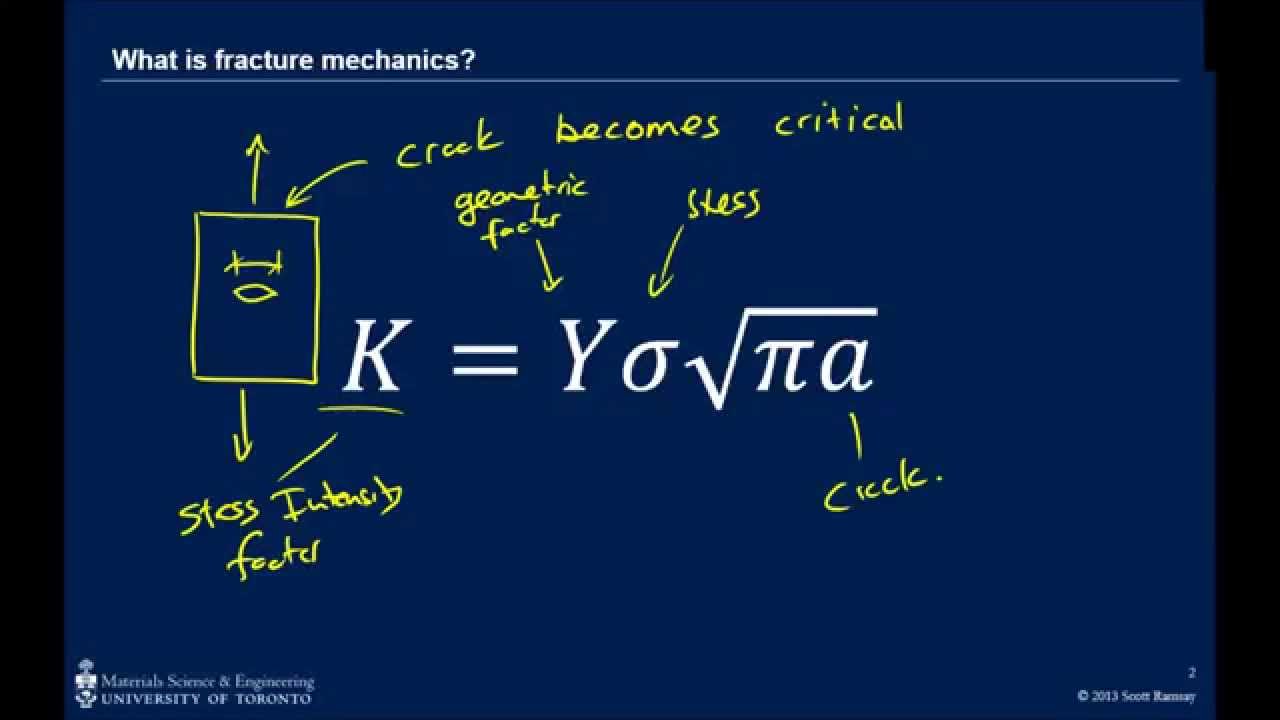
- 😀 The stress concentration factor (Kt) is a ratio between the maximum applied stress and the nominal stress in a material with a defect.
- 😀 The maximum stress at a point of concentration can be estimated using simple formulas based on defect geometry and material properties.
- 😀 For brittle materials, small cracks or defects can significantly increase the risk of fracture due to low ductility and poor energy absorption capacity.
- 😀 The critical stress for fracture propagation in a material can be determined by considering the material's surface energy and the size of the defect.
Q & A
What are stress concentrators in materials science?
-Stress concentrators are defects or irregularities in a material, such as holes, cracks, or sharp corners, where stress is concentrated more than in other areas. These defects lead to a higher likelihood of material failure at these points.
How does the presence of a hole in a material affect stress distribution?
-When a hole is present in a material, the stress lines around the hole are concentrated near the edges of the hole. This concentration of stress increases the likelihood of fracture or failure at that point, as the material is unable to evenly distribute the applied force.
What happens to stress concentration as the radius of the hole decreases?
-As the radius of the hole decreases, the stress concentration increases. This is because the smaller the hole, the more sharply the stress lines bend around it, concentrating stress in a smaller area, which can cause material failure more easily.
Why is it important to smooth sharp edges or corners in material design?
-Smoothing sharp edges or corners in material design reduces stress concentration. Sharp corners create high-stress points, making them more susceptible to fracture. By rounding or softening these edges, the material is better able to withstand forces and avoid failure.
What is the relationship between the critical stress and material toughness?
-Critical stress is the stress level at which a crack or defect in the material will begin to propagate. In materials with high toughness, this critical stress is higher because the material can absorb more energy and deform without fracturing. Conversely, brittle materials have lower critical stress and fail more easily under lower stress levels.
What is the difference between ductile and brittle materials in terms of fracture mechanics?
-Ductile materials can absorb more energy and deform plastically before fracturing, while brittle materials tend to fracture with little plastic deformation. The concentration of stress is more detrimental in brittle materials as they are less able to absorb the energy and resist crack propagation.
How does tension in a material relate to fracture mechanics?
-Tension in a material causes the atoms to be pulled apart. When stress is concentrated at a defect or crack, it can lead to crack propagation and ultimately cause the material to fracture. The higher the tension, the more likely it is that a crack will grow and lead to failure.
What role does the surface energy of a material play in fracture mechanics?
-Surface energy is the energy required to create new surface area in a material. In fracture mechanics, a material with higher surface energy is more likely to resist crack propagation, as it requires more energy to form new cracks. Materials with lower surface energy are more prone to fracture.
How do you calculate the critical stress for crack propagation in materials?
-The critical stress can be calculated using a formula that considers the applied stress, the size of the defect or crack, and material properties like surface energy. The formula generally involves calculating the stress intensity factor, which relates the applied stress to the size and shape of the crack.
What are the practical implications of understanding stress concentration in engineering design?
-Understanding stress concentration is essential in engineering to prevent material failure. By recognizing where stress will be concentrated, engineers can design components with smoother surfaces, optimize shapes, and choose materials with higher toughness, ensuring the longevity and reliability of the structures.
Outlines

此内容仅限付费用户访问。 请升级后访问。
立即升级Mindmap

此内容仅限付费用户访问。 请升级后访问。
立即升级Keywords

此内容仅限付费用户访问。 请升级后访问。
立即升级Highlights

此内容仅限付费用户访问。 请升级后访问。
立即升级Transcripts

此内容仅限付费用户访问。 请升级后访问。
立即升级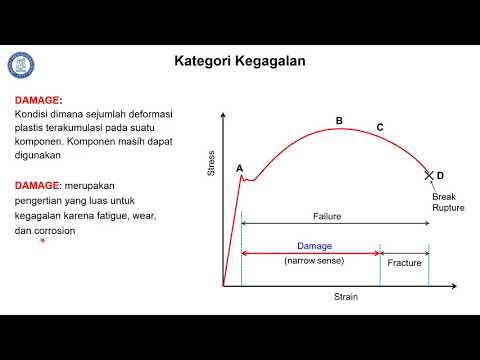

5.0 / 5 (0 votes)

