Maxsurf #11 - Analisa Equilibrium (Loadcase) dengan Maxsurf Stability
Summary
TLDRThis tutorial focuses on ship stability analysis, exploring equilibrium conditions like trim and overkill. It covers the process of using software for stability assessment, including inputting key data such as ship weight, fuel, freshwater, ballast, and tank compartments. The video also demonstrates how to adjust weight distribution to ensure the ship remains balanced and stable, preventing tipping or capsizing. The goal is to ensure the ship is safe and operational, with minimal trim variation. The analysis is crucial for ship safety and effective load management during navigation.
Takeaways
- 😀 Ship stability analysis helps determine if the ship is in balance or tilting to one side (left or right).
- 😀 Equilibrium analysis is used to understand if the ship's front or back is heavier, causing the ship to either pitch forward or backward.
- 😀 When the weight distribution is not equal, it is referred to as 'trim'—either 'bow trim' (front-heavy) or 'stern trim' (back-heavy).
- 😀 Software tools are used to simulate the ship's equilibrium conditions, including weight distribution, ballast, and fluid levels.
- 😀 Ship stability depends on factors such as the ship's weight, fuel, water, and ballast systems, which are entered into the software for analysis.
- 😀 Ballast is used to balance the ship, especially when it tilts or is unbalanced. It can also adjust the ship's center of gravity.
- 😀 The ship’s weight includes the hull, machinery, equipment, and fuel but excludes cargo, which is considered in the effective weight.
- 😀 For accurate stability calculations, defining the compartments and tanks within the software is crucial, as they affect the ship's weight distribution.
- 😀 Different tanks (e.g., freshwater, oil, ballast) must be configured in the software to correctly represent their role in the ship’s stability.
- 😀 The shape and design of the tanks and compartments (e.g., rectangular or irregular) impact the simulation, with adjustments made to fit the actual design of the ship.
- 😀 After inputting the required data (e.g., weight of the ship, tank levels), the software helps visualize the equilibrium, allowing for adjustments to prevent instability while the ship is sailing.
Q & A
What is the main purpose of performing an equilibrium analysis on a ship?
-The main purpose of equilibrium analysis is to determine whether a ship is balanced or experiencing trim, such as tilting forward or backward, and to ensure the ship can operate safely and comfortably.
What does the term 'trim haluan' mean in ship stability analysis?
-'Trim haluan' refers to the condition where the forward draft (sarat depan) is greater than the aft draft (sarat belakang), causing the ship to tilt forward or bow down.
What does 'trim stern' indicate about a ship's balance?
-'Trim stern' indicates that the aft draft (sarat belakang) is greater than the forward draft (sarat depan), causing the ship's bow to rise and the stern to lower.
Why is ballast used in ship stability analysis?
-Ballast is used to adjust the ship's center of gravity and to balance the ship, especially if the ship is trimmed forward or backward or if the weight distribution is uneven.
What types of data are required for input into a ship stability software?
-Required data include the weight of the empty ship (structure, machinery, and equipment), cargo or fluid loads (fuel, lubricants, freshwater, seawater ballast), and definitions of compartments and tanks.
What is the difference between a tank and a room (equipment compartment) in the software?
-Tanks contain fluids and are measured in percentages of capacity, while rooms or compartments are solid structures and their quantity is fixed, usually set as 1.
What steps are necessary to input a ship model into stability analysis software?
-The steps include importing a 3D model of the ship (MSG or Max Modeller format), defining rooms and tanks with their boundaries, specifying fluid types, and entering weights of the ship and its loads.
How is the visual representation of tanks adjusted in the software?
-The visual representation is adjusted by specifying the tank boundaries (front, back, top, bottom, left, right) and the fill percentage, which can show levels like 50% or 100% to match the actual fluid volume.
Why should the difference between forward and aft drafts be kept minimal in operational ships?
-Keeping the difference minimal, usually below 5%, ensures the ship operates comfortably and safely, reducing the impact of trim on ship motion during navigation.
What role does room definition play in ship stability analysis?
-Room definition specifies the physical boundaries and volume of compartments or tanks, which is essential for accurate calculation of weight distribution, buoyancy, and equilibrium.
How does equilibrium analysis help in handling ship movement during sailing?
-Equilibrium analysis helps predict and control the ship’s trim and stability, ensuring that it remains balanced and minimizing excessive pitching or rolling that can affect safety and comfort.
What additional visual features does the software provide for tank analysis?
-The software can display the volume of fluid in each tank, the tank names, and color-coded fill levels to easily visualize how full each tank is and to check for proper balance and trim.
Outlines

此内容仅限付费用户访问。 请升级后访问。
立即升级Mindmap

此内容仅限付费用户访问。 请升级后访问。
立即升级Keywords

此内容仅限付费用户访问。 请升级后访问。
立即升级Highlights

此内容仅限付费用户访问。 请升级后访问。
立即升级Transcripts

此内容仅限付费用户访问。 请升级后访问。
立即升级浏览更多相关视频

Ship Stability _ Trim Introduction Part 1

Metacentric Height ll GM ll Ships Equilibrium ll Angle of Loll ll Righting Lever and Righting Moment

Nonlinear control systems - 2.4. Lyapunov Stability Theorem

Learn 80% of Data Analysis in Excel in Just 12 Minutes
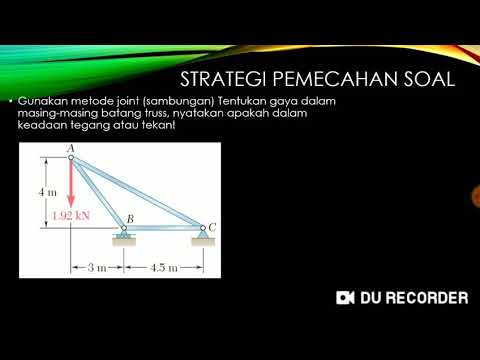
Pembahasan Soal Analisis Struktur Truss dengan metode joint/sambungan

SFORZO NORMALE IN PILASTRO D'ACCIAIO (9)
5.0 / 5 (0 votes)

