Variance (Simply explained)
Summary
TLDRThis video explains the concept of variance, its calculation, and its relationship with standard deviation. It walks through a practical example, showing how to calculate the mean, deviations, and squared differences, ultimately leading to the variance formula. The video also highlights the difference between variance and standard deviation, with standard deviation being the square root of variance, offering a more interpretable measure. Additionally, the script clarifies the use of two formulas for variance: one for population data and one for sample data, emphasizing when each should be applied. The video concludes by suggesting tools like DataTab for easy variance calculation.
Takeaways
- 😀 The variance measures how much data scatters around the mean, reflecting the dispersion of values.
- 😀 To calculate the variance, first find the mean by summing the values and dividing by the number of data points.
- 😀 Variance is calculated by squaring the difference between each data point and the mean, then averaging these squared differences.
- 😀 Squaring the differences ensures that negative and positive deviations do not cancel each other out, resulting in positive values.
- 😀 The resulting variance is expressed in squared units, making it harder to interpret than the standard deviation.
- 😀 The formula for variance involves summing the squared deviations and dividing by the number of data points (n).
- 😀 The standard deviation is the square root of the variance, making it easier to interpret as it has the same units as the original data.
- 😀 Variance gives the squared average distance from the mean, while standard deviation provides the average distance from the mean.
- 😀 There are two formulas for variance: one divides by n (used for population data), and one divides by n-1 (used for sample data).
- 😀 When working with a sample and estimating the population variance, you use n-1 in the formula to account for the sample size.
- 😀 Standard statistical software (e.g., DataTab) automatically calculates variance using the formula that divides by n-1 for sample data.
Q & A
What is the variance?
-Variance is a measure that indicates how much data scatters around the mean, providing insight into the dispersion of the dataset.
How is the mean calculated?
-The mean is calculated by summing the values of all individuals and dividing by the total number of individuals.
Why do we square the deviations from the mean when calculating variance?
-Squaring the deviations ensures that all differences are positive, regardless of whether the individual values are above or below the mean.
What is the formula for calculating variance?
-The variance is calculated by summing the squared differences of each data point from the mean, then dividing by the number of data points (N).
What does the variance represent in terms of units?
-Since the deviations are squared, the variance is measured in the square of the original unit. For example, if the data is in centimeters, the variance will be in square centimeters.
How does the variance differ from the standard deviation?
-The variance is the squared average deviation from the mean, while the standard deviation is the square root of the variance. The standard deviation has the same unit as the original data, making it easier to interpret.
Why is it preferable to use the standard deviation over the variance?
-The standard deviation is easier to interpret because it is in the same unit as the original data, unlike the variance, which is in squared units.
What is the difference between arithmetic mean and quadratic mean in the context of standard deviation?
-In the case of the standard deviation, the quadratic mean (not the arithmetic mean) is used to avoid the result being zero, as the arithmetic mean would cancel out the deviations.
Why are there two different formulas for calculating variance?
-The two formulas exist to address different scenarios: one is used when calculating variance for an entire population (dividing by N), and the other is used when calculating variance from a sample to estimate the population variance (dividing by N-1).
When should you use the formula that divides by N-1?
-You should use the formula dividing by N-1 when you are working with a sample and want to estimate the variance of the entire population.
How can you calculate variance easily using online tools?
-You can use online tools like DataTab, where you simply input your data, select the variable, and click to calculate the variance, which will give you the result in a straightforward way.
Outlines

此内容仅限付费用户访问。 请升级后访问。
立即升级Mindmap

此内容仅限付费用户访问。 请升级后访问。
立即升级Keywords

此内容仅限付费用户访问。 请升级后访问。
立即升级Highlights

此内容仅限付费用户访问。 请升级后访问。
立即升级Transcripts

此内容仅限付费用户访问。 请升级后访问。
立即升级浏览更多相关视频

Standard Deviation and Variance

Ilmu Data #5 - Varians dan Standar Deviasi

MEASURES OF DISPERSION || MATHEMATICS IN THE MODERN WORLD
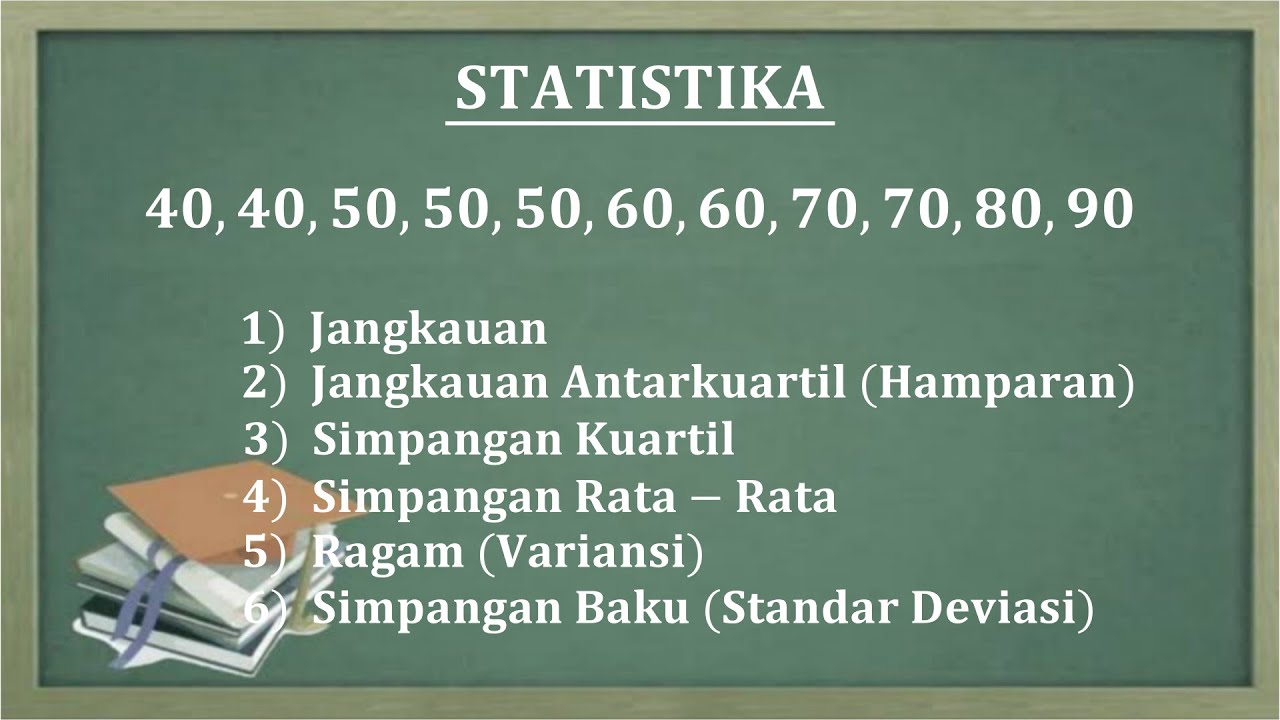
JANGKAUAN, HAMPARAN, SIMPANGAN KUARTIL, SIMPANGAN RATA RATA, RAGAM DAN STANDAR DEVIASI
Standard Deviation & Degrees of Freedom Explained | Statistics Tutorial | MarinStatsLectures
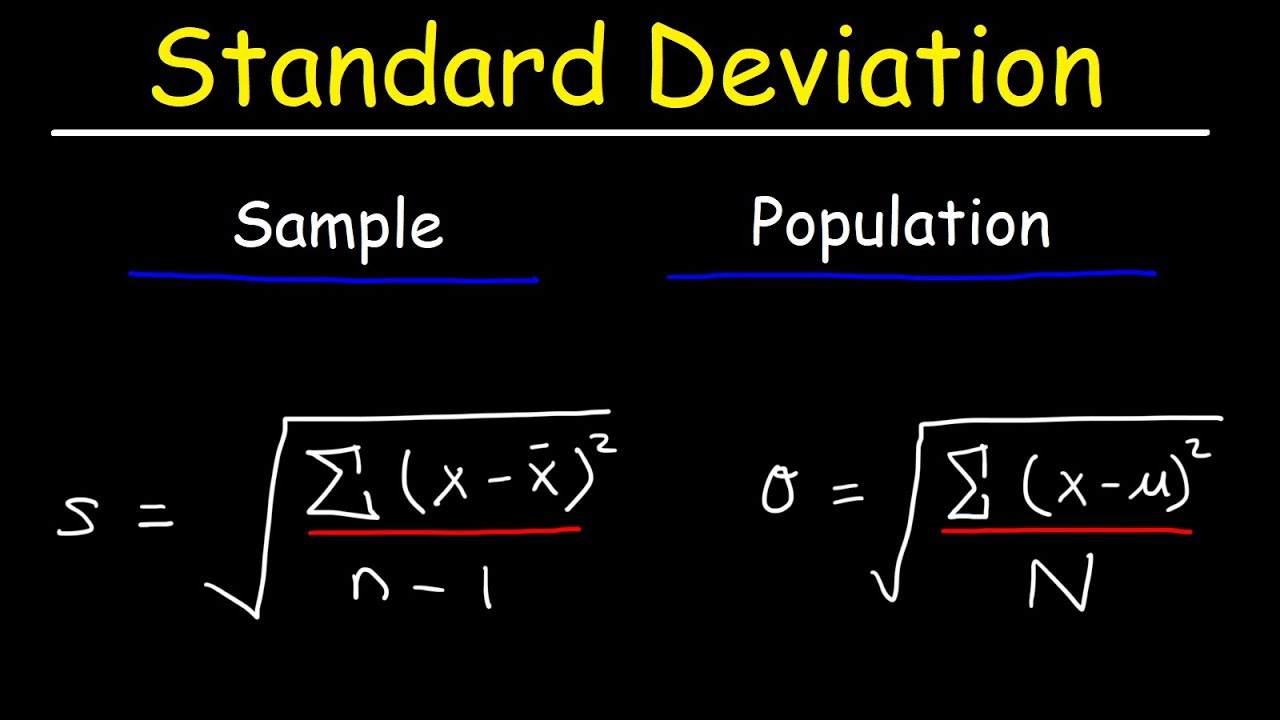
Standard Deviation Formula, Statistics, Variance, Sample and Population Mean
5.0 / 5 (0 votes)

