LEADERSHIP THEORIES UNLOCKED: Simplifying SHRM's leadership theories
Summary
TLDRIn this video, Angela Murray breaks down key leadership theories including Hersey and Blanchard's Situational Leadership, Fiedler's Contingency Theory, and the Trait Theory. Using personal examples from her career, she explains how different leadership styles—directing, coaching, participating, and delegating—apply to various team dynamics. The video explores how effective leadership hinges on matching the right style to the situation, whether dealing with entry-level employees or experienced ones. Angela also discusses how traits like confidence and assertiveness influence leadership success, with insights into practical applications for team management. Stay tuned for next week’s exploration of other leadership models.
Takeaways
- 😀 Situational Leadership Theory, introduced by Hersey and Blanchard, involves four leadership styles: Directing, Coaching, Participating, and Delegating, which vary based on team members' skills and experience.
- 😀 The Directing style is highly directive and suitable for employees who lack skill or experience, often seen in entry-level workers.
- 😀 Coaching combines direction with support to help employees develop their skills, fitting for those with some competence but needing guidance.
- 😀 Participating is a more hands-off approach where leaders give less direction, allowing employees to take more responsibility for decisions.
- 😀 Delegating is the most hands-off style, where the leader provides minimal input, and employees are responsible for managing their own tasks.
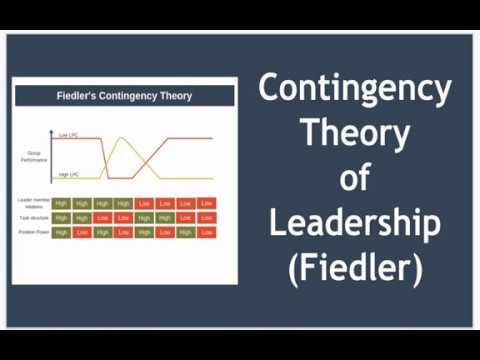
- 😀 Fitler's Contingency Theory emphasizes the need for leaders to match their leadership style with the situation, considering factors like leader-member relations, task structure, and position power.
- 😀 Fiedler's theory highlights the importance of assessing the situation before applying a leadership style, as the right style can greatly influence effectiveness.
- 😀 The Trait Theory of leadership suggests that certain traits (like confidence, assertiveness, and creativity) are common in great leaders and can be acquired over time.
- 😀 The Great Man Theory, a predecessor to Trait Theory, claims that leadership traits are inherent and cannot be developed, which has been criticized for overlooking leaders who lack these traits but still excel.
- 😀 Leadership effectiveness depends not only on the leader's natural abilities but also on their ability to develop and refine certain traits, like assertiveness, over time.
- 😀 The importance of context in leadership is crucial — a leadership style that works in one situation might fail in another, as illustrated by the example of a production manager’s failed approach due to poor team relationships.
Q & A
What is the Situational Leadership Theory, and how does it relate to leadership styles?
-The Situational Leadership Theory, developed by Hersey and Blanchard, identifies four leadership styles: directing, coaching, participating, and delegating. Leaders should adapt their style based on the needs of their team, taking into account the employees' skill level and the situation at hand. This approach emphasizes flexibility in leadership.
How did the speaker’s experience as a new people leader align with the Situational Leadership Theory?
-The speaker’s experience reflects the 'selling' leadership style, where the manager provides direction but also tries to coach and develop the new leader. Initially, the speaker lacked confidence and needed guidance, but over time, they transitioned to a more participative leadership style, where they had more autonomy in decision-making.
What leadership style did the speaker’s counterpart, who was a seasoned leader, require?
-The speaker’s counterpart, being an experienced leader, would have benefitted from a more delegating leadership style. Since the counterpart was competent, they required less direction and more autonomy in decision-making, as opposed to the coaching style used for the speaker.
In the context of the Situational Leadership Theory, which style is most effective for employees with little experience or skill?
-The 'directing' leadership style is most effective for employees who lack experience or skill. This style involves high direction from the leader and is suitable for entry-level employees or those new to a task.
What is Fiedler's Contingency Theory, and what does it emphasize?
-Fiedler’s Contingency Theory posits that the effectiveness of a leader depends on the fit between the leader’s style and the situation. The theory identifies three factors that influence this fit: leader-member relations, task structure, and position power. Leaders need to assess these factors to determine the most effective leadership style for each situation.
Why did the new production manager’s leadership style not work in the speaker's example from the organization?
-The new production manager's style did not work because the relationship between the leader and the team was already damaged. While his leadership style had worked in previous situations, it did not fit the current one, where there was a need for healing and rebuilding trust with the employees.
How does Fiedler’s Contingency Theory relate to the speaker's experience with the production manager?
-According to Fiedler’s Contingency Theory, the manager’s leadership style should have aligned with the situation. The speaker’s example illustrates that the leader’s approach did not match the fractured leader-member relationship, which resulted in ineffective leadership. A more relationship-focused leader would have been more successful.
What is the primary difference between the Great Man Theory and the Trait Theory of Leadership?
-The Great Man Theory suggests that great leaders are born with certain traits and cannot acquire them. In contrast, the Trait Theory acknowledges that while some leadership traits are innate, others can be developed or learned over time.
How does the Trait Theory explain the potential for developing leadership qualities?
-The Trait Theory suggests that certain leadership qualities, such as confidence and assertiveness, can be naturally present in some leaders but can also be acquired or enhanced through development. This allows individuals to grow into better leaders, even if they do not initially possess all the required traits.
Can you explain a scenario where a leader's lack of assertiveness affected their leadership potential, according to the Trait Theory?
-In the example shared, a technician with excellent skills lacked assertiveness, which led to his contributions being overlooked. Even though he had the intelligence and problem-solving skills, his inability to assert himself hindered his leadership potential. The Trait Theory suggests that developing assertiveness could have helped him become a more effective leader.
Outlines

此内容仅限付费用户访问。 请升级后访问。
立即升级Mindmap

此内容仅限付费用户访问。 请升级后访问。
立即升级Keywords

此内容仅限付费用户访问。 请升级后访问。
立即升级Highlights

此内容仅限付费用户访问。 请升级后访问。
立即升级Transcripts

此内容仅限付费用户访问。 请升级后访问。
立即升级


5.0 / 5 (0 votes)

