20 April 2026
Summary
TLDRIn this lesson on geography, the teacher introduces the concept of the atmosphere, explaining its composition and the various layers, such as the troposphere, stratosphere, and others. The lesson covers the characteristics of each atmospheric layer, including temperature gradients and weather phenomena. The teacher explains key weather elements, including air pressure, temperature, humidity, wind, clouds, and rainfall, and explores the different types of winds and rainfall. Students also learn about the processes behind weather events like cyclones and precipitation, with a special focus on Indonesia's regional winds and weather patterns. The session concludes with a reflection on the importance of these atmospheric concepts for understanding the Earth's climate system.
Takeaways
- 🌍 The atmosphere is a layer of gases surrounding Earth, composed mainly of nitrogen, oxygen, and other trace gases that determine air quality.
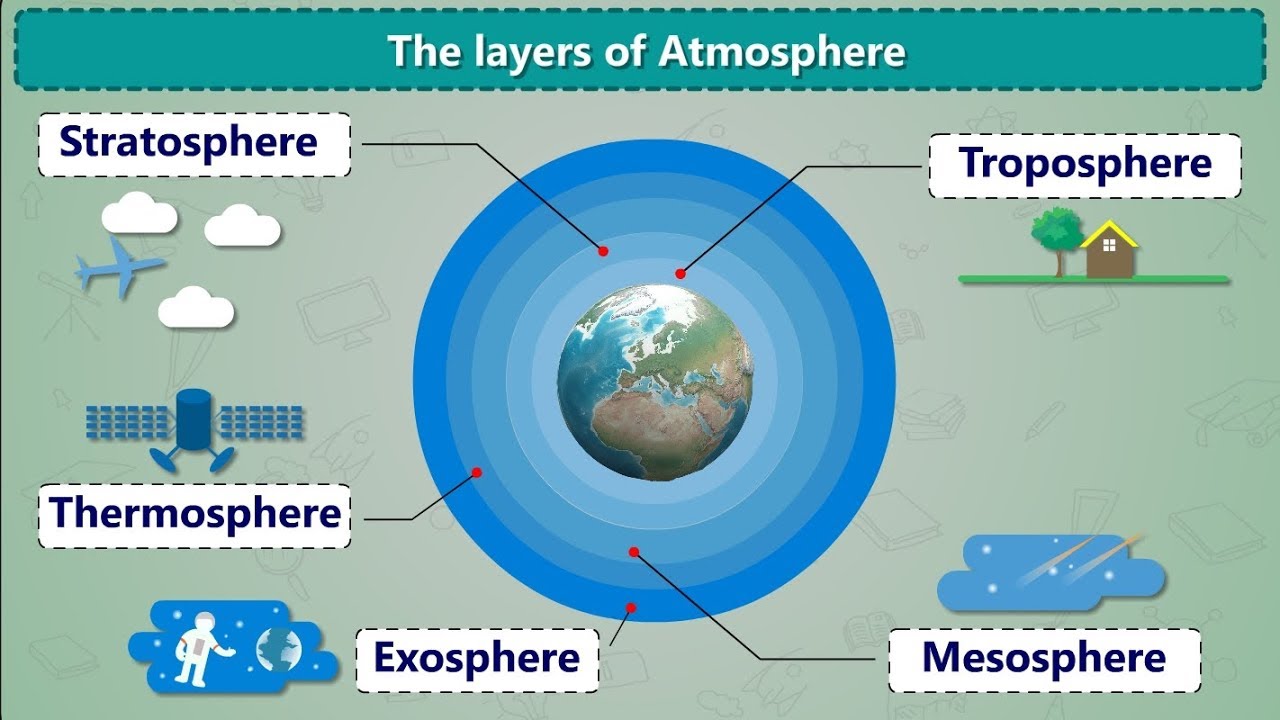
- 🧱 The atmosphere is divided into five main layers: troposphere, stratosphere, mesosphere, thermosphere, and exosphere.
- 🌦️ The troposphere (0–12 km) is the lowest layer where weather phenomena occur and temperature decreases with altitude.
- ☀️ The stratosphere contains the ozone layer, which protects Earth from harmful ultraviolet radiation, and temperature increases with height.
- ☄️ The mesosphere protects Earth from meteors and experiences very cold temperatures that decrease further with altitude.
- 📡 The thermosphere contains ionized particles that can reflect radio waves, making communication possible.
- 🚀 The exosphere is the outermost layer with very weak gravitational influence compared to other layers.
- 🌡️ Weather refers to short-term atmospheric conditions, while climate is the long-term average of weather over a large area.
- 🌤️ Key weather elements include temperature, air pressure, humidity, wind, clouds, and rainfall.
- 💨 Wind is caused by differences in air pressure, moving from high-pressure (cold) areas to low-pressure (warm) areas and influenced by the Coriolis effect.
- 🌧️ Rain forms when moist air rises, cools, becomes saturated, and condenses into water droplets that fall to Earth.
- 🌏 Different types of winds exist, including permanent winds, monsoons, and local winds like land and sea breezes.
- 🌈 Clouds are collections of water droplets in the air and can lead to various weather phenomena such as rain and storms.
- ⚡ Additional atmospheric phenomena include fog, lightning, auroras, rainbows, and halos.
- 📌 The troposphere is the most important layer for human life because it directly affects daily weather and environmental conditions.
Q & A
What is the atmosphere and what is it made of?
-The atmosphere is a layer of air that surrounds the Earth. It is made up of gases such as nitrogen, oxygen, argon, carbon dioxide, helium, hydrogen, and others. Nitrogen is the most abundant gas in the atmosphere.
What are the main layers of the atmosphere and how are they arranged?
-The atmosphere is made up of five main layers: the Troposphere (0-12 km), Stratosphere (12-80 km), Mesosphere (50-80 km), Thermosphere (80-800 km), and Exosphere (800 km and above). These layers are arranged from the Earth's surface upward.
What is the significance of the ozone layer in the Stratosphere?
-The ozone layer in the Stratosphere plays a crucial role in protecting the Earth from harmful ultraviolet (UV) radiation from the sun.
What happens to the temperature as you move upwards through the Troposphere?
-As you move upwards through the Troposphere, the temperature decreases. For every 100 meters of elevation, the temperature drops by 0.5 to 0.6 degrees Celsius.
What role does the Troposphere play in weather and human life?
-The Troposphere is where weather events like clouds, precipitation, and storms occur. It directly influences human life because it is the layer closest to the Earth's surface, where all weather-related phenomena take place.
What is the difference between weather and climate?
-Weather refers to the short-term atmospheric conditions in a specific area, whereas climate is the average weather conditions over a longer period of time and a larger geographic area.
What are the main factors that affect air temperature?
-Air temperature is influenced by factors such as sunlight duration, the angle at which sunlight hits the Earth, the Earth's surface conditions, and the presence of clouds or other atmospheric phenomena.
How does air pressure relate to wind movement?
-Wind is caused by the movement of air from areas of high pressure to areas of low pressure. The difference in air pressure drives the wind, with wind flowing from the high-pressure areas to the low-pressure areas.
What is the difference between absolute humidity and relative humidity?
-Absolute humidity refers to the total amount of water vapor in the air, while relative humidity compares the amount of water vapor in the air to the maximum amount it can hold at a given temperature. The higher the relative humidity, the closer the air is to saturation.
What is the process by which rain occurs?
-Rain occurs when water vapor in the air condenses into droplets. These droplets gather and grow larger as they are carried upward by winds. When the droplets become too heavy to stay suspended, they fall to the Earth as rain.
What are the different types of wind found in Indonesia?
-In Indonesia, the types of winds include the Trade Winds (Pasat), the Anti-Trade Winds (Anti-Pasat), the Westerlies (Angin Barat), and the Monsoon Winds (Angin Muson). These winds are responsible for influencing the seasonal weather patterns, such as the rainy and dry seasons.
What are the main types of rainfall, and how do they differ?
-The main types of rainfall include zenithal rainfall, orographic rainfall, and frontal rainfall. Zenithal rainfall occurs near the equator where the sun's heat causes rapid evaporation and condensation. Orographic rainfall occurs when moist air is forced up a mountain range, cooling and condensing as it rises. Frontal rainfall occurs when two air masses of different temperatures collide, causing the warm air to rise and cool, resulting in precipitation.
Outlines

This section is available to paid users only. Please upgrade to access this part.
Upgrade NowMindmap

This section is available to paid users only. Please upgrade to access this part.
Upgrade NowKeywords

This section is available to paid users only. Please upgrade to access this part.
Upgrade NowHighlights

This section is available to paid users only. Please upgrade to access this part.
Upgrade NowTranscripts

This section is available to paid users only. Please upgrade to access this part.
Upgrade NowBrowse More Related Video
The Layers Of Atmosphere | Air and Atmosphere | What is Atmosphere | Earth 5 Layers
Karakteristik Lapisan Atmosfer

KARAKTERISTIK LAPISAN ATMOSFER #geography #education #kurikulummerdeka #atmosphere #atmosfer

LAPISAN BUMI PART 1. ATMOSFER : IPA KELAS 7 SMP

Hidrometeorologia - parte II

DINAMIKA ATMOSFER DAN DAMPAKNYA TERHADAP KEHIDUPAN | GEOGRAFI
5.0 / 5 (0 votes)
