stop trading like an idiot.
Summary
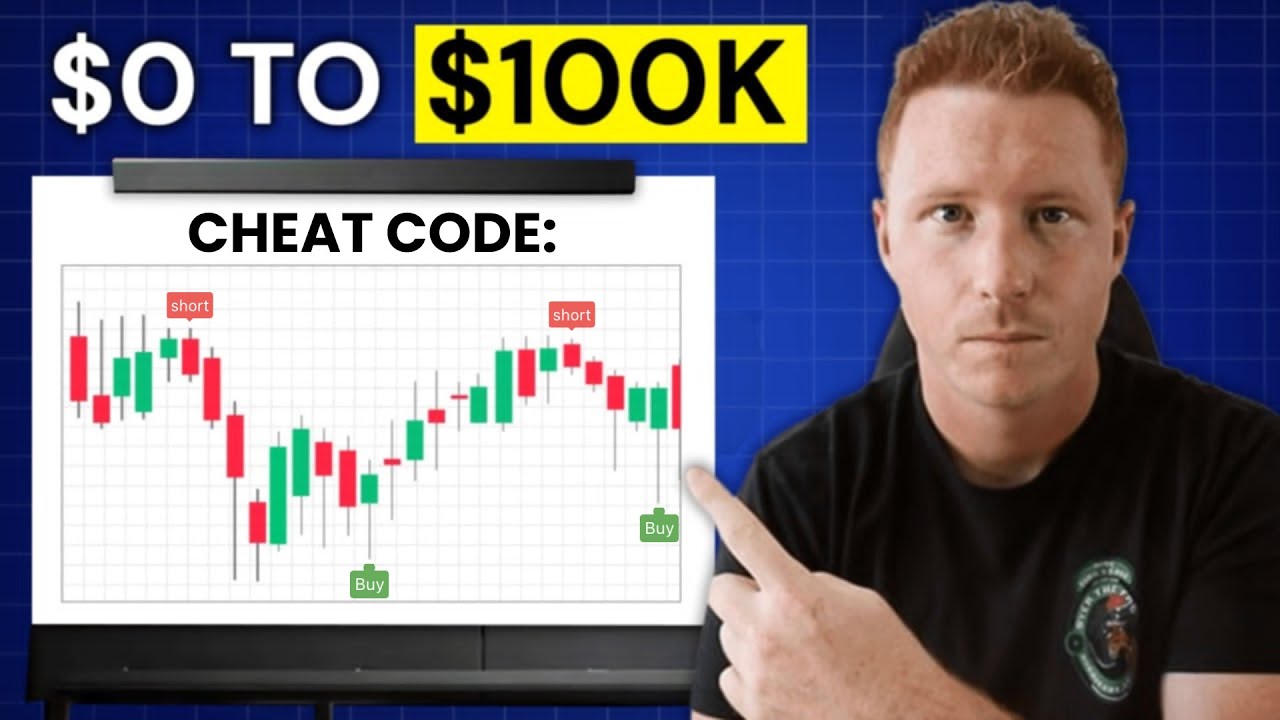
TLDRThis video breaks down the math behind trading prop firm accounts, revealing how to profit without needing a market-beating strategy. By leveraging the convex payoff structure—where losses are capped to challenge fees but gains are fully realized—traders can optimize their chance of passing challenges. Using simulations, the video shows that high win-rate, low risk/reward strategies outperform high risk/reward ones in prop firm challenges. Even strategies with zero or slightly positive expected value per trade can yield significant net profits when fees and payouts are considered. The key takeaway: programmatic, data-driven approaches outperform following gurus or random trading strategies.
Takeaways
- 📊 Prop firm trading is unique: you don’t need a market-beating strategy to be profitable due to the account’s payoff structure.
- 💡 Convex payoff structure means losses are capped to challenge and activation fees, while gains are fully realized.
- 🎯 Optimizing risk geometry—win rate vs. risk-to-reward ratio—is crucial for passing prop firm challenges.
- 🔢 Monte Carlo simulations can model strategy performance and help determine the best risk geometry without real trading.
- ⚖️ High win rate with low risk-to-reward ratio generally results in a higher probability of passing prop challenges.
- 🛑 Strategies with zero or negative expected value can still generate net positive returns in the prop firm environment.
- 💻 Learning to code and deploying programmatic strategies via prop firm APIs is more effective than following YouTube or guru tips.
- 🎰 The key to success is exploiting the convex payoff structure, not necessarily having a high-alpha market strategy.
- 📈 Adjusting risk geometry for the funded phase can maximize expected payouts per funded account.
- 💵 Net expected value accounts for challenge fees, activation costs, and probability of passing, allowing informed strategy decisions.
- 🚀 Simple, systematic strategies like opening range breakouts can outperform most traders when properly optimized.
- ❌ Stop relying on trading courses or social media tips; focus on testing, coding, and simulation-driven strategy deployment.
Q & A
What is the main idea of the video regarding prop firm trading?
-The video explains how to understand the mathematics behind trading prop firm accounts, focusing on how to pass the challenge and make money from funded accounts. It introduces the concept of convex payoff structures and highlights how to optimize strategies that have zero or small positive expected value.
What does the term 'convex payoff structure' mean in the context of prop firm trading?
-A convex payoff structure means that your downside is limited to the cost of joining the prop firm challenge, while the upside (potential profit) is theoretically unlimited. This creates an asymmetry where losses are capped but wins can grow exponentially as prices move in your favor.
Why is the market efficiency an important consideration when trading prop firm accounts?
-Prop firm accounts typically trade in highly liquid markets with tons of institutional and retail traders, making them highly efficient. This means it's difficult to find a strategy that consistently generates alpha (returns above market average) because these markets are well-priced and efficient.
Can you still make money on prop firm challenges with a strategy that has zero expected value?
-Yes, you can. The key is that even strategies with zero expected value per trade can make money in prop firm challenges due to the convex payoff structure. The losses are not realized, but the winnings are, allowing you to potentially pass challenges and generate profits over time.
How does risk geometry impact the probability of passing a prop firm challenge?
-Risk geometry, which includes the win rate and risk-to-reward ratio (RR), greatly affects the probability of passing a challenge. A strategy with a higher win rate and lower RR is more likely to pass the challenge, as it minimizes larger losses and leverages frequent smaller wins.
What strategy characteristics increase the odds of passing a prop firm challenge?
-Strategies with a higher win rate and lower RR (Risk-to-Reward ratio) have higher odds of passing a prop firm challenge. For example, a strategy with a 50% win rate and a 1:1 RR ratio has a much better pass rate than strategies with a 20% win rate and high RR, despite both having zero expected value.
How can Monte Carlo simulations help in optimizing prop firm strategies?
-Monte Carlo simulations can be used to model the risk and reward outcomes of different strategies, simulating many trials to understand the likelihood of passing a prop firm challenge. This helps in selecting the optimal strategy that maximizes the chances of passing, even if the strategy itself has zero expected value.
What does the video say about strategies used by most traders who fail the prop firm challenge?
-The video suggests that most traders who fail the challenge are using strategies with negative expected value. These strategies often come from gurus or are based on popular but ineffective approaches. The majority of traders likely fail because they don't understand the actual mathematics behind prop firm accounts.
How can learning to code help in prop firm trading?
-Learning to code allows traders to create custom strategies that are optimized for the convex payoff structure of prop firm challenges. By coding a strategy, traders can simulate its performance, optimize risk geometry, and deploy it using the firm's API, increasing the chances of passing the challenge and making real profits.
What is the net expected value of passing a prop firm challenge, and how does it relate to the strategy's performance?
-The net expected value of passing a prop firm challenge depends on the cost of the challenge and activation fees, as well as the average payout from a funded account. For example, a strategy that passes 40% of the time can yield a net profit after factoring in fees, with an average payout of around $8,600 per successful pass.
Outlines

This section is available to paid users only. Please upgrade to access this part.
Upgrade NowMindmap

This section is available to paid users only. Please upgrade to access this part.
Upgrade NowKeywords

This section is available to paid users only. Please upgrade to access this part.
Upgrade NowHighlights

This section is available to paid users only. Please upgrade to access this part.
Upgrade NowTranscripts

This section is available to paid users only. Please upgrade to access this part.
Upgrade Now




5.0 / 5 (0 votes)
