Santa Maria delle Grazie | From Solari to Bramante - What Makes This Church So Special?
Summary
TLDRSanta Maria Dellegrate in Milan is a striking fusion of Northern and High Renaissance styles. Its simple brick exterior contrasts with the stunning interior, which blends Gothic and Renaissance elements. The church is home to priceless artworks, including Tishon’s 'Crowning with Thorns' and Caravaggio’s 'Deposition from the Cross.' Breante’s design introduced light-filled geometry, with intricate graffiti decoration on the ceiling, showcasing Lombard craftsmanship. Though originally intended as the tomb for the Sforza dynasty, the church’s history reflects ambition and broken dreams, making it a testament to Milan's artistic and architectural legacy.
Takeaways
- 😀 The Church of Santa Maria Delegratia in Milan is a fusion of artistic ambition, broken dreams, and unparalleled architectural genius.
- 😀 The church's front facade, designed by Guineaforte Solari, is a simple red brick wall with a striking white marble Renaissance portal commissioned by Ludovviko Ilmoro.
- 😀 The church's architectural design blends different periods, with Solari's Gothic-style nave contrasting with Breante's Renaissance tribune and choir.
- 😀 The tribune's exterior features vibrant geometric patterns using terracotta, granite, and white plaster, showcasing Milan's Renaissance at its height.
- 😀 Inside the church, the nave is decorated in a Lombard hall church style, emphasizing width over verticality, with early Renaissance touches.
- 😀 The church features several chapels with significant art, including a fresco by Gaenzio Ferrari and Caravaggio's 'Deposition from the Cross.'
- 😀 The masterpiece 'Crowning with Thorns' by Tishon was stolen by Napoleon's troops in 1797 and is now housed at the Louvre Museum in Paris.
- 😀 The Chapel of Madonna Delegratia is the emotional heart of the church, with significant artwork depicting the Madonna and child.
- 😀 Breante's unique graffiti decoration in the tribune and choir combines vibrant geometric motifs and serves as a hallmark of the Lombard Renaissance.
- 😀 The church was originally intended to be the mausoleum of the Forza dynasty, but the tombs were relocated, and today, the wooden choir stalls serve as a notable feature.
- 😀 Visitors can easily access the Basilica of Santa Maria Delegratia by Milan's metro and explore the church's stunning artwork and history.
Q & A
What is the significance of the Church of Santa Maria delle Grazie in Milan?
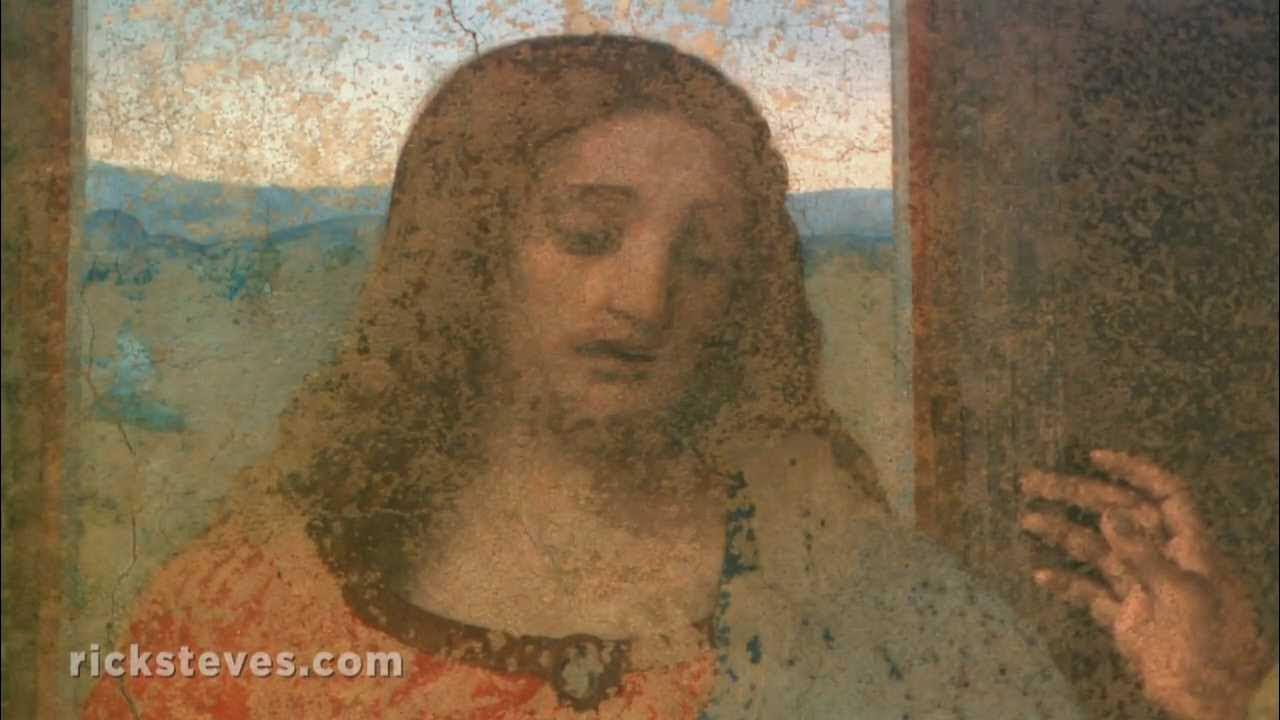
-The Church of Santa Maria delle Grazie is a historic church in Milan, renowned for its artistic and architectural features. It houses 'The Last Supper' by Leonardo da Vinci and represents a unique fusion of Northern and High Renaissance styles.
Who designed the church’s oldest front facade?
-The front facade of the church was designed by Guiniforte Solari, and it features a simple, unadorned red brick and terracotta structure with six strong buttresses dividing the surface.
How does the church's central doorway differ from the rest of the facade?
-The central doorway stands out due to its high Renaissance design, crafted from luminous white marble, contrasting with the plain brick surroundings. This portal was commissioned by Ludovico Il Moro.
What is the historical and artistic significance of the Lunette fresco by Leonardo da Vinci?
-The Lunette fresco by Leonardo da Vinci, originally placed above the central doorway, was lost due to experimental techniques da Vinci used for 'The Last Supper.' It was an important work of early Renaissance art.
What architectural features define the tribune and choir designed by Donato Bramante?
-Bramante’s design for the tribune and choir focuses on light and geometry, replacing the dark Gothic structure with a bright, open Renaissance space. The interior is decorated with scrafido (graffiti) decoration, featuring vibrant geometric motifs.
What is scrafido decoration, and why is it significant to the church's design?
-Scrafido decoration involves etching away layers of colored plaster to reveal the shades beneath, creating a two-tone graphic effect. This technique was used by Donato Bramante in the tribune and choir, making it a hallmark of Lombard Renaissance architecture.
What was the original purpose of the choir in Santa Maria delle Grazie?
-The choir was commissioned by Ludovico Il Moro to serve as the final resting place for the powerful Sforza dynasty. However, the tombs for Ludovico and his wife, Beatrice d'Este, were eventually moved to the Certosa di Pavia after Ludovico’s downfall.
Why was Tishon’s 'Crowning with Thorns' so significant, and where is it now?
-Tishon’s 'Crowning with Thorns' was a dramatic and colorful masterpiece that was once displayed in the Holy Crown Chapel. However, it was stolen by Napoleon’s troops in 1797 and is now part of the Italian collection at the Louvre Museum in Paris.
How does the Holy Crown Chapel reflect the blend of Renaissance and Baroque influences?
-The Holy Crown Chapel, painted by Gaenzio Ferrari, displays vivid frescoes of Christ’s passion, blending Renaissance techniques with dramatic Baroque realism. The chapel also houses Caravaggio’s 'Deposition from the Cross' altarpiece.
What was the purpose of the small chapel of the Madonna delle Grazie?
-The Madonna delle Grazie chapel, an emotional center of the complex, predates the church itself and houses significant artwork, including a depiction of the Madonna with infant Jesus, and connects directly back to the church’s origins.
Outlines

This section is available to paid users only. Please upgrade to access this part.
Upgrade NowMindmap

This section is available to paid users only. Please upgrade to access this part.
Upgrade NowKeywords

This section is available to paid users only. Please upgrade to access this part.
Upgrade NowHighlights

This section is available to paid users only. Please upgrade to access this part.
Upgrade NowTranscripts

This section is available to paid users only. Please upgrade to access this part.
Upgrade NowBrowse More Related Video

What Was Renaissance Art? AP Euro Bit by Bit #6

The Northern Renaissance (AP Euro Review)

L'Italia delle Signorie

Come è stata costruita la cupola di Santa Maria del Fiore? L'opera del genio di Brunelleschi
Milan, Italy: Leonardo da Vinci - Rick Steves’ Europe Travel Guide - Travel Bite

Medieval Art History Overview from Phil Hansen
5.0 / 5 (0 votes)
