Percobaan Listrik Statis | Tugas Fisika XII MIPA 3
Summary
TLDRIn this video, the creator demonstrates various static electricity experiments using common household items like a balloon, plastic bottle, and paper clips. The experiments explore how static charges can make objects stick to surfaces, move, or even alter the direction of water. Each experiment builds on the last, showcasing both successes and failures. The video emphasizes patience, with the creator sharing the challenges faced and encouraging viewers to try the experiments themselves. It's a fun and educational exploration of electricity, perfect for those interested in science experiments at home.
Takeaways
- 😀 The video demonstrates a series of static electricity experiments.
- 😀 The first experiment involves rubbing a balloon on cloth and sticking it to a wall, showing how the balloon attracts to surfaces.
- 😀 In the second experiment, the balloon is placed against the palm of the hand, causing it to stick.
- 😀 The third experiment involves attaching the balloon to a can to observe the static effects.
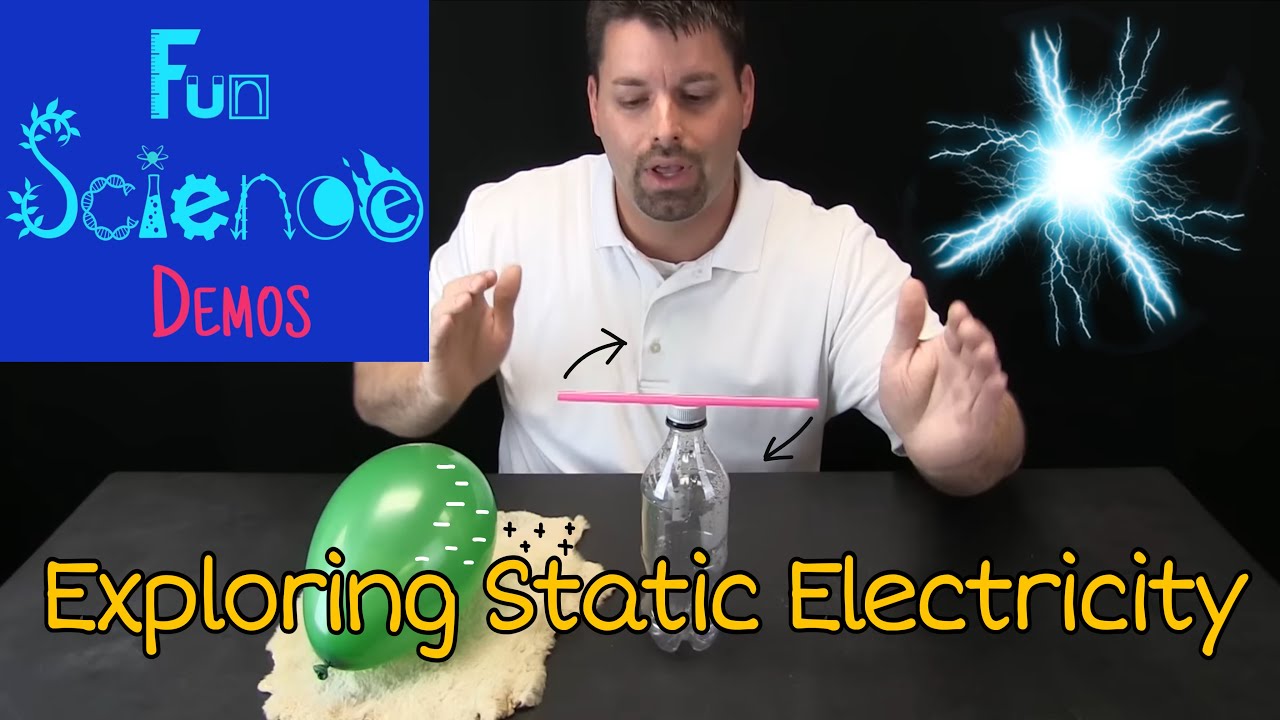
- 😀 The fourth experiment shows how a pipette, when placed over a bottle cap, moves due to static electricity.
- 😀 In the fifth experiment, a pencil is used to transfer static electricity to an eraser.
- 😀 The sixth experiment demonstrates how a paper, folded and attached to a sharp pen, reacts to static electricity.
- 😀 The video highlights how rubbing a pen with cloth causes it to attract objects.
- 😀 In the seventh experiment, the balloon is directed toward water, altering the water’s direction slightly due to static electricity.
- 😀 The eighth experiment uses a pen to attract a coin and a toothpick, showing how static can influence light objects.
- 😀 The experiments involve trial and error, with the video emphasizing the importance of patience and persistence.
- 😀 The video encourages viewers to try these experiments themselves, with an emphasis on the fun and patience needed to achieve results.
Q & A
What is the purpose of the video?
-The video demonstrates a series of static electricity experiments using everyday items to show how static electricity can affect different objects.
What items are needed for the experiments?
-The experiments require a balloon, cloth, a can, a plastic bottle, paper pipettes, a pen, a plastic glass, an eraser, toothpicks, and coins.
How does static electricity make the balloon stick to a wall?
-By rubbing the balloon against a cloth, static electricity builds up, which makes the balloon attract the wall, causing it to stick.
What happens when the balloon is placed near a hand?
-When the balloon is brought near the hand, it will stick to the hand due to the static charge it carries.
What occurs when the pipettes are placed over a plastic bottle cap?
-The pipettes move when placed over the plastic bottle cap, indicating the presence of static electricity and its effect on the objects.
What is the significance of using the pen and eraser in the experiment?
-The pen is charged by rubbing it against a cloth, and when placed near the eraser, the static electricity makes the pen move.
What does folding the paper and attaching it to the pen demonstrate?
-Folding the paper and attaching it to the pen demonstrates how static electricity can influence objects with small mass, causing them to move.
Why does the balloon change the direction of the water in the experiment?
-The balloon, when rubbed to generate static electricity, creates a charge that influences the flow of water, slightly altering its direction.
Why did the final experiment with the coin and toothpick fail at first?
-The initial attempt failed because the static electricity setup didn't generate enough charge to balance the coin and toothpick correctly under the plastic cup.
What caused the final experiment to succeed after multiple attempts?
-The final success was due to a different pen being used to charge the static, which successfully balanced the coin and toothpick under the plastic cup.
Outlines

This section is available to paid users only. Please upgrade to access this part.
Upgrade NowMindmap

This section is available to paid users only. Please upgrade to access this part.
Upgrade NowKeywords

This section is available to paid users only. Please upgrade to access this part.
Upgrade NowHighlights

This section is available to paid users only. Please upgrade to access this part.
Upgrade NowTranscripts

This section is available to paid users only. Please upgrade to access this part.
Upgrade NowBrowse More Related Video




5.0 / 5 (0 votes)
