June 4 1942 Battle Of Midway From The Japanese Perspective military history
Summary
TLDRThe Battle of Midway, a pivotal turning point in World War II, saw the Japanese Navy's supreme confidence crumble. Despite months of unbroken success, the Japanese fleet, led by Commander Tairo Aayoki aboard the Akagi, was doomed by overconfidence, flawed strategic planning, and critical indecision. The Japanese underestimated American intelligence and strength, leading to a disastrous series of events. Within hours, Japan lost four carriers and over 3,000 men, marking the end of its offensive power and the beginning of a challenging war of attrition in the Pacific, which the U.S. would dominate.
Takeaways
- 😀 The Japanese fleet, led by Vice Admiral Chuichi Nagumo, was highly confident after a series of successful victories, including the attack on Pearl Harbor and a relentless campaign across the Pacific.
- 😀 The Japanese fleet was built around six powerful aircraft carriers, considered the best in the world, with highly skilled aviators who had never been defeated.
- 😀 Victory disease set in, leading Japanese leaders to become overconfident, dismissing risks, and assuming that their success was inevitable.
- 😀 Admiral Isoroku Yamamoto was concerned about Japan's ability to win the war in the long term, especially after the American aircraft carriers escaped Pearl Harbor.
- 😀 Operation MI, aimed at invading Midway Island, was designed to trap the American fleet, but it was based on flawed assumptions, including overconfidence in secure communication codes and underestimating American intelligence capabilities.
- 😀 The Americans had broken Japan's code, allowing them to anticipate the attack on Midway, enabling them to set a counter-trap with their own carriers.
- 😀 Japanese intelligence and reconnaissance were unreliable, including a cancelled recon flight and late submarine deployments, which led to Japan sailing toward Midway unaware of the American fleet's movements.
- 😀 Admiral Nagumo's decision-making became a key flaw in the battle. He hesitated when to launch his strike, leading to confusion and a lack of coordination among his forces.
- 😀 The American torpedo bomber attacks, though largely unsuccessful, drew down the Japanese fighter patrols, leaving their carriers vulnerable to a devastating counterattack by American dive bombers.
- 😀 In a span of just five minutes, three of Japan's finest carriers (Akagi, Kaga, and Soryu) were sunk by American dive bombers, marking the turning point of the battle and the Pacific War.
Q & A
What was the main factor behind Japan's overconfidence before the Battle of Midway?
-The main factor behind Japan's overconfidence was the unbroken string of victories they had enjoyed since Pearl Harbor, which led to the belief that their pilots were naturally superior, and that their fighting spirit and plans were flawless.
How did Japan's strategic overconfidence contribute to the failure of the Midway operation?
-Japan's overconfidence led to a failure in recognizing key risks, dismissing warnings, and underestimating the enemy. This arrogance influenced their strategic planning, especially in relying on surprise and assuming that the American fleet was unaware of their plans.
Why was Admiral Yamamoto worried about Japan's position in the war despite their early successes?
-Yamamoto was concerned because he understood America's industrial power, having studied in the U.S. He knew that Japan had a limited window to secure a victory before America's industrial might could overwhelm them.
How did the U.S. intelligence and codebreakers impact the Japanese strategy at Midway?
-The U.S. Navy had broken Japan's main naval code, JN25, allowing them to predict the Japanese attack on Midway. This gave the U.S. a significant strategic advantage, as they could move their carriers into position before the Japanese attack began.
What were the key flaws in the Japanese plan for the Battle of Midway?
-The Japanese plan was overly complex, relying on multiple fleets spread across a vast area without adequate communication. It also underestimated the American response and depended too heavily on surprise, which was compromised by U.S. intelligence.
Why did Admiral Nagumo hesitate to launch a counterattack after the first American torpedo bombers were spotted?
-Nagumo hesitated because his training and doctrine demanded a fully coordinated strike with fighter escorts. He chose to wait for a more organized response, but this delay proved fatal as the American attack arrived sooner than expected.
What role did the torpedo bombers play in the American counterattack at Midway?
-The torpedo bombers, although largely ineffective in terms of damage, played a crucial role by diverting the Japanese fighters away from their defensive positions, opening the way for the dive bombers to strike the Japanese carriers unchallenged.
What was the significance of the attack by American dive bombers on the Japanese carriers at 10:20 AM?
-At 10:20 AM, American dive bombers launched a surprise attack on the Japanese carriers while they were at their most vulnerable, resulting in devastating damage. Three of Japan's four carriers, including the Akagi, Kaga, and Soryu, were severely crippled or destroyed in a matter of minutes.
How did the Japanese response to the American dive bombers affect the outcome of the battle?
-The Japanese response was slow and disorganized. The flight decks were cluttered with planes being rearmed, which made the carriers especially vulnerable. Their lack of readiness to respond to the dive bomber attack resulted in catastrophic losses.
Why did Japan fail to recover from the defeat at Midway despite the later counterattacks by the Hiryu?
-While the Hiryu launched a counterattack and damaged the USS Yorktown, the earlier losses of three carriers left Japan's naval power irreparably weakened. The Hiryu was eventually sunk by American bombers, and the loss of four carriers, along with experienced personnel, ended Japan’s ability to launch large-scale offensive operations in the Pacific.
Outlines

This section is available to paid users only. Please upgrade to access this part.
Upgrade NowMindmap

This section is available to paid users only. Please upgrade to access this part.
Upgrade NowKeywords

This section is available to paid users only. Please upgrade to access this part.
Upgrade NowHighlights

This section is available to paid users only. Please upgrade to access this part.
Upgrade NowTranscripts

This section is available to paid users only. Please upgrade to access this part.
Upgrade NowBrowse More Related Video
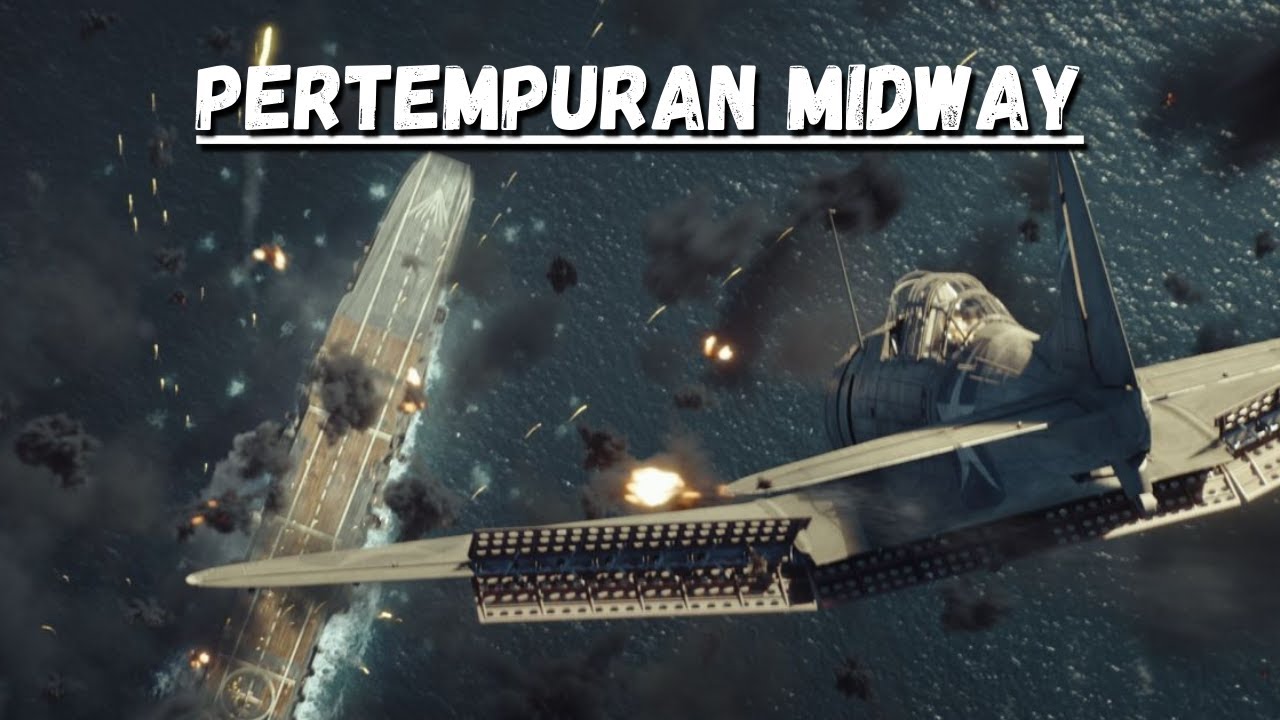
PERTEMPURAN MIDWAY 4 JUNI 1942 // AWAL KEKALAHAN JEPANG DI PASIFIK // DETEKTIF SEJARAH
Pertempuran Laut Terbesar Sepanjang Sejarah dalam Battle of Leyte Gulf
World War II (short version)

Battle of Singapore: Japan vs British - Animated History
Battle of the Java Sea

PERANG DUNIA II - FRONT ASIA PASIFIK l (KELOMPOK 7)
5.0 / 5 (0 votes)
