How Grab became a tech giant (CEO Anthony Tan) | Rapid Response
Summary
TLDRIn this interview, Anthony Tan, CEO of Grab, discusses the company's journey from a ride-sharing platform to Southeast Asia's leading super app. He talks about overcoming challenges like competition with Uber, implementing AI, and fostering a culture of humility and hunger within Grab. Tan emphasizes Grab's commitment to sustainability, the importance of local solutions, and the company's efforts to provide jobs and drive economic growth. He also highlights the role of generative AI in enhancing customer experience and the future potential of electric and autonomous vehicles in Southeast Asia. Ultimately, Grab's success lies in its ability to innovate while balancing business, social, and environmental responsibility.
Takeaways
- 😀 Grab started as a ride-sharing platform in 2012 but evolved into Southeast Asia's largest 'super app,' offering services like food delivery, financial services, and more.
- 😀 Anthony Tan, CEO of Grab, emphasizes balancing fierceness and humility, referring to the lion and lamb metaphor to describe leadership.
- 😀 Grab's success lies in solving hyper-local problems, like safety for women and children in rides and providing financing for drivers without smartphones.
- 😀 The company’s fintech business has grown significantly, leveraging data to create credit scores for lending, allowing Grab to better price risks and collect payments.
- 😀 Despite geopolitical tensions and economic challenges, Grab has managed to weather economic downturns by expanding supply and reducing prices, benefiting both customers and drivers.
- 😀 Grab operates in over eight countries across Southeast Asia, with a focus on both short-term profitability and long-term sustainability, including their goal to be carbon-neutral by 2040.
- 😀 Anthony explains the importance of 'Kaizen' (improvement) and 'Kaaku' (step-change), as they aim to use AI to transform Grab into a more efficient and innovative company.
- 😀 A company-wide pause was implemented to upskill employees on AI, creating a shift in mindset where 80% of employees who were initially fearful of AI, ended up embracing it and seeing its value.
- 😀 Grab is using generative AI to create empathetic solutions for merchants, including an AI assistant that boosts sales and provides emotional support, especially for struggling businesses.
- 😀 Grab’s relationship with Uber shifted from fierce competition to collaboration after acquiring Uber's Southeast Asia business. This highlights the potential benefits of partnerships even with previous competitors.
- 😀 Grab is cautious about autonomous vehicles in Southeast Asia, recognizing that the region's road infrastructure and labor costs require a longer ramp-up time for AVs. They focus on upskilling drivers and integrating them into the autonomous vehicle ecosystem.
Q & A
What does Anthony Tan mean by the concept of a 'super app' in the context of Grab?
-Anthony Tan defines a 'super app' as an app that offers multiple services in one platform. Grab began by solving specific local problems like safety for rides, then expanded into services like fintech and payment systems to meet the needs of drivers and customers in Southeast Asia.
How did Grab use its data advantage in the fintech sector?
-Grab's fintech success comes from collecting vast amounts of data from its services. This data is used to create a comprehensive credit score system across 100 data points, allowing Grab to price risk better and collect repayments more efficiently.
How does Grab adapt to the challenging geopolitical environment and economic conditions?
-Despite geopolitical tensions and economic challenges, Grab focuses on cushioning the impact on employment. By offering drivers and merchants the flexibility to join quickly, Grab has been able to maintain supply and reduce surge pricing, benefiting both customers and drivers.
What is the 'Kaizen' philosophy that Grab follows, and how does it relate to AI development?
-The 'Kaizen' philosophy at Grab refers to the principle of continuous improvement, striving to be 1% better every day. This mindset is extended to AI development, where Grab aims to leverage generative AI to make transformative changes to the business.
What was the purpose behind Grab’s company-wide 'cyberization' initiative?
-The 'cyberization' initiative was meant to upskill Grab's employees in generative AI. Over a 9-week sprint, employees from all areas of the company, regardless of background, learned how AI could enhance their work, shifting mindsets and developing practical AI solutions.
How did Grab integrate AI into its platform for merchant support?
-Grab developed an AI-powered merchant assistant that helps merchants with sales, photo edits, business strategy, and even emotional support, offering empathetic responses to challenges like tough business times.
Why did Grab choose to partner with multiple AI companies, like OpenAI and Anthropic?
-Grab partners with multiple AI companies to find the best solutions for specific tasks. They work with OpenAI to enhance accessibility for visually impaired users and leverage multiple AI technologies to ensure the best outcomes for their diverse needs.
How did Grab outmaneuver Uber in Southeast Asia?
-Grab’s success in Southeast Asia was due to its hyper-localized approach. For example, Grab developed its own mapping system to better cater to the region’s unique road infrastructure, which gave it a competitive advantage over Uber, which relied on third-party maps.
What role does sustainability, particularly electric vehicles (EVs), play in Grab's future plans?
-Sustainability is critical for Grab’s future, especially with the goal of becoming carbon-neutral by 2040. Grab is investing in electric vehicles (EVs) and working with governments to build the necessary infrastructure, which includes not only EV cars but also electric motorbikes and personal mobility devices.
What is Grab's cautious approach to autonomous vehicles (AVs), and why?
-Grab is cautious about deploying autonomous vehicles in Southeast Asia due to the region’s challenging road infrastructure and lower labor costs. While experimenting with AVs, Grab is focused on creating new job opportunities for drivers in this evolving landscape.
Outlines

This section is available to paid users only. Please upgrade to access this part.
Upgrade NowMindmap

This section is available to paid users only. Please upgrade to access this part.
Upgrade NowKeywords

This section is available to paid users only. Please upgrade to access this part.
Upgrade NowHighlights

This section is available to paid users only. Please upgrade to access this part.
Upgrade NowTranscripts

This section is available to paid users only. Please upgrade to access this part.
Upgrade NowBrowse More Related Video

The Rise of Grab: How I built a $2 billion a year super app

Want to Succeed in Business? Find a Problem to Solve | Anthony Tan and Amane Dannouni | TED

Zillow CEO on Housing Market, Rentals and Fed Rate Cuts

Bitcoin Rewards & Banking. Fold App is bridging the gap!
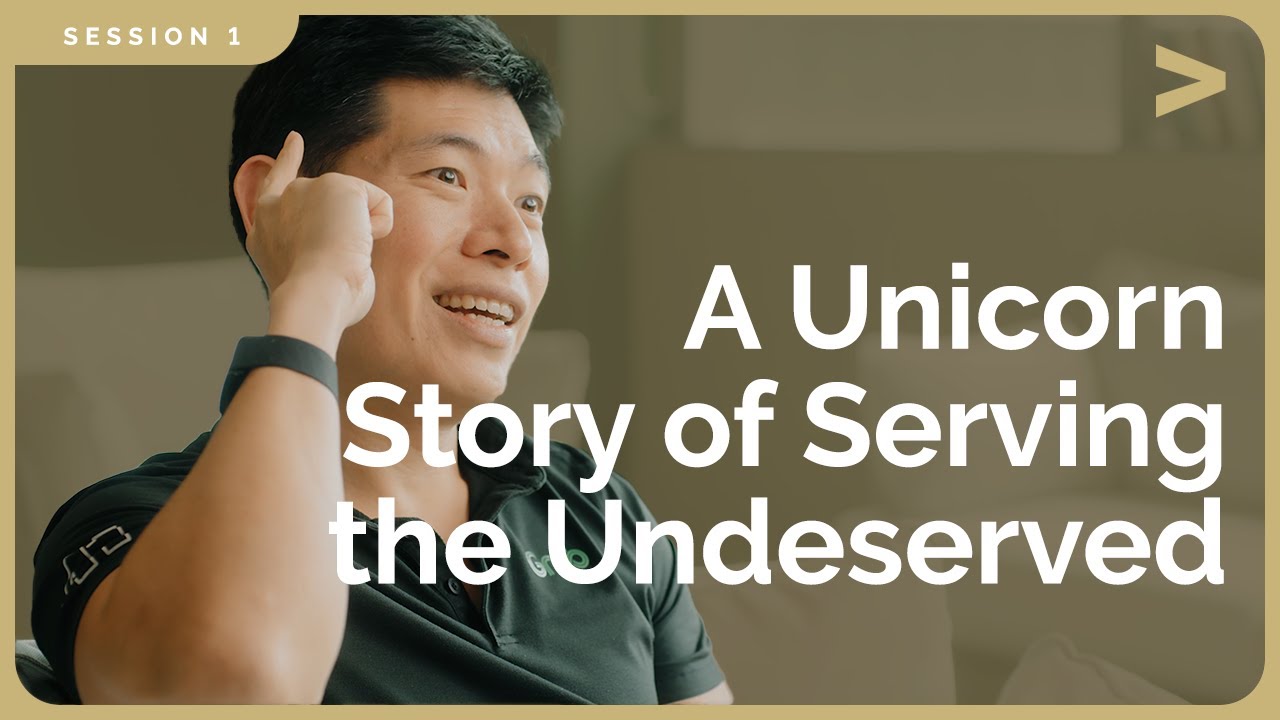
Excellence Matters | Serving 9 Million Entrepreneurs | Anthony Tan

Jane Sun, Trip.com: What AI Means for Travel
5.0 / 5 (0 votes)
