How to use Elliott Wave with Fibonacci
Summary
TLDRThis video combines Elliott Wave Theory (EWT) with Fibonacci analysis to help traders forecast market movements. The script explores key Fibonacci retracement and extension levels, such as 50%, 100%, and 161.8%, and their relevance in identifying impulsive and corrective waves. The content guides viewers through practical applications, showing when and how to use Fibonacci tools to validate wave projections. Additional methods like Fibonacci fans and channels are introduced for a more precise market analysis. Overall, the video offers a detailed, hands-on approach to integrating Fibonacci with Elliott Wave for improved trading strategies.
Takeaways
- 😀 Elliott Wave basics are essential: understand swing highs/lows, accumulation/distribution, and corrective vs impulsive waves.
- 😀 L2G/Electric Wave rules should be mastered to accurately identify wave patterns and count structures.
- 😀 Fibonacci tools act as measurement instruments for price movements, not time.
- 😀 Key Fibonacci ratios include 50%, 100%, and 161.8%, each serving different purposes for wave analysis.
- 😀 50% retracement is typically used for corrective waves like Wave 2 or Wave 4, but exceptions exist.
- 😀 100% extension helps project the maximum target of Wave 5, especially when Wave 3 is shorter than Wave 1.
- 😀 161.8% extension distinguishes impulsive motif waves from corrective waves; less than this usually indicates an ABC correction.
- 😀 Fibonacci channels, fans, and pens are useful for alternative projections, especially when waves deviate from standard angles.
- 😀 Impulsive waves generally move around a 45° angle; steeper or flatter waves may indicate weakness or corrective behavior.
- 😀 Clustering Fibonacci levels (like 0.618, 1.0, 1.618) helps predict wave completion and potential reversal points.
- 😀 Confirmation of wave type should always cross-check with wave structure; Fibonacci ratios indicate tendencies, not certainties.
- 😀 Combining Elliott Wave, Fibonacci tools, trend indicators, and momentum indicators improves accuracy and provides multiple layers of analysis.
Q & A
What is the purpose of combining Elliott Wave theory with Fibonacci analysis?
-The combination of Elliott Wave theory and Fibonacci analysis helps in predicting potential price targets, understanding wave structures, and confirming whether the market is moving impulsively or correcting. Fibonacci ratios provide critical levels for confirming wave patterns, such as corrective or impulse waves.
What is the significance of the 50% Fibonacci level in Elliott Wave analysis?
-The 50% Fibonacci level is often used to target corrective waves, particularly wave 4 (W4). It's a common level for retracements in corrective waves, though it doesn't guarantee the price will always stop at this level.
How do Fibonacci ratios like 161.8% help in confirming the type of wave?
-The 161.8% Fibonacci extension is commonly used to identify whether a wave is impulsive (a part of a strong trend) or corrective. If the wave extends beyond this level, it's likely an impulsive wave; if not, it may be part of a corrective structure.
Why is it important to use Fibonacci for both retracement and projection in Elliott Wave analysis?
-Fibonacci retracement levels help identify potential reversal points in corrective waves, while Fibonacci extensions project where the next impulse waves may end. Both tools together provide a comprehensive framework for anticipating price movement and trend continuation.
What role do momentum indicators like MACD and Stochastic Oscillator play in the analysis?
-Momentum indicators, such as MACD and Stochastic Oscillator, are used to measure the strength of price movements and help confirm whether a wave is impulsive or corrective. These indicators support the interpretation of price behavior and provide extra validation for wave patterns.
Can Fibonacci ratios always guarantee precise wave predictions?
-No, Fibonacci ratios are guidelines based on common market behavior, but they don't guarantee exact outcomes. While certain levels (like 50% or 161.8%) are frequently observed, price action can deviate from these levels due to market volatility and other factors.
What does it mean when an impulse wave does not reach the expected Fibonacci level, such as the 161.8% extension?
-When an impulse wave does not reach the expected 161.8% Fibonacci extension, it suggests the wave might not be an impulse wave after all. This discrepancy could indicate a need to reassess the wave count or structure, possibly identifying it as part of a larger corrective move.
How can Fibonacci Channel be used in conjunction with Elliott Wave theory?
-Fibonacci Channel is used to measure price movement by drawing parallel lines to the Fibonacci retracement levels. This helps in projecting price targets and understanding the behavior of wave 3 and wave 5 in Elliott Wave analysis. The Fibonacci Channel provides additional context to confirm wave projections.
What does the use of Fibonacci fans indicate in Elliott Wave analysis?
-Fibonacci fans are used to identify potential areas of support or resistance based on Fibonacci ratios. They are typically applied to validate whether a wave is following the expected price trajectory and can be used to spot potential reversal points.
What are the implications when an Elliott Wave pattern doesn’t follow the expected structure according to Fibonacci levels?
-If an Elliott Wave pattern does not adhere to the expected Fibonacci levels, it suggests that the analysis might need to be revised. This could mean the wave count is incorrect, or the market behavior is not following typical patterns, indicating a possible change in trend or structure.
Outlines

Этот раздел доступен только подписчикам платных тарифов. Пожалуйста, перейдите на платный тариф для доступа.
Перейти на платный тарифMindmap

Этот раздел доступен только подписчикам платных тарифов. Пожалуйста, перейдите на платный тариф для доступа.
Перейти на платный тарифKeywords

Этот раздел доступен только подписчикам платных тарифов. Пожалуйста, перейдите на платный тариф для доступа.
Перейти на платный тарифHighlights

Этот раздел доступен только подписчикам платных тарифов. Пожалуйста, перейдите на платный тариф для доступа.
Перейти на платный тарифTranscripts

Этот раздел доступен только подписчикам платных тарифов. Пожалуйста, перейдите на платный тариф для доступа.
Перейти на платный тарифПосмотреть больше похожих видео

Elliott Waves & Fibonacci Retracement / Extension - Ep. 38 | Trading MasterClass 2.0
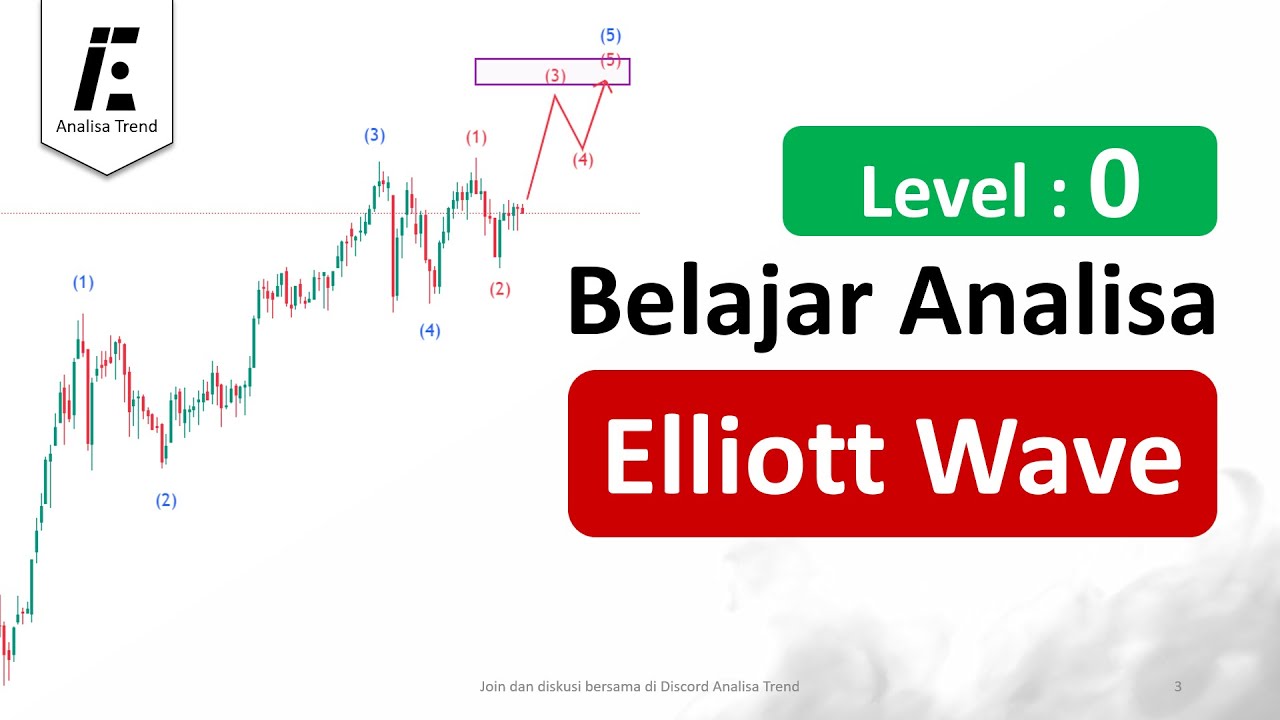
Belajar Analisa Elliott Wave level 0 | mengenal elliott wave

Elliott Wave Part 3 || Strategi Analisa

The ONLY Elliott Wave Theory Trading Guide You’ll Ever Need

The Simplest Way to Use & Trade Elliott Waves (Changes Everything...)

Ethereum Support and Resistance Levels: Latest Elliott Wave Forecast for ETH and Microstructure
5.0 / 5 (0 votes)

