Why Millennials Are Confused by Gen Z (It’s Deeper Than You Think)
Summary
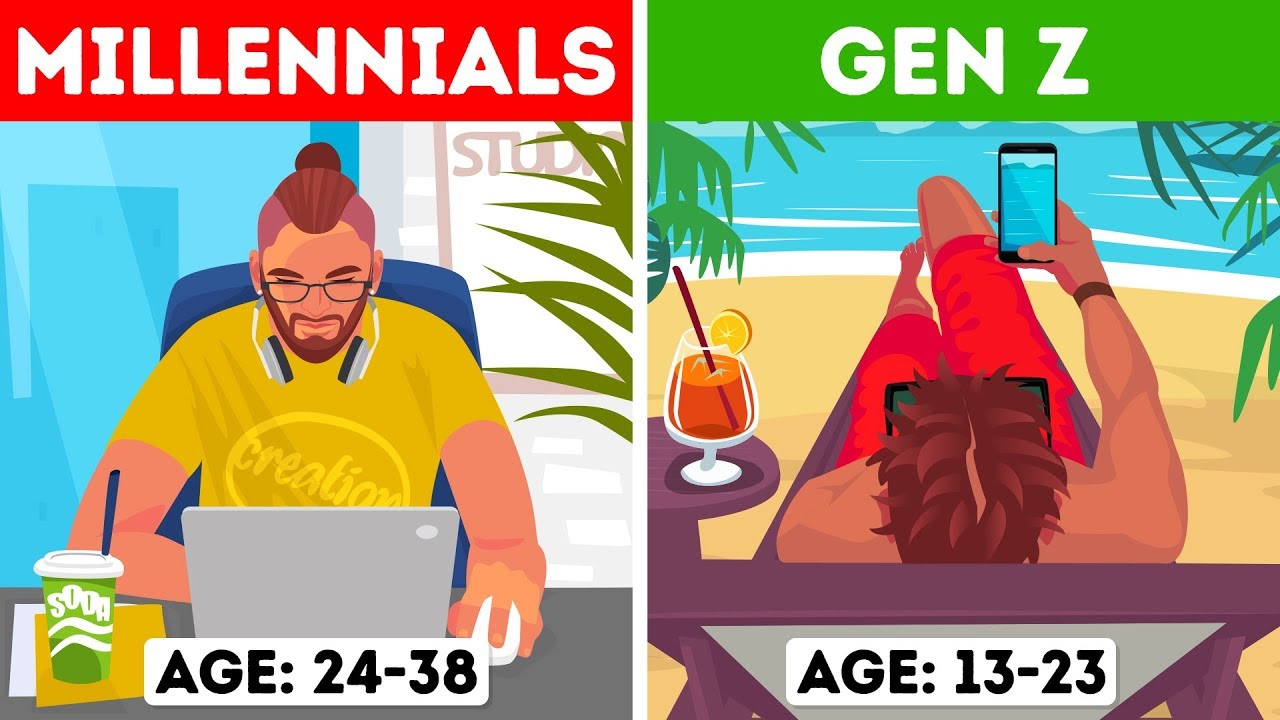
TLDRThis script explores the psychological divide between Millennials and Generation Z, moving beyond stereotypes to uncover how different historical, economic, and technological environments shaped their mindsets. While Millennials grew up transitioning from analog to digital life, Gen Z were born into constant connectivity, economic instability, and social media saturation. The video examines perceptions of Gen Z as more anxious, individualistic, and fragile, reframing these traits as adaptive responses to uncertainty and digital immersion. Ultimately, it argues that generational differences are not flaws, but context-driven psychological adaptations that reflect shifting societal realities and evolving definitions of identity, success, and well-being.
Takeaways
- 😀 Millennials grew up during the rise of the internet, with a mix of analog childhood and digital adulthood, while Gen Z was born into a fully digital world with constant connectivity.
- 😀 Millennials often perceive Gen Z as more anxious, sensitive, and individualistic, but these traits are shaped by different societal pressures and expectations.
- 😀 Gen Z experiences higher rates of anxiety and mental health challenges due to social media exposure, constant comparison, and evolving societal stressors.
- 😀 Gen Z values authenticity and emotional transparency, with mental health openness seen as honesty rather than weakness, contrasting with Millennials' more suppressed approach.
- 😀 Gen Z's individualism is rooted in growing up in a world of uncertainty, where personal identity and self-authorship have become central due to economic instability and political fragmentation.
- 😀 While Millennials value collaboration and teamwork, Gen Z prefers independence, clear expectations, and rapid feedback, reflecting their different learning and work styles.
- 😀 Millennials prioritize work-life balance and purpose-driven careers, while Gen Z takes it further by prioritizing mental health, well-being, and personal autonomy over financial success.
- 😀 Gen Z tends to embrace flexible career paths like freelancing and entrepreneurship, rejecting rigid corporate structures in favor of autonomy and internal satisfaction.
- 😀 Gen Z processes information socially and collaboratively, using community networks to interpret knowledge, which contrasts with Millennials' more individual approach to research and learning.
- 😀 Gen Z's family and relationship dynamics differ from Millennials, with a preference for non-traditional household structures and a stronger emphasis on direct communication and personal boundaries.
- 😀 Stereotypes like Gen Z being fragile or self-centered miss the psychological truth: these traits reflect adaptive responses to a rapidly changing, uncertain world rather than weaknesses or flaws.
Q & A
Why do millennials see Gen Z as more anxious and sensitive?
-Millennials often perceive Gen Z as more anxious due to the higher rates of anxiety and mental health challenges that Gen Z reports. This perception is fueled by constant social media exposure, digital comparison culture, and evolving stressors unique to Gen Z, such as economic instability and political fragmentation.
How does Gen Z's approach to individualism differ from millennials?
-While millennials value a sense of community and collective collaboration, Gen Z tends to prioritize personal identity, autonomy, and self-authorship. Gen Z's individualism is a response to growing up in a world of uncertainty, where traditional institutions have less influence, and personal branding and direct action are emphasized.
What is the primary difference between millennials and Gen Z when it comes to career values?
-Millennials prioritize work-life balance, creativity, and meaning in their careers. In contrast, Gen Z places higher importance on mental well-being, life satisfaction, and autonomy, often opting for gig work, freelance opportunities, or entrepreneurship rather than traditional corporate roles.
Why do millennials sometimes perceive Gen Z as less committed?
-Millennials interpret Gen Z's career flexibility and rejection of traditional job structures as a lack of commitment. However, for Gen Z, this reflects a desire for authenticity, value alignment, and work that supports their well-being, rather than an unwillingness to commit.
How has social media influenced Gen Z's mental health compared to millennials?
-Gen Z has grown up with constant connectivity, which has contributed to higher rates of anxiety, stress, and social comparison. Unlike millennials, who experienced a more gradual introduction to social media, Gen Z faces unique challenges such as digital oversaturation and unrealistic standards set by social platforms.
What are the psychological differences in how millennials and Gen Z process information?
-Millennials typically process information individually, seeking deep, linear understanding. Gen Z, on the other hand, processes knowledge socially through digital platforms, valuing community learning and shared understanding over solitary, in-depth research.
Why do millennials sometimes view Gen Z's emotional transparency as vulnerability?
-Millennials grew up in a culture where mental health wasn't as openly discussed, so Gen Z's willingness to share emotions, anxiety, and vulnerabilities may seem excessive or fragile to them. However, Gen Z views this openness as a form of honesty and self-awareness rather than weakness.
How has the economic context shaped the differences between millennials and Gen Z?
-Millennials entered adulthood during a period of economic growth, which encouraged optimism, community-oriented values, and a focus on meaningful careers. In contrast, Gen Z came of age during economic instability, recessions, and the COVID-19 pandemic, which fostered a more pragmatic, security-driven approach to life and work.
What does the preference for independent work among Gen Z reflect?
-Gen Z’s preference for independent work, clear expectations, and rapid feedback stems from a desire for autonomy and a more flexible, results-driven approach to work. This preference contrasts with millennials, who value teamwork, collaboration, and mentorship in professional environments.
Why do millennials and Gen Z differ in their views on family structures?
-Millennials grew up in more traditional nuclear family structures, while Gen Z tends to embrace more diverse family dynamics, such as multi-generational living or cohabitation. These differences reflect economic pressures like high housing costs and delayed financial independence, which shape Gen Z's relationship to family and long-term commitments.
Outlines

Этот раздел доступен только подписчикам платных тарифов. Пожалуйста, перейдите на платный тариф для доступа.
Перейти на платный тарифMindmap

Этот раздел доступен только подписчикам платных тарифов. Пожалуйста, перейдите на платный тариф для доступа.
Перейти на платный тарифKeywords

Этот раздел доступен только подписчикам платных тарифов. Пожалуйста, перейдите на платный тариф для доступа.
Перейти на платный тарифHighlights

Этот раздел доступен только подписчикам платных тарифов. Пожалуйста, перейдите на платный тариф для доступа.
Перейти на платный тарифTranscripts

Этот раздел доступен только подписчикам платных тарифов. Пожалуйста, перейдите на платный тариф для доступа.
Перейти на платный тарифПосмотреть больше похожих видео


5.0 / 5 (0 votes)

