La CLAVE para pronunciar los verbos REGULARES en INGLÉS
Summary
TLDRIn this English class, the instructor focuses on improving pronunciation of regular verbs in the past tense, a key challenge for non-native speakers. He explains that the ending sound of a verb determines whether the past tense is pronounced with /t/, /d/, or /ɪd/, using clear examples to distinguish between 'voiceless' and 'vibrated' sounds. Through step-by-step guidance and practical exercises, viewers learn to correctly pronounce common verbs like 'walk,' 'kiss,' 'enjoy,' and 'start.' The lesson emphasizes daily practice, careful listening, and the subtle differences that make speech sound more natural, helping learners avoid common mistakes and sound more like native speakers.
Takeaways
- 😀 Pronunciation in English is crucial, especially for regular verbs in the past tense, as it reveals whether a speaker is a native or a learner.
- 😀 Regular verbs in the past have three possible endings: /d/, /t/, and /ɪd/ (ed), depending on the final sound of the verb.
- 😀 The final sound of the verb determines the correct past tense pronunciation, not the spelling of the word.
- 😀 Verbs ending in a 'voiceless' sound (like /k/, /p/, /s/) use the /t/ ending in past tense pronunciation.
- 😀 Voiceless sounds do not vibrate when pronounced, and the past tense /t/ should be pronounced lightly, not overly stressed.
- 😀 Verbs ending in 'voiced' sounds (like /b/, /g/, /v/) use the /d/ ending in past tense pronunciation.
- 😀 Voiced sounds vibrate when pronounced, and the /d/ ending should blend smoothly with the verb.
- 😀 Verbs ending in /t/ or /d/ sounds require the /ɪd/ (ed) ending to make pronunciation clear and distinct.
- 😀 Examples of voiceless verbs include 'walked', 'kissed', and 'watched', while voiced examples include 'answered', 'believed', and 'enjoyed'.
- 😀 Correct pronunciation of regular past tense verbs requires identifying the verb’s final sound, not guessing from spelling, to sound more natural in English.
Q & A
What is the main focus of this English class?
-The main focus is on pronunciation, specifically on correctly pronouncing regular verbs in the past tense in English.
Why are regular verbs in the past tense considered a 'neuralgic point' in pronunciation?
-Because incorrect pronunciation of these verbs immediately signals to native speakers that someone is a non-native English speaker or still learning English.
How many types of pronunciations exist for regular verbs in the past tense?
-There are three types of pronunciations: verbs ending with a 'd' sound, verbs ending with a 't' sound, and verbs ending with an 'ed' sound pronounced as /ɪd/.
How can you determine which pronunciation a regular verb should take in the past tense?
-You determine it by analyzing the final sound of the verb in its base form. If the final sound is voiced, use /d/; if it is voiceless, use /t/; if it ends in /t/ or /d/ sound, use /ɪd/.
Can you give an example of a verb that ends with a voiceless sound and how it is pronounced in past tense?
-Yes. The verb 'walk' ends with a voiceless sound /k/, so in the past tense it is pronounced 'walked' with a /t/ sound at the end: /wɔːkt/.
Can you give an example of a verb that ends with a voiced sound and how it is pronounced in past tense?
-Yes. The verb 'believe' ends with a voiced sound /v/, so in the past tense it is pronounced 'believed' with a /d/ sound at the end: /bɪˈliːvd/.
What is the pronunciation rule for verbs that end with /t/ or /d/ sounds?
-For verbs ending in /t/ or /d/ sounds, the past tense adds an extra syllable /ɪd/. For example, 'start' becomes 'started' /ˈstɑːrtɪd/.
Why should learners avoid adding extra emphasis when pronouncing past tense endings?
-Because overemphasizing the ending can make the pronunciation unnatural. For example, saying 'walk-ted' is incorrect; it should be 'walked' with a subtle /t/ sound.
How does understanding vibration in sounds help with past tense pronunciation?
-Vibration (voiced vs voiceless) helps determine whether the verb ending should be pronounced as /d/ (voiced) or /t/ (voiceless), ensuring correct pronunciation.
What practical method does the instructor suggest for mastering past tense pronunciation?
-The instructor suggests listening to the final sound of the base verb, identifying if it is voiced or voiceless, and practicing the corresponding /d/, /t/, or /ɪd/ ending while slightly reducing the intensity of the final consonant.
Why is practicing these pronunciation rules important for learners?
-Because correct past tense pronunciation helps learners sound more natural in English and reduces the likelihood of being immediately recognized as a non-native speaker.
Can you give examples of regular verbs with their past tense endings for each pronunciation type?
-Yes. Voiceless /t/: 'walk' → 'walked'; Voiced /d/: 'enjoy' → 'enjoyed'; Ending in /t/ or /d/ → 'start' → 'started'.
Outlines

このセクションは有料ユーザー限定です。 アクセスするには、アップグレードをお願いします。
今すぐアップグレードMindmap

このセクションは有料ユーザー限定です。 アクセスするには、アップグレードをお願いします。
今すぐアップグレードKeywords

このセクションは有料ユーザー限定です。 アクセスするには、アップグレードをお願いします。
今すぐアップグレードHighlights

このセクションは有料ユーザー限定です。 アクセスするには、アップグレードをお願いします。
今すぐアップグレードTranscripts

このセクションは有料ユーザー限定です。 アクセスするには、アップグレードをお願いします。
今すぐアップグレード関連動画をさらに表示
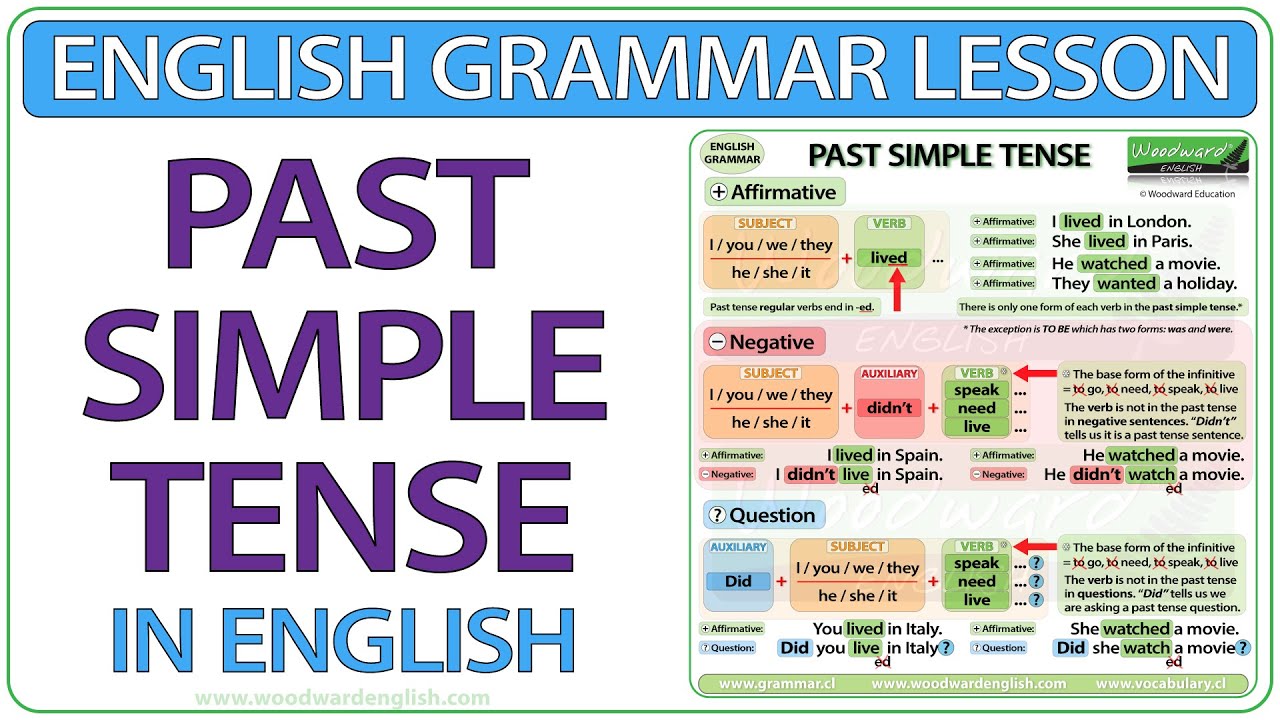
Past Simple Tense in English - Regular and Irregular Verbs Grammar lesson

SIMPLE PAST: aprenda a falar sobre o PASSADO em inglês (DID) | Aula 06 - English in Brazil

Lesson 10: Simple Past

Simple Past: Como não errar mais o passado simples no inglês

How to Overcome Mother Tongue Influence & Speak English Confidently

SIMPLE PAST | Verbos Regulares
5.0 / 5 (0 votes)

