Маск готовится к катастрофе
Summary
TLDRElon Musk's recent project, Terafab, reveals his response to global instability, particularly surrounding Taiwan and its vital chip production. As China intensifies its focus on Taiwan, Musk is proactively building his own chip manufacturing capabilities to mitigate risks associated with Taiwan's geopolitical volatility. With the potential for a Chinese invasion disrupting global supply chains, Musk aims to create a self-sufficient ecosystem for Tesla and other ventures. Terafab reflects his strategy of vertical integration and independence, securing future technological dominance despite uncertain global tensions.
Takeaways
- 😀 Elon Musk's latest moves, including the TeraFab project, are rooted in his strategy to safeguard against potential global disruptions, especially the Taiwan-China conflict.
- 😀 The increasing dependence on Taiwan for semiconductor production, especially from companies like TSMC, creates significant risk to global economies in the event of conflict.
- 😀 The U.S. and China are both vying for control over crucial technologies, with China investing heavily to close the gap in semiconductor production but struggling to match Taiwan's capabilities.
- 😀 A potential blockade of Taiwan by China could lead to severe global economic consequences, as Taiwan produces 90% of the world's advanced chips.
- 😀 The global economy could lose up to $10 trillion in the first year of a Chinese military action against Taiwan, worse than the 2008 financial crisis and COVID pandemic combined.
- 😀 Musk's TeraFab project is his answer to the looming risks posed by reliance on Taiwan, aiming to create an independent supply chain for chips, specifically optimized for Tesla and AI.
- 😀 TeraFab aims to produce chips at a 2-nanometer process, which is even more advanced than TSMC's current best, signaling Musk's ambition to take chip production to the next level.
- 😀 The concept of 'sovereign AI' is emerging, where countries and corporations seek to build and control their own supply chains for chips and data centers, reducing external dependencies.
- 😀 Musk's approach mirrors his earlier success with the Gigafactory in Nevada, where he set out to produce more batteries than the entire world, showing his track record of disrupting industries with bold visions.
- 😀 The global shift towards 'sovereign AI' could create vast opportunities in construction, energy, and engineering, signaling a new economic era driven by self-reliance in technology production.
Q & A
Why is Elon Musk's latest decision considered a major move?
-Elon Musk's decision to invest billions into a semiconductor manufacturing project, which aims to produce advanced chips for Tesla, is considered significant because it positions him as potentially independent from Taiwan's chip production, a region highly sensitive to geopolitical tensions.
What role does Taiwan play in the global chip production industry?
-Taiwan is crucial in global chip production, as it manufactures 90% of the world’s most advanced semiconductors. Its leading company, TSMC, is the backbone of many technologies, including artificial intelligence, smartphones, and defense systems.
What is China's strategic interest in Taiwan?
-China's primary interest in Taiwan stems from the island's dominance in semiconductor manufacturing. China lacks the capability to produce advanced chips independently and sees Taiwan as critical to its technological and economic ambitions.
How does the potential Taiwan-China conflict impact the global economy?
-A conflict involving Taiwan could result in a disruption of global semiconductor supply chains, leading to significant economic losses. Analysts predict that a Chinese invasion or blockade of Taiwan could lead to a $10 trillion loss in the first year, which would be more devastating than both the 2008 financial crisis and the COVID-19 pandemic combined.
Why is China investing heavily in its own semiconductor capabilities?
-China has invested heavily in semiconductor manufacturing, but its efforts have been limited by a lack of access to advanced technology like EUV (Extreme Ultraviolet) machines, which are essential for creating cutting-edge chips. Despite billions in investment, Chinese companies like SMIC are still far behind Taiwan's TSMC in terms of technological capabilities.
What is the significance of the 2026 Chinese Five-Year Plan?
-The 2026 Five-Year Plan marks a shift in China's strategy. While the previous plan focused on self-sufficiency in semiconductor production, the 2026 plan emphasizes artificial intelligence (AI) and digital economy growth. This reflects China's recognition of its inability to create a full semiconductor supply chain and its pivot towards AI integration.
What is the 'Terafap' project, and how does it relate to Elon Musk's strategy?
-The 'Terafap' project is Elon Musk's initiative to create an independent semiconductor production line for Tesla and his other ventures. By producing chips in-house, Musk aims to reduce dependence on Taiwan, ensuring his companies' technological advancement even if geopolitical tensions disrupt global chip supply.
How does Elon Musk’s vertical integration approach help mitigate global risks?
-Musk’s vertical integration strategy involves creating an entirely self-sustaining ecosystem for his companies, including manufacturing chips, batteries, and even energy. This approach reduces reliance on external suppliers and minimizes the risks posed by potential disruptions in global supply chains, especially in light of geopolitical instability.
Why is Elon Musk’s focus on specialized chips rather than general-purpose chips significant?
-Musk’s focus on creating specialized chips, optimized for Tesla’s AI-driven autopilot and other specific tasks, makes them more efficient and energy-effective than general-purpose chips produced by companies like Nvidia. This approach mirrors Apple's strategy, ensuring maximum performance for Tesla’s specific needs.
What impact would a Chinese invasion of Taiwan have on global technology companies?
-A Chinese invasion of Taiwan would severely disrupt the global semiconductor supply chain, potentially rendering companies like Apple, Nvidia, and Google unable to manufacture their products. The consequences would include severe delays in AI development, smartphone production, and other critical technologies, with major economic fallout.
Outlines

このセクションは有料ユーザー限定です。 アクセスするには、アップグレードをお願いします。
今すぐアップグレードMindmap

このセクションは有料ユーザー限定です。 アクセスするには、アップグレードをお願いします。
今すぐアップグレードKeywords

このセクションは有料ユーザー限定です。 アクセスするには、アップグレードをお願いします。
今すぐアップグレードHighlights

このセクションは有料ユーザー限定です。 アクセスするには、アップグレードをお願いします。
今すぐアップグレードTranscripts

このセクションは有料ユーザー限定です。 アクセスするには、アップグレードをお願いします。
今すぐアップグレード関連動画をさらに表示
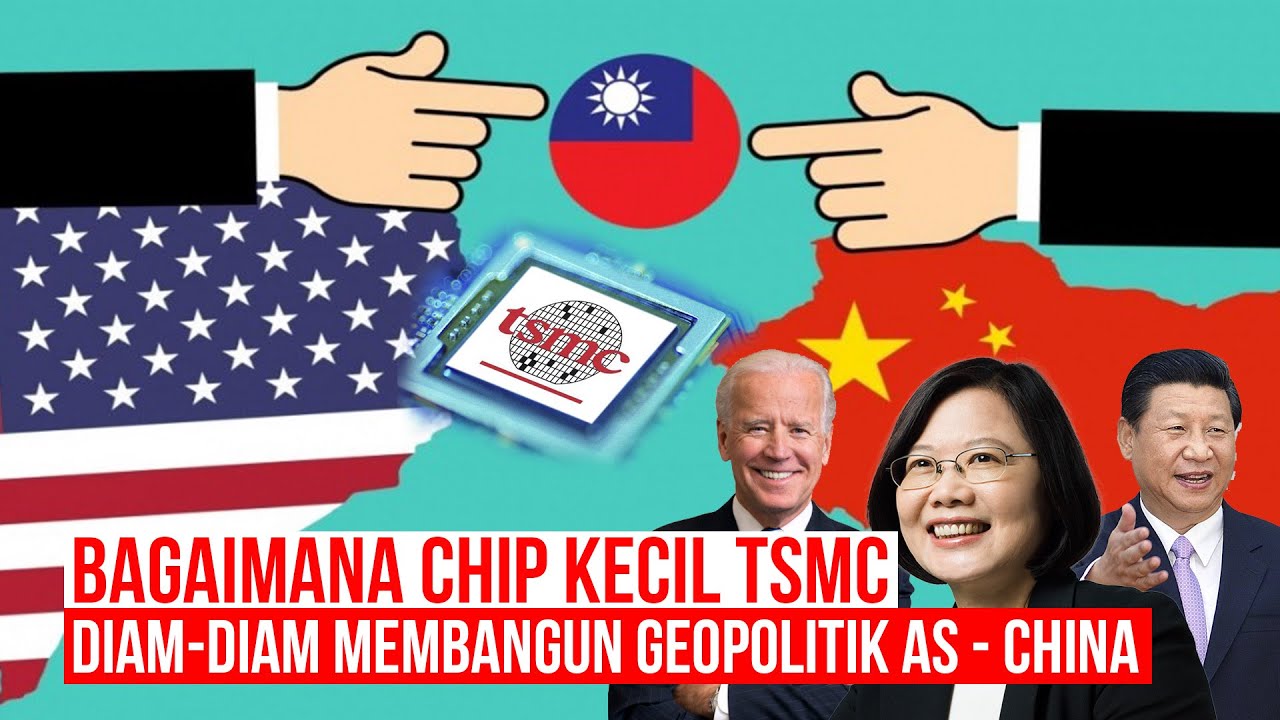
Chip Kecil TSMC Diam-diam Membangun Geopolitik AS - China - Taiwan, Bagiamana Semua ini Bermula?

Why China might invade Taiwan over microchips | If You’re Listening | ABC News In-depth

How an AI chip war could destroy the global economy | Chris Miller for The Freethink Interview

Elon Musk's Secret Baby Empire: 14 Kids, NDAs & Millions Paid for Silence | Firstpost America | N18G

Keir Starmer Responds to Elon Musk’s Explosive Claims!

The CHIPS Act: Made in America, again
5.0 / 5 (0 votes)

