Sejarah Perang Korea 1950 sampai 1953
Summary
TLDRThe Korean War, fought from June 25, 1950, to July 27, 1953, was a significant conflict between North and South Korea, with global implications as it became a proxy war between the U.S. and its allies, and the Soviet Union and China. Following Japan's defeat in WWII, Korea was divided into two zones, leading to the rise of conflicting ideologies. The war caused immense destruction and loss of life, with North Korea receiving support from communist powers, while South Korea was backed by the U.S. The war ended with an armistice, but the political and military tension between the two Koreas continues today.
Takeaways
- 😀 The Korean War, lasting from June 25, 1950 to July 27, 1953, was a civil conflict between North and South Korea, heavily influenced by Cold War rivalries.
- 😀 The war was a proxy battle between the Western bloc, led by the United States, and the Eastern bloc, led by the Soviet Union and China.
- 😀 After World War II, Korea was divided at the 38th parallel, with the Soviet Union controlling the North and the United States controlling the South, without consultation with Koreans themselves.
- 😀 The post-WWII division of Korea eventually led to the establishment of two separate governments in the North and South, one communist and the other democratic.
- 😀 The United Nations recognized South Korea as the legitimate government in 1948, while North Korea was backed by the Soviet Union but not internationally recognized.
- 😀 The Korean War began when North Korean forces crossed the 38th parallel into South Korea on June 25, 1950, leading to a UN resolution supporting military aid to South Korea.
- 😀 North Korea had superior military strength with a well-equipped and trained army, initially achieving major victories, while South Korea had fewer soldiers and weaker equipment.
- 😀 The United States intervened to assist South Korea, preventing North Korean forces from capturing the South and pushing back the invaders.
- 😀 The war caused immense destruction, especially in North Korea, with widespread bombing that devastated infrastructure and the economy.
- 😀 A ceasefire was agreed upon on July 27, 1953, although it was never a formal peace treaty, leaving the possibility of conflict reigniting at any time.
- 😀 The aftermath of the war led to differing political and economic paths for the two Koreas: North Korea prioritized military strength, while South Korea focused on industrial and economic development, resulting in more significant growth.
Q & A
What was the primary cause of the Korean War?
-The primary cause of the Korean War was the conflict between North and South Korea, which was influenced by the broader Cold War rivalry between the Soviet Union (supporting North Korea) and the United States (supporting South Korea).
When did the Korean War take place?
-The Korean War took place from June 25, 1950, to July 27, 1953.
How was Korea divided after World War II?
-After World War II, Korea was divided into two zones at the 38th parallel. The North was controlled by the Soviet Union and the South by the United States, without consulting the Korean people.
What event triggered the start of the Korean War?
-The war started when North Korean forces crossed the 38th parallel into South Korea on June 25, 1950, initiating a full-scale invasion.
How did the international community react to the North Korean invasion?
-The United Nations quickly passed Resolution 83, which recommended military support for South Korea. This led to direct military intervention by the United States and other UN member states.
What was the role of the Soviet Union and China during the Korean War?
-The Soviet Union supported North Korea, while China intervened on behalf of North Korea after UN forces advanced past the 38th parallel, providing troops and military support.
Why did the Korean War involve a Cold War proxy conflict?
-The Korean War was seen as a proxy conflict between the Western bloc (led by the United States and its allies) and the Eastern bloc (led by the Soviet Union and China) during the Cold War, with Korea becoming a battleground for ideological and geopolitical rivalry.
What significant event occurred in 1945 that influenced Korea's division?
-The significant event was the Potsdam Conference in 1945, where the Allies decided to divide Korea into two occupation zones after Japan's defeat in World War II, without consulting Korean leaders.
What was the impact of the Korean War on the civilian population?
-The Korean War caused devastating loss of life and widespread destruction. Both North and South Korea suffered significant civilian casualties and property damage due to continuous bombings and the fighting.
What were the economic and political impacts of the Korean War on the two Koreas?
-Economically, the war devastated both countries' infrastructure. Politically, it led to North Korea adopting a communist regime while South Korea became a democratic state, with significant differences in their political and economic systems.
Did the Korean War officially end with a peace treaty?
-No, the Korean War did not end with a peace treaty. Instead, a ceasefire agreement was signed on July 27, 1953, but the war technically never officially ended, leaving the two Koreas in a state of armistice.
Outlines

このセクションは有料ユーザー限定です。 アクセスするには、アップグレードをお願いします。
今すぐアップグレードMindmap

このセクションは有料ユーザー限定です。 アクセスするには、アップグレードをお願いします。
今すぐアップグレードKeywords

このセクションは有料ユーザー限定です。 アクセスするには、アップグレードをお願いします。
今すぐアップグレードHighlights

このセクションは有料ユーザー限定です。 アクセスするには、アップグレードをお願いします。
今すぐアップグレードTranscripts

このセクションは有料ユーザー限定です。 アクセスするには、アップグレードをお願いします。
今すぐアップグレード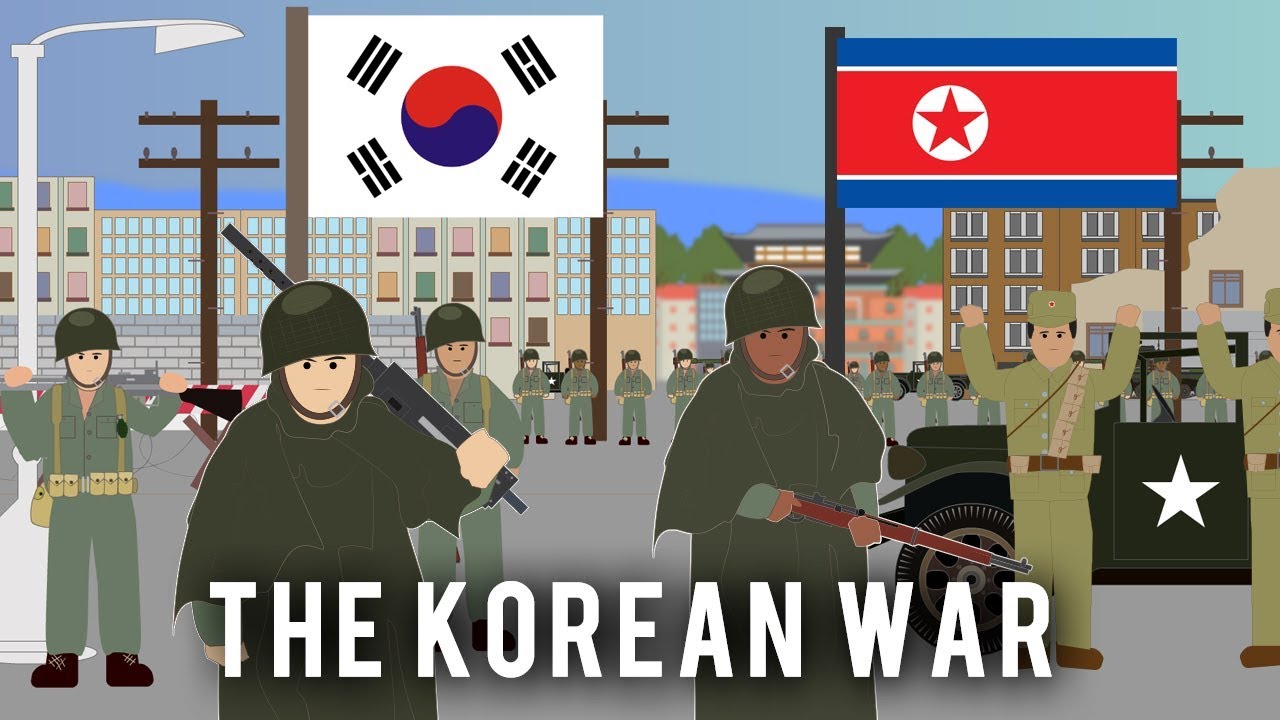


5.0 / 5 (0 votes)

