Trigonometry Explained Like You Are 5 Years Old
Summary
TLDRThis video demystifies trigonometry by explaining sine, cosine, and tangent in terms of real-world ratios rather than memorized formulas. Using right triangles, it shows how each function relates to the triangle's sides—sine for opposite over hypotenuse, cosine for adjacent over hypotenuse, and tangent for opposite over adjacent. It also covers inverse functions, allowing calculation of angles from side lengths. The video emphasizes understanding over memorization, highlighting practical applications like measuring heights, calculating ramp angles, or programming diagonal movement in games. By grasping these fundamental concepts, viewers gain a clear, lasting comprehension of how trigonometric functions work and when to use each one.
Takeaways
- 😀 Trigonometry is based on right triangles, where one angle is exactly 90°. The relationships between the sides of these triangles are what trig functions rely on.
- 😀 The three sides of a right triangle are the hypotenuse (longest side), opposite side (opposite the chosen angle), and adjacent side (next to the chosen angle).
- 😀 The core idea of trigonometry is that the ratios of sides in a right triangle for a given angle remain constant, no matter the triangle's size.
- 😀 Sine (sin) is the ratio of the opposite side to the hypotenuse. It answers 'how tall is the triangle relative to the longest side?'
- 😀 Cosine (cos) is the ratio of the adjacent side to the hypotenuse. It answers 'how wide is the triangle relative to the longest side?'
- 😀 Tangent (tan) is the ratio of the opposite side to the adjacent side. It answers 'how steep is the angle?'
- 😀 The mnemonic SOH-CAH-TOA helps remember the relationships: SOH = Sine = Opposite / Hypotenuse, CAH = Cosine = Adjacent / Hypotenuse, TOA = Tangent = Opposite / Adjacent.
- 😀 Inverse trigonometric functions (arcsin, arccos, arctan) let you find the angle when given the ratio of sides.
- 😀 Trigonometric functions are used in real life for construction, surveying, game development, and GPS navigation, showing how essential these ratios are in everyday tasks.
- 😀 Common mistakes include confusing the opposite and adjacent sides, using sine when tangent is more appropriate, and applying trig functions to non-right triangles.
- 😀 Understanding trig functions means knowing the relationships between the sides of a right triangle, not just memorizing formulas. This understanding stays with you beyond tests.
Q & A
What is the basic foundation of trigonometry?
-The basic foundation of trigonometry is a right triangle, which has one 90° angle. The three sides of the triangle — the hypotenuse, opposite side, and adjacent side — are key to understanding trigonometric functions.
What are the three important sides of a right triangle?
-In a right triangle, the three important sides are: the hypotenuse (the longest side opposite the 90° angle), the opposite side (across from a chosen angle), and the adjacent side (next to the chosen angle).
How do trigonometric ratios stay consistent across different-sized right triangles?
-No matter how small or large a right triangle is, as long as the angle is the same, the ratio between two specific sides (like opposite/hypotenuse or adjacent/hypotenuse) remains constant. This is the core principle behind trigonometry.
What is sine (sin) in trigonometry?
-Sine (sin) is a ratio where the opposite side is divided by the hypotenuse. It answers the question, 'How long is the opposite side compared to the hypotenuse?'
How does cosine (cos) differ from sine (sin)?
-Cosine (cos) is a ratio where the adjacent side is divided by the hypotenuse. It answers the question, 'How long is the side next to the angle compared to the hypotenuse?' This is different from sine, which compares the opposite side to the hypotenuse.
What does tangent (tan) measure in trigonometry?
-Tangent (tan) is the ratio of the opposite side divided by the adjacent side. It measures how steep an angle is, or more specifically, the height compared to the base distance.
How do sine, cosine, and tangent relate to each other?
-Sine, cosine, and tangent are related because they describe different ratios for the same right triangle. Sine deals with the opposite/hypotenuse ratio, cosine deals with the adjacent/hypotenuse ratio, and tangent deals with the opposite/adjacent ratio.
What is the mnemonic SOHCAHTOA used for?
-SOHCAHTOA is a mnemonic that helps you remember the ratios for sine, cosine, and tangent. SOH means sine = opposite/hypotenuse, CAH means cosine = adjacent/hypotenuse, and TOA means tangent = opposite/adjacent.
What are inverse trigonometric functions, and how do they work?
-Inverse trigonometric functions (arcsin, arccos, arctan) allow you to find the angle when you are given a ratio. For example, if you know the ratio of opposite to adjacent (tangent), you can use arctan to find the angle that produces that ratio.
What is a common mistake when working with trigonometric functions?
-A common mistake is confusing the opposite and adjacent sides. The names of these sides depend on which angle you're focusing on, so always label your triangle first before applying any trigonometric functions.
Outlines

Cette section est réservée aux utilisateurs payants. Améliorez votre compte pour accéder à cette section.
Améliorer maintenantMindmap

Cette section est réservée aux utilisateurs payants. Améliorez votre compte pour accéder à cette section.
Améliorer maintenantKeywords

Cette section est réservée aux utilisateurs payants. Améliorez votre compte pour accéder à cette section.
Améliorer maintenantHighlights

Cette section est réservée aux utilisateurs payants. Améliorez votre compte pour accéder à cette section.
Améliorer maintenantTranscripts

Cette section est réservée aux utilisateurs payants. Améliorez votre compte pour accéder à cette section.
Améliorer maintenantVoir Plus de Vidéos Connexes
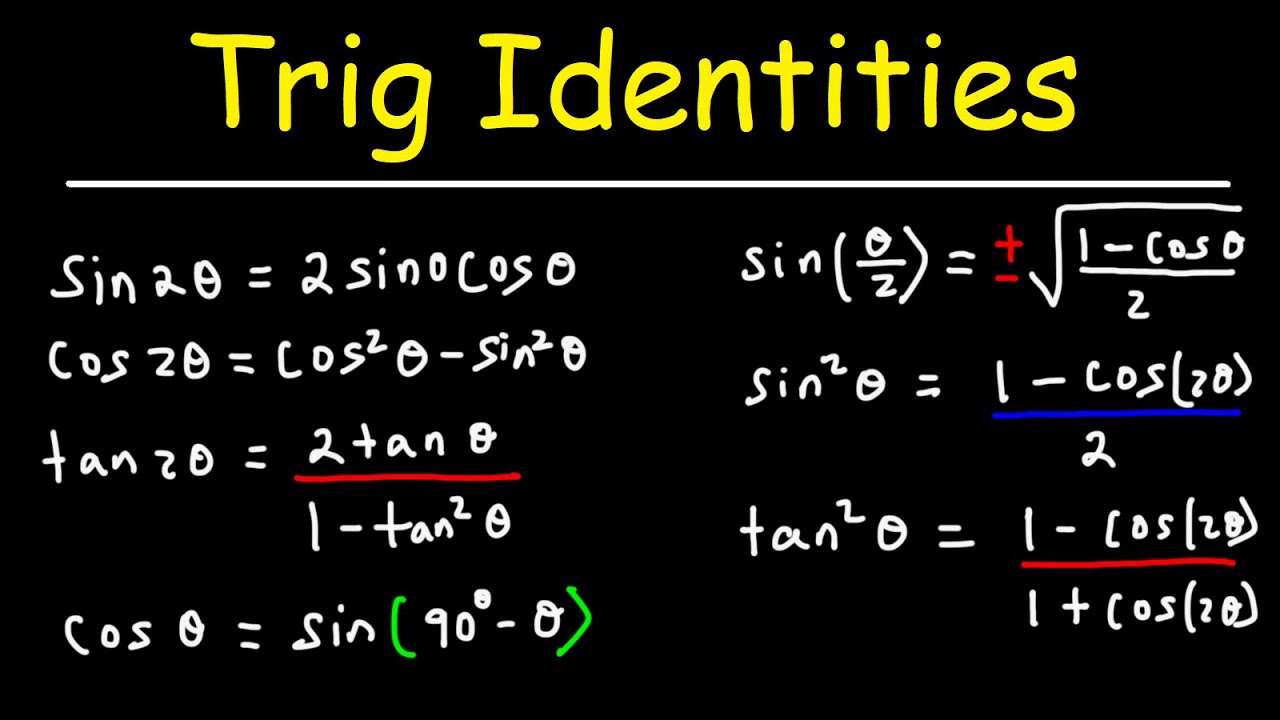
Trig Identities

Pemanfaatan Perbandingan Trigonometri Hal 110-114 Bab 4 Kelas 10 SMA SMK Kurikulum Merdeka

TRIGONOMETRI SUDUT ISTIMEWA
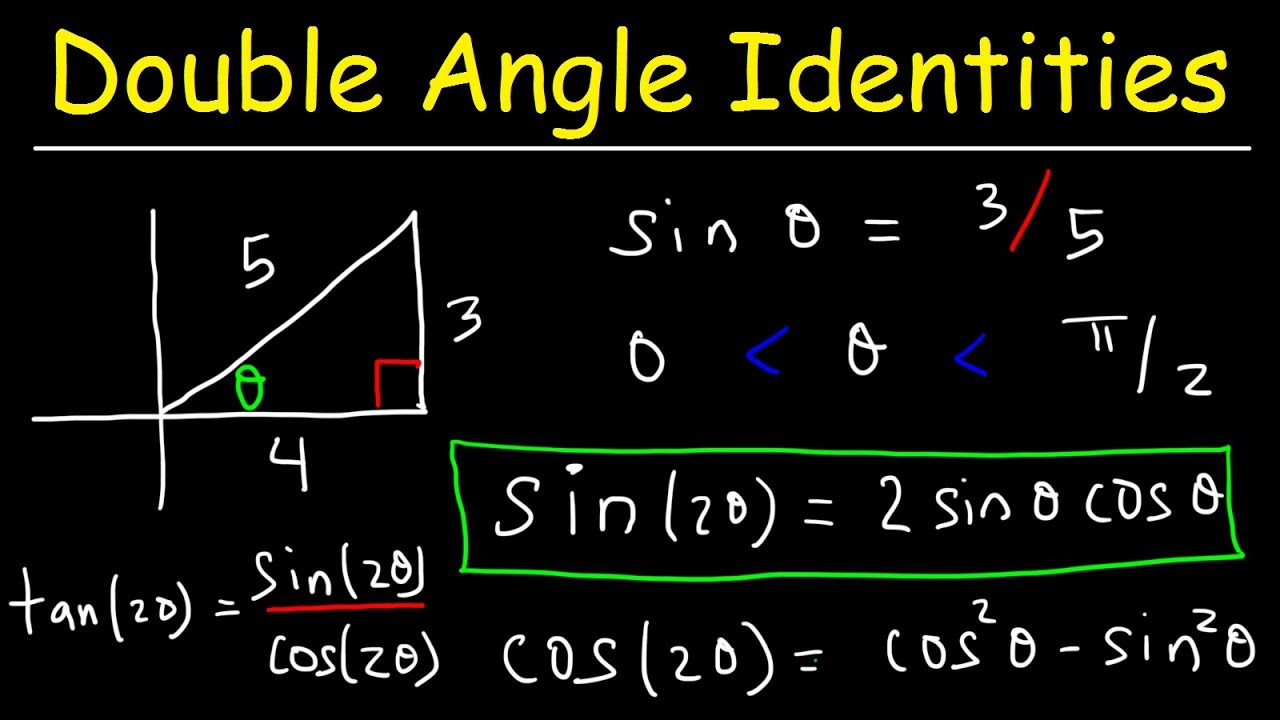
Double Angle Identities & Formulas of Sin, Cos & Tan - Trigonometry
Menentukan Nilai Trigonometri Segitiga Siku Siku Perbandingan Trigonometri segitiga Siku Siku
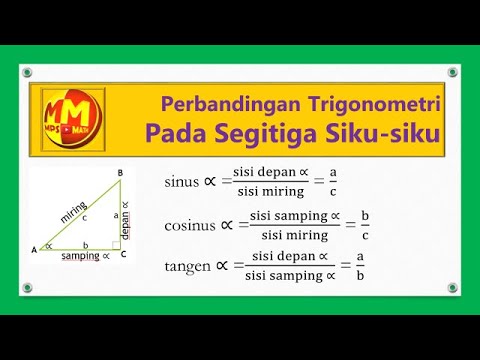
Perbandingan Trigonometri Pada Segitiga SIku-siku #Trigonometri
5.0 / 5 (0 votes)

