Penerapan Program APU & PPT
Summary
TLDRThis video provides a comprehensive guide to Anti-Money Laundering (AML) and Counter-Terrorism Financing (CTF) practices at Bank Jateng. It explains the essential steps involved in customer due diligence (CDD), including identification, verification, and monitoring of customer transactions. The video also outlines the risk-based approach for assessing customers' risk levels and the enhanced due diligence (EDD) required for high-risk clients, including Politically Exposed Persons (PEPs). It emphasizes the importance of regular monitoring, reporting suspicious transactions, and complying with legal obligations to mitigate financial crimes, safeguarding both the bank and the public.
Takeaways
- 😀 The main goal of the APU-PPT program at Bank Jateng is to prevent the bank from being used for money laundering and terrorism financing.
- 😀 Customer Due Diligence (CDD) is a primary tool, consisting of three stages: identification, verification, and transaction monitoring.
- 😀 Identification involves collecting customer information and documents, ensuring proper classification between individual and corporate clients.
- 😀 Verification requires confirming the authenticity of identity documents and requesting additional official documents if doubts arise.
- 😀 CDD is part of prudent banking practices, protecting the bank from operational, legal, and reputational risks.
- 😀 Customers are classified by risk level using a Risk-Based Approach: low, medium, and high risk, including Politically Exposed Persons (PEPs).
- 😀 High-risk customers require Enhanced Due Diligence (EDD), involving deeper scrutiny of documents and information.
- 😀 The bank must monitor the terrorist database managed by the Indonesian Police at least once per year.
- 😀 All transactions and customer data must be documented and reported to the Financial Transaction Reports and Analysis Center (PPATK), including suspicious transactions and large cash transactions over Rp500 million.
- 😀 Implementing the APU-PPT program reduces the bank's exposure to risks and contributes to the safety and security of the community.
- 😀 Consistent application of APU-PPT procedures ensures compliance with regulations and reinforces the bank's role in national financial integrity.
Q & A
What is the purpose of the APU PPT program at Bank Jateng?
-The purpose of the APU PPT program at Bank Jateng is to prevent the bank from being used as a medium for money laundering and terrorism financing.
What are the key components of Customer Due Diligence (CDD)?
-Customer Due Diligence (CDD) consists of three key components: identification, verification, and transaction monitoring of customers.
How does Bank Jateng ensure the identity of its customers during the identification phase?
-During the identification phase, Bank Jateng requests information and documents from customers, and then verifies the identity against the provided documents to ensure accuracy.
What is the difference between low, medium, and high-risk customers in the context of the APU PPT program?
-Low and medium-risk customers are monitored through standard CDD procedures, while high-risk customers are subject to enhanced due diligence (EDD), involving a deeper investigation of documents and information.
What is meant by 'Politically Exposed Persons' (PEPs), and why are they important in the APU PPT program?
-Politically Exposed Persons (PEPs) refer to individuals who hold or have held prominent public positions. They are considered higher risk for potential involvement in money laundering or terrorism financing, and thus require additional scrutiny.
How often does Bank Jateng monitor its customers against terrorist databases?
-Bank Jateng performs a minimum of one annual review of its customers against terrorist databases to ensure compliance with anti-terrorism financing measures.
What actions does Bank Jateng take when it identifies suspicious financial transactions?
-When Bank Jateng identifies suspicious transactions, it reports them to the Financial Transaction Reports and Analysis Center (PPATK) for further investigation.
What are the reporting requirements for transactions at Bank Jateng under the APU PPT program?
-Bank Jateng is required to report transactions such as cash transactions of Rp500 million or more, international fund transfers, and suspicious financial transactions to PPATK.
What risks does the CDD process help Bank Jateng mitigate?
-The CDD process helps Bank Jateng mitigate risks including operational, legal, and reputational risks by ensuring the integrity of customer transactions and their alignment with the bank's policies.
Why is the APU PPT program important for the broader community in Indonesia?
-The APU PPT program at Bank Jateng contributes to national security and public safety by preventing financial crimes such as money laundering and terrorism financing, thereby maintaining the stability of the financial system.
Outlines

Cette section est réservée aux utilisateurs payants. Améliorez votre compte pour accéder à cette section.
Améliorer maintenantMindmap

Cette section est réservée aux utilisateurs payants. Améliorez votre compte pour accéder à cette section.
Améliorer maintenantKeywords

Cette section est réservée aux utilisateurs payants. Améliorez votre compte pour accéder à cette section.
Améliorer maintenantHighlights

Cette section est réservée aux utilisateurs payants. Améliorez votre compte pour accéder à cette section.
Améliorer maintenantTranscripts

Cette section est réservée aux utilisateurs payants. Améliorez votre compte pour accéder à cette section.
Améliorer maintenantVoir Plus de Vidéos Connexes
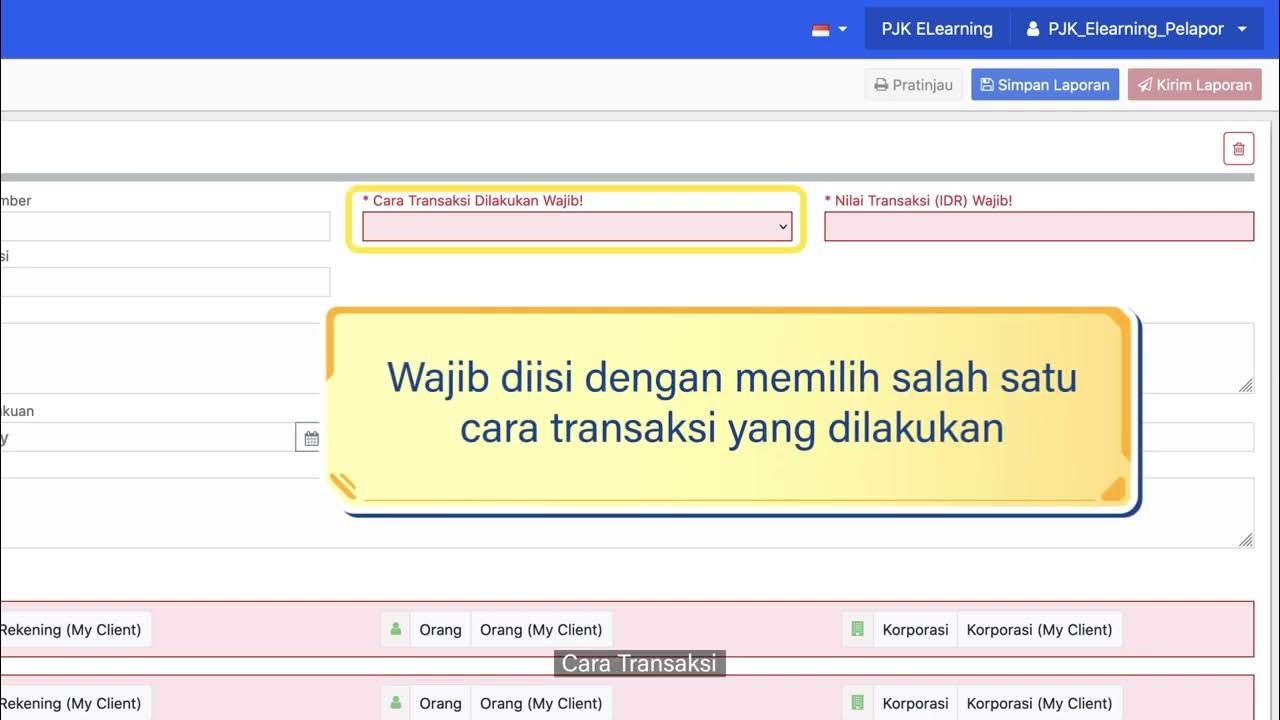
Tata Cara Penyampaian Pelaporan Transaksi Keuangan GoAML bagi Pihak Pelapor

Regulasi Fintech di Indonesia

What is a European Union AML Directive | 6MLD | Money Laundering Directive | AML Regulatory Scope

AML/KYC Certification Course | Financial Action Task Force | By Amanjyot Kaur

AML Watcher A Quick Demo | The Future of AML Compliance and AML Screening

Interpol blue notice laban kay Alice Guo, hiniling ng mga awtoridad, ayon sa DOJ | Saksi
5.0 / 5 (0 votes)

