BIOLOGIA - Lezione 17 - La Fermentazione | Metabolismo Cellulare
Summary
TLDRThis video explains the process of fermentation, a key metabolic step following glycolysis when oxygen is limited. It begins by reviewing glycolysis, which breaks glucose into pyruvate while producing a net of 2 ATP. If oxygen is available, cells proceed with the Krebs cycle and oxidative phosphorylation, generating up to 36 ATP. Without oxygen, pyruvate undergoes fermentation to regenerate NAD+, allowing glycolysis to continue. Humans perform lactic acid fermentation in muscles during intense exercise, causing temporary cramps, while some microorganisms use alcoholic fermentation to produce ethanol and carbon dioxide, as in bread and alcoholic beverages. Fermentation yields less energy than full cellular respiration but ensures survival under anaerobic conditions.
Takeaways
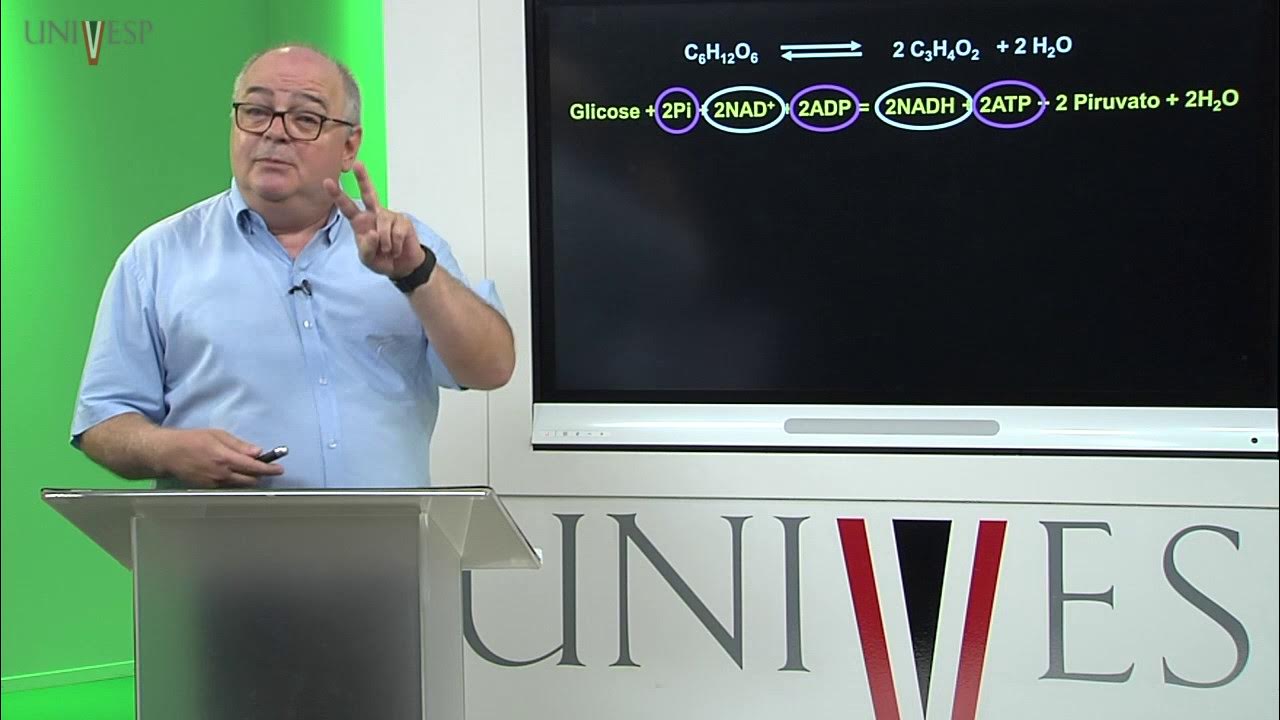
- 😀 Glycolysis is the first step in cellular metabolism, where glucose (6 carbon atoms) is broken down into two molecules of pyruvate (3 carbon atoms each), producing 2 ATP in the process.
- 😀 The cell invests 2 ATP molecules early in glycolysis but gains 4 ATP molecules by the end, resulting in a net gain of 2 ATP.
- 😀 ATP (adenosine triphosphate) is the energy currency of the cell, used for energy transfer and storage. When ATP is used, energy is expended, and when it's synthesized, energy is stored.
- 😀 If oxygen is available, the cell progresses to the Krebs cycle and oxidative phosphorylation, generating around 36 ATP molecules, providing much more energy than glycolysis alone.
- 😀 In the absence of oxygen, glycolysis alone cannot continue without regenerating NAD+ (Nicotinamide adenine dinucleotide), which is achieved through fermentation.
- 😀 Fermentation is the process by which cells regenerate NAD+ in the absence of oxygen, ensuring glycolysis can continue. There are two main types of fermentation: lactic acid and alcoholic fermentation.
- 😀 Lactic acid fermentation occurs in human muscle cells when oxygen is low, producing lactate (lactic acid) as a byproduct and causing muscle fatigue and cramps.
- 😀 Alcoholic fermentation occurs in yeast cells, where pyruvate is converted to acetaldehyde and then to ethanol (alcohol) and CO2, which is used in baking and alcohol production.
- 😀 Fermentation is less energy-efficient than aerobic respiration, as it produces only 2 ATP molecules per glucose molecule, compared to 36 ATPs in the presence of oxygen.
- 😀 Muscles experience cramping and fatigue due to the accumulation of lactic acid during intense exercise, which lowers pH and disrupts normal muscle function.
- 😀 The production of ethanol and CO2 during alcoholic fermentation is crucial in industries like baking and alcohol production, where yeast is used for fermentation to leaven bread and create alcoholic beverages.
Q & A
What is the first stage of glucose catabolism, and what does it accomplish?
-The first stage of glucose catabolism is glycolysis, which breaks down one molecule of glucose (6 carbon atoms) into two molecules of pyruvate (3 carbon atoms each), producing a net gain of 2 ATP.
Why does glycolysis initially consume ATP even though its purpose is to produce energy?
-Glycolysis consumes 2 ATP at the beginning as a small investment to destabilize glucose molecules, enabling the subsequent reactions to generate a higher amount of ATP later in the pathway.
What role does NAD⁺ play in glycolysis?
-NAD⁺ acts as an electron carrier, accepting electrons during glycolysis to become NADH. It must be regenerated (oxidized back to NAD⁺) for glycolysis to continue, especially under anaerobic conditions.
What happens to pyruvate when oxygen is available in the cell?
-When oxygen is available, pyruvate enters the Krebs cycle and oxidative phosphorylation, producing CO₂, H₂O, and approximately 36 ATP per glucose molecule through complete cellular respiration.
Why does the cell perform fermentation in the absence of oxygen?
-Fermentation occurs in the absence of oxygen to regenerate NAD⁺, allowing glycolysis to continue producing ATP, even though only a small amount of energy (2 ATP per glucose) is obtained.
What is lactic acid fermentation, and where does it occur in humans?
-Lactic acid fermentation converts pyruvate into lactate (or lactic acid) while regenerating NAD⁺. In humans, it occurs in muscle cells during intense exercise when oxygen supply is insufficient.
How does lactic acid accumulation affect muscles?
-Lactic acid accumulation lowers the pH in muscle tissues, which can cause cramps, pain, and temporary muscle fatigue, signaling the body to reduce activity to prevent damage.
What is alcoholic fermentation, and which organisms perform it?
-Alcoholic fermentation converts pyruvate into ethanol and CO₂, regenerating NAD⁺. This process is carried out by certain yeasts and other microorganisms and is utilized in baking and alcoholic beverage production.
Why does fermentation produce much less ATP compared to aerobic respiration?
-Fermentation only relies on glycolysis for ATP production, yielding 2 ATP per glucose molecule, whereas aerobic respiration fully oxidizes glucose in the Krebs cycle and oxidative phosphorylation, producing approximately 36 ATP.
How does CO₂ production in alcoholic fermentation benefit bread making?
-The CO₂ produced during alcoholic fermentation forms gas bubbles in dough, causing it to rise and giving bread its light, airy texture while ethanol evaporates during baking.
What determines whether a cell will perform fermentation or continue to aerobic respiration?
-The presence or absence of oxygen determines the pathway: if oxygen is available, the cell proceeds with aerobic respiration; if oxygen is limited or the cell is anaerobic, it undergoes fermentation to regenerate NAD⁺ and maintain glycolysis.
Can cells survive on fermentation alone, and if so, why?
-Yes, cells can survive on fermentation alone because it allows glycolysis to continue producing ATP even without oxygen, providing enough energy for basic cellular functions despite being much less efficient than aerobic respiration.
Outlines

Cette section est réservée aux utilisateurs payants. Améliorez votre compte pour accéder à cette section.
Améliorer maintenantMindmap

Cette section est réservée aux utilisateurs payants. Améliorez votre compte pour accéder à cette section.
Améliorer maintenantKeywords

Cette section est réservée aux utilisateurs payants. Améliorez votre compte pour accéder à cette section.
Améliorer maintenantHighlights

Cette section est réservée aux utilisateurs payants. Améliorez votre compte pour accéder à cette section.
Améliorer maintenantTranscripts

Cette section est réservée aux utilisateurs payants. Améliorez votre compte pour accéder à cette section.
Améliorer maintenant




5.0 / 5 (0 votes)

