What the Heck is Reactance and Why is it So Weird?!?
Summary
TLDRThis video delves into the concept of impedance in AC circuits, explaining the differences between resistance, inductive reactance, and capacitive reactance. It highlights how inductors and capacitors store energy, causing phase shifts in current and voltage, unlike resistors that dissipate energy. The video emphasizes the importance of understanding impedance in real-world circuits, where resistance and reactance combine. It also touches on power factor correction, showing how inductive and capacitive elements interact to influence the efficiency of power transfer in various systems, particularly in industrial and commercial settings.
Takeaways
- 😀 Reactants are different from resistance. Resistance involves energy consumption (heat, light, etc.), while reactants (inductors and capacitors) store and release energy without dissipating it as heat.
- 😀 Impedance is the combination of resistance and reactance (from inductors and capacitors). It represents the total opposition in an AC circuit.
- 😀 Inductors and capacitors resist changes in current differently. Inductors store energy in magnetic fields, while capacitors store energy in electric fields.
- 😀 In AC circuits, impedance is measured in ohms, combining the effects of resistance (R) and reactance (X). Reactance can be inductive (XL) or capacitive (XC).
- 😀 Impedance calculations in AC circuits involve resistance and the net effect of inductive and capacitive reactance. They can either add or cancel each other out.
- 😀 Inductive reactance causes current to lag behind voltage by 90°, while capacitive reactance causes current to lead voltage by 90°.
- 😀 Voltage and current in a resistive circuit are in-phase, meaning they reach their peak values simultaneously. In reactive circuits, the phase relationship is disrupted.
- 😀 'Eli the Iceman' is a mnemonic to remember that in an inductor, voltage leads the current (lag), while in a capacitor, current leads voltage (lead).
- 😀 The power factor in AC circuits is crucial for understanding energy transfer efficiency. Power is only transferred when voltage and current are in-phase.
- 😀 In practical circuits, combinations of resistive, inductive, and capacitive elements are common. The total impedance and phase relationship depend on how these components interact.
- 😀 Power factor correction, such as adding capacitors to inductive loads, can improve efficiency by reducing phase difference between voltage and current, minimizing wasted energy.
Q & A
What is the difference between reactance and resistance?
-Resistance is the opposition to current flow, commonly seen in components like resistors, where energy is converted to heat or light. Reactance, on the other hand, is the opposition to changes in current caused by inductors and capacitors, which store energy instead of dissipating it.
What does impedance represent in an AC circuit?
-Impedance represents the total opposition to current flow in an AC circuit, combining both resistance and reactance. It is calculated as the square root of the sum of the squares of resistance (R) and reactance (X).
Why is impedance a more accurate term than resistance in AC circuits?
-Impedance is more accurate because AC circuits often include components like inductors and capacitors, which introduce reactance. Resistance alone cannot describe the total opposition in these circuits, making impedance the more comprehensive term.
How do inductors and capacitors differ in their effect on AC circuits?
-Inductors resist changes in current and cause a lag in current relative to voltage, while capacitors resist changes in voltage and cause the current to lead the voltage. This results in phase shifts in the circuit, with inductors leading to a 90° lag and capacitors causing a 90° lead.
What is the role of reactance in AC circuits?
-Reactance in AC circuits refers to the opposition to changes in current or voltage, depending on whether the circuit contains inductors or capacitors. Inductive reactance resists changes in current, while capacitive reactance resists changes in voltage.
What is the significance of phase shifts in AC circuits with inductors and capacitors?
-Phase shifts are crucial because they affect the efficiency of power transfer. In inductive circuits, voltage leads the current by 90°, while in capacitive circuits, current leads voltage by 90°. These shifts determine how much power is transferred to the load and influence the overall power factor.
How does the phase shift impact power transfer in an AC circuit?
-Power transfer in an AC circuit only occurs when the voltage and current are in phase. When they are out of phase (due to inductors or capacitors), the power transferred to the load is reduced, and much of the energy is lost as reactive power, making the system less efficient.
What is the power factor, and why is it important?
-The power factor represents the ratio of real power (usable power) to apparent power (total power supplied). A power factor close to 1 means efficient power transfer, while a lower power factor indicates more energy is lost as reactive power. Utility companies often fine businesses with low power factors.
What is the relationship between inductive reactance and capacitive reactance?
-Inductive reactance and capacitive reactance are inverses of each other. Inductive reactance increases with frequency and inductance, while capacitive reactance decreases with frequency and capacitance. In some circuits, their effects can cancel each other out, leading to improved power factor.
How do you calculate the reactance of an inductor and capacitor?
-Inductive reactance (XL) is calculated using the formula XL = 2πfL, where f is the frequency and L is the inductance. Capacitive reactance (XC) is calculated using the formula XC = 1/(2πfC), where f is the frequency and C is the capacitance. Both reactances are measured in ohms.
Outlines

Cette section est réservée aux utilisateurs payants. Améliorez votre compte pour accéder à cette section.
Améliorer maintenantMindmap

Cette section est réservée aux utilisateurs payants. Améliorez votre compte pour accéder à cette section.
Améliorer maintenantKeywords

Cette section est réservée aux utilisateurs payants. Améliorez votre compte pour accéder à cette section.
Améliorer maintenantHighlights

Cette section est réservée aux utilisateurs payants. Améliorez votre compte pour accéder à cette section.
Améliorer maintenantTranscripts

Cette section est réservée aux utilisateurs payants. Améliorez votre compte pour accéder à cette section.
Améliorer maintenantVoir Plus de Vidéos Connexes
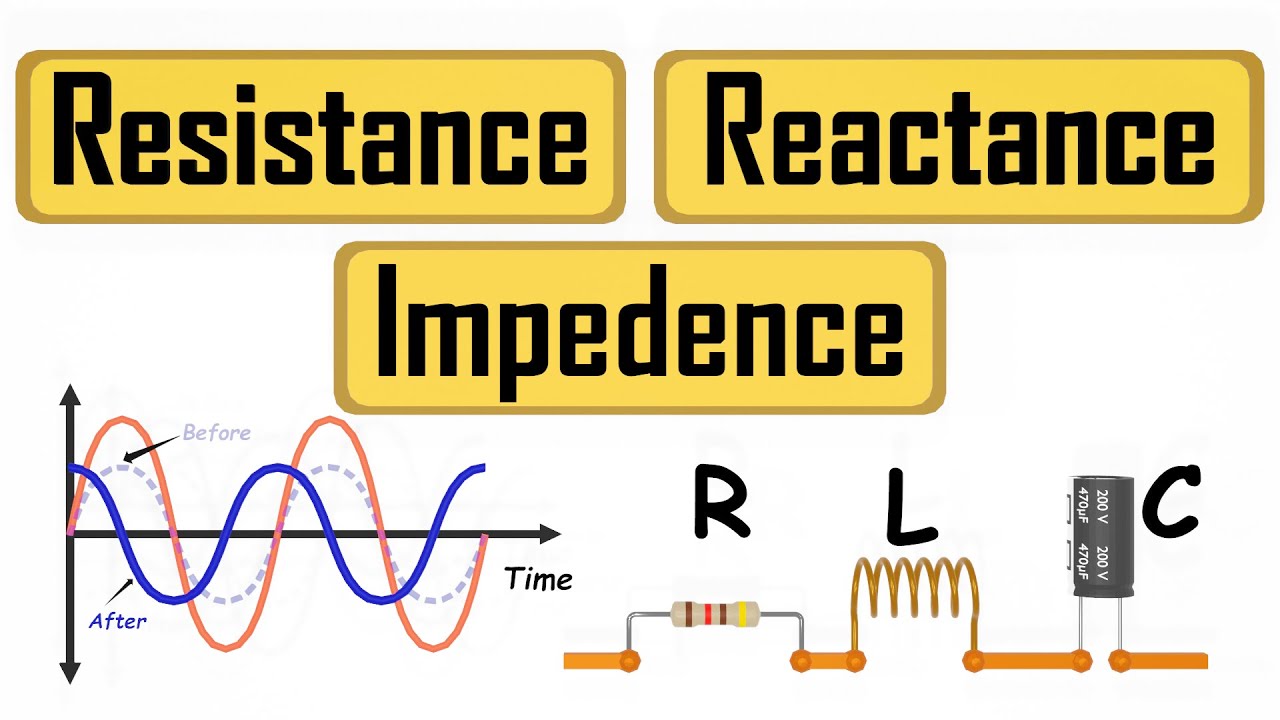
What are Resistance Reactance Impedance
AC Through Series RLC Circuit - AC Circuits - Basic Electrical Engineering

Simulasi Arus dan Tegangan Bolak-Balik dengan Phet

A.C. CIRCUIT | A.C. FUNDAMENTALS | COMPLETE STUDY OF PURE A.C. CIRCUITS | LECTURE 3 IN HINDI

Simulasi Resonansi RLC - Electronics Workbench
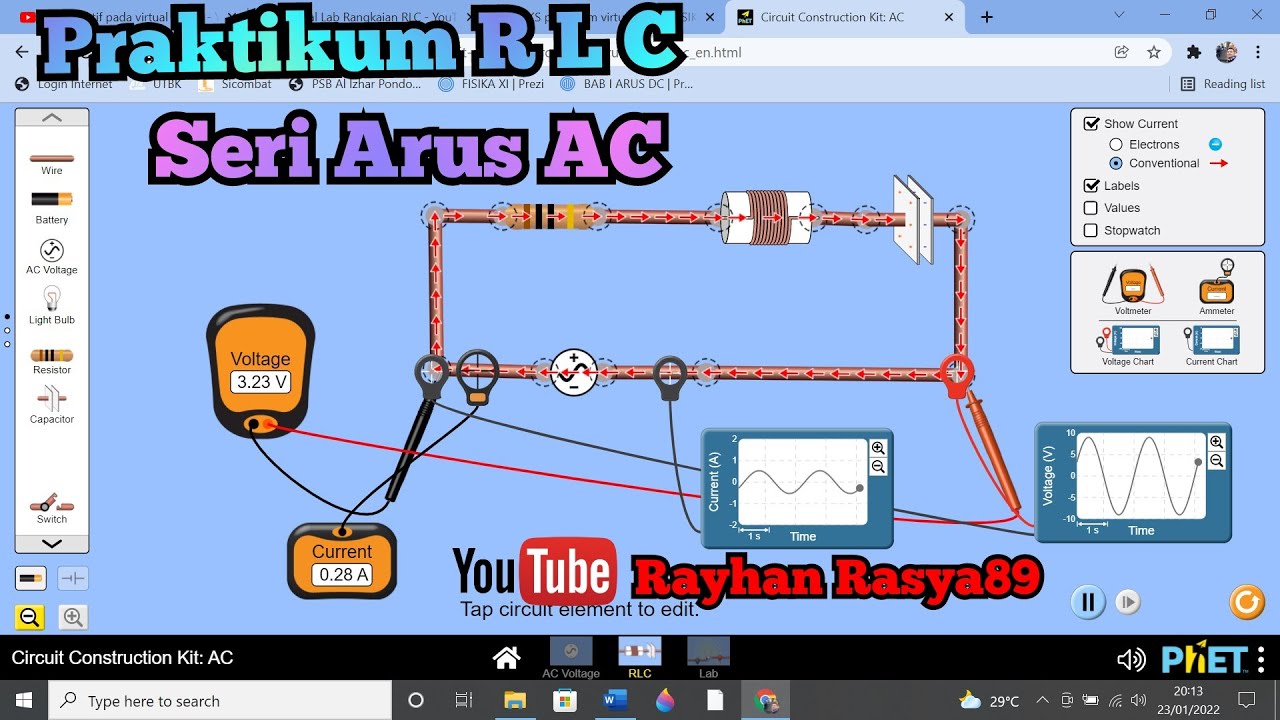
Praktikum RANGKAIAN RLC SERI PADA ARUS AC menggunakan Virtual Lab PHET.
5.0 / 5 (0 votes)

