MATERI UTBK SNBT MATEMATIKA SAINTEK PERTIDAKSAMAAN KUADRAT
Summary
TLDRThis educational video offers an in-depth lesson on mathematical inequalities, focusing on quadratic inequalities, number lines, and the properties of functions. Key concepts include solving linear and quadratic inequalities, analyzing positive and negative regions, and understanding the properties of definite functions. The lesson also covers how to solve inequalities involving roots and absolute values, providing step-by-step guidance on determining solution intervals. The video concludes by emphasizing the importance of understanding these mathematical principles for solving more complex inequalities.
Takeaways
- 😀 Inequalities are mathematical statements using symbols like <, >, ≤, ≥, and ≠ to compare values.
- 😀 Key properties of inequalities include transitivity, addition, multiplication with positive or negative numbers, and operations with powers and reciprocals.
- 😀 A number line is a helpful tool to visualize positive and negative regions of a function and determine solution intervals.
- 😀 Odd and even powers affect the sign of a function differently: odd powers change sign, while even powers retain the same sign.
- 😀 Positive definite functions always yield positive values for any input x, while negative definite functions always yield negative values.
- 😀 Operations involving definite functions and arbitrary functions follow specific rules for multiplication and division to maintain positivity or negativity.
- 😀 Solving linear inequalities involves isolating the variable from constants to find the solution set.
- 😀 Quadratic inequalities are solved by setting one side to zero, factoring, finding zeros, and determining positive or negative intervals to establish the solution set.
- 😀 Radical (square root) inequalities require ensuring non-negative values for the radicands and often reduce to solving quadratic inequalities.
- 😀 Absolute value inequalities have specific rules: for |F(x)| ≥ |G(x)|, multiply (F(x)+G(x)) and (F(x)-G(x)) ≥ 0; for |F(x)| ≤ |G(x)|, the product ≤ 0.
- 😀 The absolute value function is defined as x if x ≥ 0 and -x if x < 0, which is essential for solving absolute value inequalities.
Q & A
What is an inequality in mathematics?
-An inequality is an open mathematical statement that uses symbols such as greater than (>), less than (<), greater than or equal to (≥), less than or equal to (≤), or not equal to (≠).
What is the first property of inequalities mentioned in the transcript?
-If a and b are real numbers, then either a < b, a = b, or a > b.
How does one determine the sign of an expression using a number line?
-To determine the sign of an expression using a number line, set one side of the inequality to zero, factor the expression if necessary, test intervals between roots for positive or negative values, and note that the sign of the rightmost term follows the sign of the highest-degree coefficient.
What is a definite positive function?
-A function f(x) is definite positive if f(x) > 0 for all x, meaning it always produces positive values regardless of x.
What is a definite negative function?
-A function f(x) is definite negative if f(x) < 0 for all x, meaning it always produces negative values regardless of x.
How do the properties of definite positive and definite negative functions affect multiplication and division?
-For a definite positive function f(x) and any function g(x), f(x) * g(x) > 0 implies g(x) > 0, f(x) * g(x) < 0 implies g(x) < 0, f(x)/g(x) > 0 implies g(x) > 0, and f(x)/g(x) < 0 implies g(x) < 0. For definite negative f(x), the inequalities for g(x) are reversed.
What steps are used to solve linear inequalities?
-To solve a linear inequality, isolate the variable x on one side of the inequality separate from constants.
What are the steps to solve quadratic inequalities?
-To solve a quadratic inequality, first set one side to zero, factor the expression, determine the roots (zeros), identify intervals where the function is positive or negative, and select the solution set based on the inequality sign (positive for > 0 or ≥ 0, negative for < 0 or ≤ 0).
How is an inequality with square roots solved?
-To solve a square root inequality, first ensure the expression under the square root is non-negative, then solve the inequality using methods similar to linear or quadratic inequalities, and finally find the intersection of all relevant conditions.
How is an absolute value inequality solved?
-For |f(x)| > |g(x)|, solve the inequalities (f(x) + g(x))*(f(x) - g(x)) ≥ 0. For |f(x)| ≤ |g(x)|, solve (f(x) + g(x))*(f(x) - g(x)) ≤ 0. Remember that absolute value is positive when the expression is ≥ 0 and negative when < 0.
What is the significance of even and odd powers in inequalities?
-For even powers, the sign of the result is always positive regardless of the base sign, whereas for odd powers, the result maintains the sign of the base. This affects how inequalities are interpreted when raising terms to powers.
Outlines

Esta sección está disponible solo para usuarios con suscripción. Por favor, mejora tu plan para acceder a esta parte.
Mejorar ahoraMindmap

Esta sección está disponible solo para usuarios con suscripción. Por favor, mejora tu plan para acceder a esta parte.
Mejorar ahoraKeywords

Esta sección está disponible solo para usuarios con suscripción. Por favor, mejora tu plan para acceder a esta parte.
Mejorar ahoraHighlights

Esta sección está disponible solo para usuarios con suscripción. Por favor, mejora tu plan para acceder a esta parte.
Mejorar ahoraTranscripts

Esta sección está disponible solo para usuarios con suscripción. Por favor, mejora tu plan para acceder a esta parte.
Mejorar ahoraVer Más Videos Relacionados
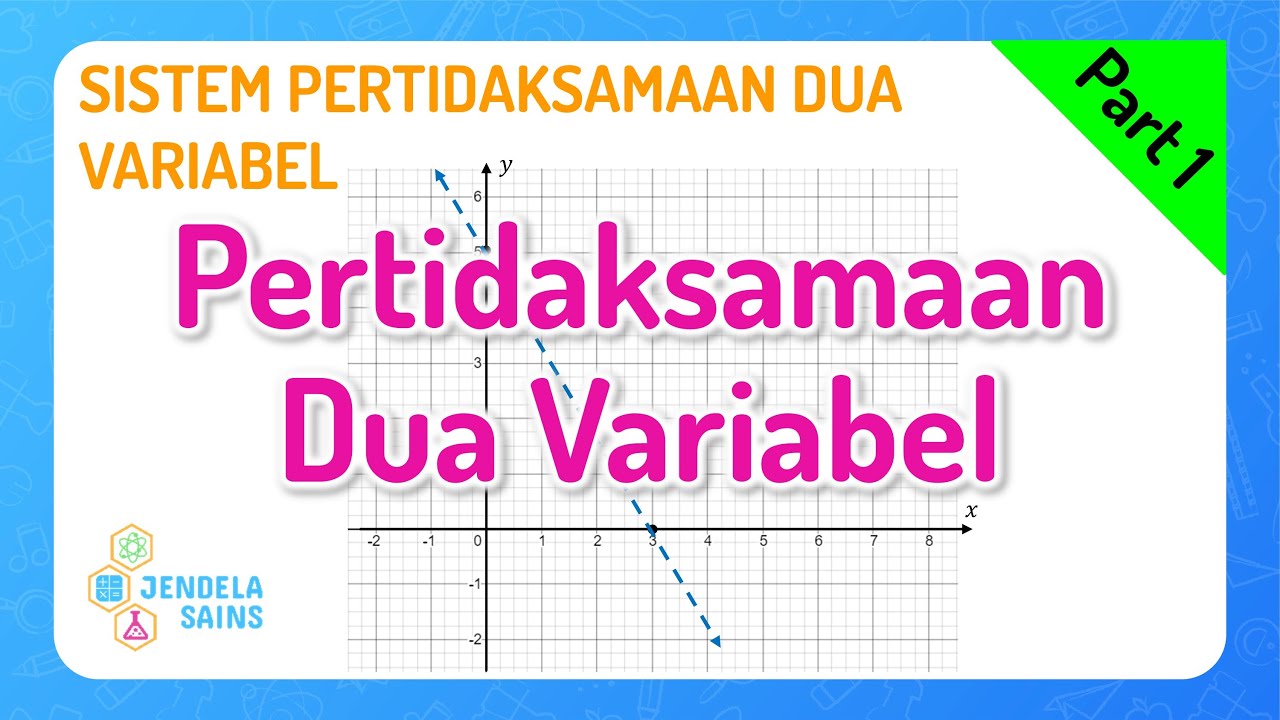
SPtDV Matematika Kelas 10 • Part 1: Pertidaksamaan Linear & Kuadrat Dua Variabel

Solving Quadratic Equations

Half Past Paper - Week 2 - Higher Edexcel GCSE Maths - Maths Revision
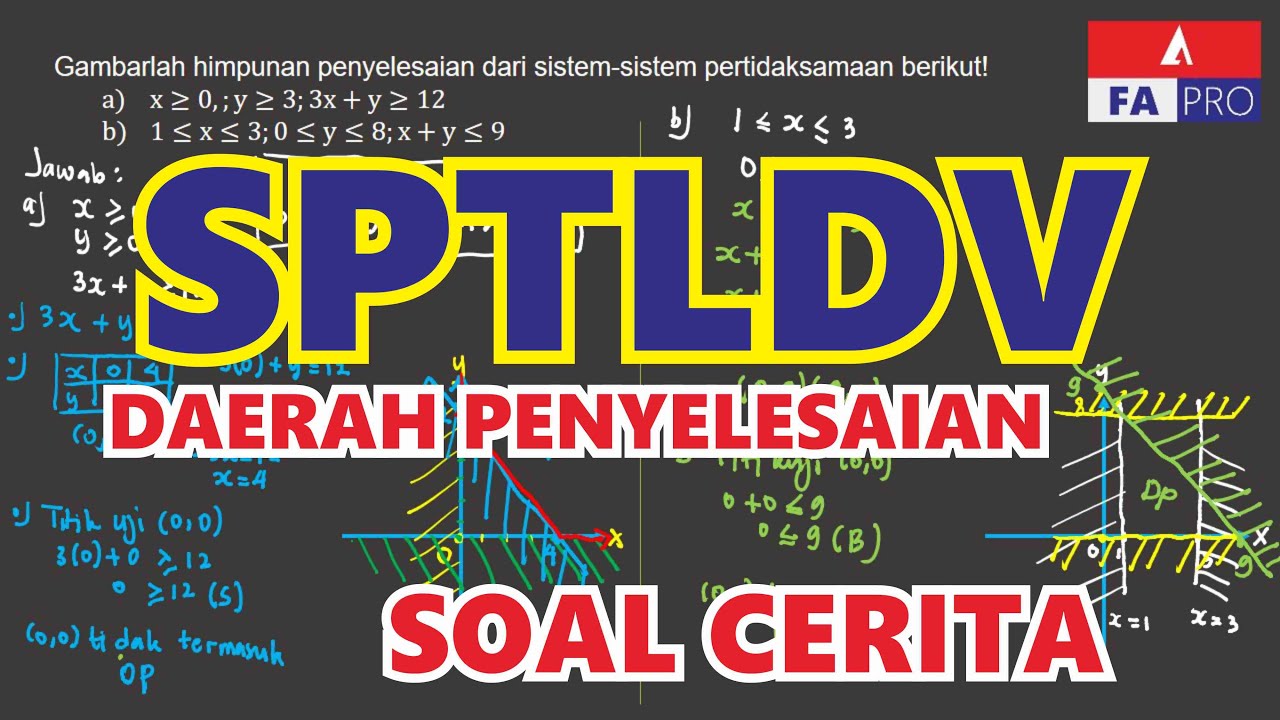
Soal & Pembahasan SPTLDV Sistem Pertidaksamaan Linear Dua Variabel SOAL CERITA
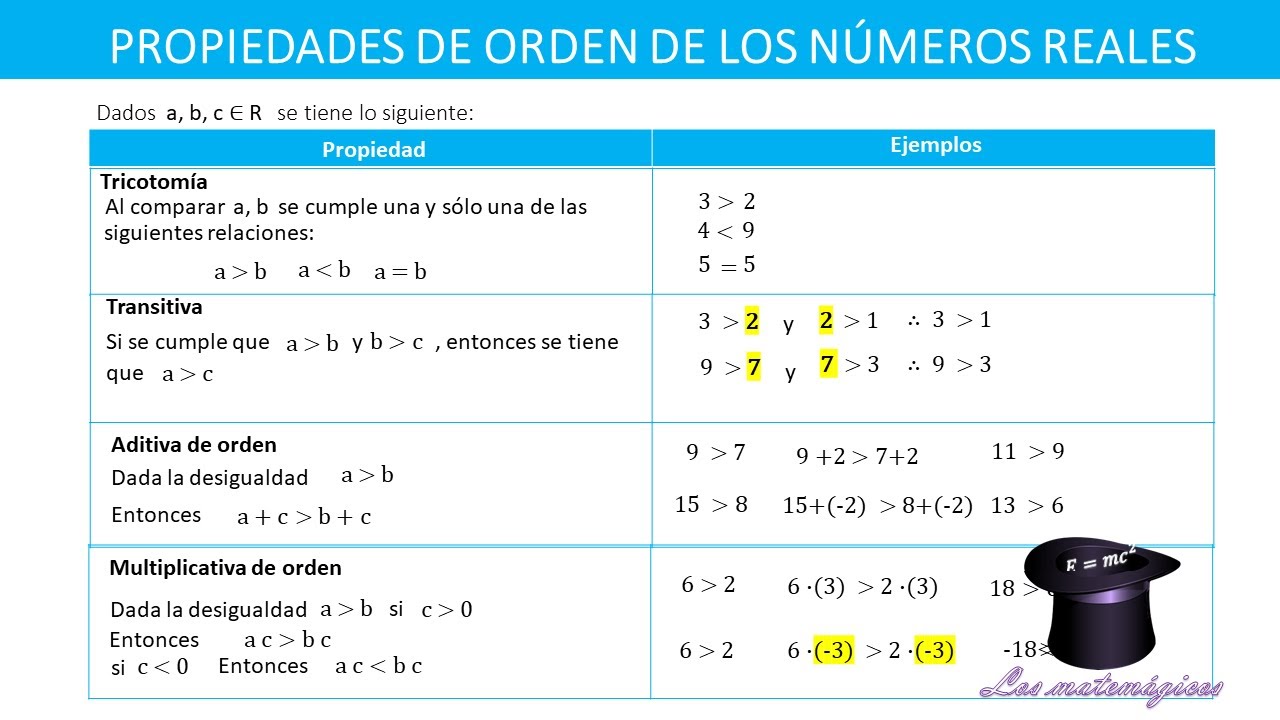
PROPIEDADES DE ORDEN DE LOS NÚMEROS REALES

Program Linear: 1.Menentukan grafik pertidaksamaan linear satu variabel
5.0 / 5 (0 votes)

