The Process of Gastrulation
Summary
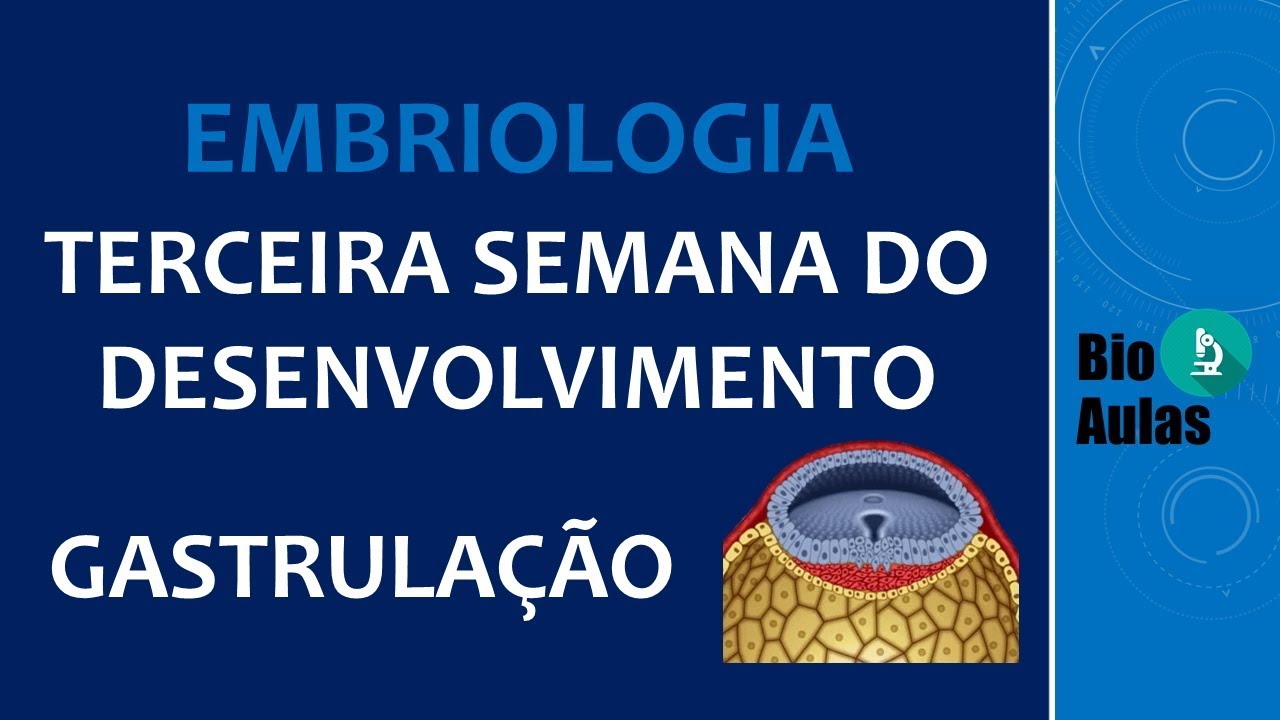
TLDRBy the end of the second week of development, the bilaminar embryonic disc, composed of the hypoblast and epiblast, is formed. During the third week, this disc undergoes gastrulation, creating three primary germ layers: ectoderm, mesoderm, and definitive endoderm. The process begins with the formation of the Primitive streak around day 15, which establishes the body axes and develops a primitive node and groove. Epiblast cells migrate inward through the groove in a process called invagination, replacing hypoblast cells and forming the endoderm and mesoderm. The remaining epiblast becomes the ectoderm, completing gastrulation and establishing the embryo's foundational structure.
Takeaways
- 😀 The bilaminar embryonic disc, consisting of the hypoblast and epiblast, forms by the end of the second week of development.
- 😀 Around the third week, the bilaminar disc differentiates into three primary germ layers in a process called gastrulation.
- 😀 The primitive streak forms around 15 days after fertilization along the midline of the epiblast, marking the embryo’s major body axes.
- 😀 The primitive streak defines the cranial (head) and caudal (tail) ends, as well as the left and right sides of the embryo.
- 😀 At the cranial end of the streak, the primitive node forms, containing a circular depression called the primitive pit.
- 😀 The primitive groove forms along the midline of the streak as the primitive pit extends toward the caudal end of the embryo.
- 😀 Cells from the epiblast migrate inward through the primitive groove and detach to form the interior layers of the embryo, a process known as invagination.
- 😀 The first invaginated cells displace the hypoblast and form the definitive endoderm, replacing most of the hypoblast by day 16.
- 😀 The remaining epiblast cells become the ectoderm, forming the outermost layer of the embryo.
- 😀 Some invaginated cells form the mesoderm, a layer situated between the ectoderm and endoderm.
- 😀 After the formation of the definitive endoderm and mesoderm, epiblast cells no longer migrate to the primitive streak, completing gastrulation.
Q & A
What are the two layers that form the bilaminar embryonic disc?
-The bilaminar embryonic disc consists of the hypoblast and the epiblast.
During which week of development does gastrulation occur?
-Gastrulation occurs during the third week of development.
What major structure forms around 15 days after fertilization along the midline of the epiblast?
-The Primitive streak forms along the midline of the epiblast around 15 days after fertilization.
What body axes are defined by the formation of the Primitive streak?
-The Primitive streak defines the cranial-caudal axis (head to tail) and the left-right sides of the embryo.
What is the primitive node and what special feature does it contain?
-The primitive node is an expansion at the cranial end of the Primitive streak, containing a circular depression called the primitive pit.
Describe the process of invagination during gastrulation.
-Invagination is the inward migration of epiblast cells toward the Primitive streak, where they detach and move beneath the epiblast into the interior of the embryo.
Which layer replaces the hypoblast cells during gastrulation?
-The definitive endoderm replaces the hypoblast cells during gastrulation.
What does the remaining epiblast become after invagination and endoderm formation?
-The remaining epiblast forms the ectoderm, which is the most exterior layer of the embryo.
What germ layer is formed by the epiblast cells that settle between the ectoderm and definitive endoderm?
-These epiblast cells form the mesoderm, the middle primary germ layer.
When does the migration of epiblast cells toward the Primitive streak stop?
-Epiblast cell migration toward the Primitive streak stops once the definitive endoderm and mesoderm are fully formed.
How does the ectoderm continue to develop during gastrulation?
-The ectoderm continues to form from the cranial end to the caudal end of the embryo, completing the establishment of the three primary germ layers.
Why is gastrulation considered a crucial process in embryonic development?
-Gastrulation is crucial because it establishes the three primary germ layers—ectoderm, mesoderm, and endoderm—which are the foundation for all tissues and organs in the embryo.
Outlines

Dieser Bereich ist nur für Premium-Benutzer verfügbar. Bitte führen Sie ein Upgrade durch, um auf diesen Abschnitt zuzugreifen.
Upgrade durchführenMindmap

Dieser Bereich ist nur für Premium-Benutzer verfügbar. Bitte führen Sie ein Upgrade durch, um auf diesen Abschnitt zuzugreifen.
Upgrade durchführenKeywords

Dieser Bereich ist nur für Premium-Benutzer verfügbar. Bitte führen Sie ein Upgrade durch, um auf diesen Abschnitt zuzugreifen.
Upgrade durchführenHighlights

Dieser Bereich ist nur für Premium-Benutzer verfügbar. Bitte führen Sie ein Upgrade durch, um auf diesen Abschnitt zuzugreifen.
Upgrade durchführenTranscripts

Dieser Bereich ist nur für Premium-Benutzer verfügbar. Bitte führen Sie ein Upgrade durch, um auf diesen Abschnitt zuzugreifen.
Upgrade durchführenWeitere ähnliche Videos ansehen
Gastrulação: Ectoderma, Mesoderma e Endoderma - Terceira Semana do Desenvolvimento (Embriologia)

General Embryology - Detailed Animation On Second Week Of Development

✅ SEGUNDA SEMANA | EMBRIOLOGÍA [2023] 📚 DESARROLLO EMBRIONARIO | EMBARAZO | DISCO BILAMINAR

Embryology | Mesoderm

How is the primitive streak formed | Best 3D Medical Learning App | MediMagic

General Embryology Review in 20 minutes
5.0 / 5 (0 votes)

