Protein Synthesis: Translation | A-level Biology | OCR, AQA, Edexcel
Summary
TLDRThis video provides a comprehensive overview of the translation process in protein synthesis. After transcription, mRNA enters the cytoplasm and binds to a ribosome, where translation begins. The ribosome reads mRNA codons, and tRNA molecules bring the corresponding amino acids. As the ribosome moves along the mRNA, amino acids are linked by peptide bonds, forming a polypeptide chain. The process continues until a stop codon signals the end, releasing the complete protein. The video concludes with the protein's folding into its functional tertiary structure, ready for biological activity.
Takeaways
- 😀 Translation is the second main stage of protein synthesis, occurring after transcription.
- 😀 During translation, the genetic information from mRNA is used to create a string of amino acids, forming a protein.
- 😀 The mRNA, made in the nucleus, enters the cytoplasm and binds to a ribosome to start translation.
- 😀 The ribosome consists of two subunits: a large subunit and a small subunit.
- 😀 Translation begins at the start codon (AUG) on the mRNA, where the first tRNA brings methionine.
- 😀 tRNA molecules carry specific amino acids and have anticodons that are complementary to mRNA codons.
- 😀 The ribosome forms peptide bonds between amino acids, building a polypeptide chain.
- 😀 The ribosome moves along the mRNA, reading one codon at a time, to add the corresponding amino acid to the polypeptide.
- 😀 Multiple ribosomes can translate the same mRNA simultaneously, producing many copies of the same protein.
- 😀 Translation ends when the ribosome reaches a stop codon (UGA, UAA, UAG), signaling the release of the completed polypeptide.
- 😀 The polypeptide then folds into its tertiary structure, with the amino acid sequence determining its final shape and function.
Q & A
What is the process of translation in protein synthesis?
-Translation is the process where the genetic information carried by mRNA is used to synthesize a protein. It occurs after transcription and involves translating the mRNA sequence into a specific sequence of amino acids to form a protein.
What happens during transcription before translation?
-In transcription, the DNA sequence in the nucleus is used to create a complementary strand of mRNA. This mRNA then exits the nucleus and enters the cytoplasm, where it serves as a template for translation.
What is the role of the ribosome in translation?
-The ribosome binds to the mRNA and facilitates the reading of the codons on the mRNA. It assembles amino acids brought by tRNAs into a growing polypeptide chain, eventually forming a protein.
What is the start codon and why is it important?
-The start codon is always AUG, which codes for the amino acid methionine. It is crucial because it signals the beginning of translation, where the ribosome starts reading the mRNA to synthesize the protein.
How does tRNA contribute to translation?
-tRNA molecules carry specific amino acids and have an anticodon that is complementary to the codons on the mRNA. Each tRNA binds to its corresponding codon, bringing the correct amino acid to form a polypeptide.
What is a peptide bond, and how is it formed?
-A peptide bond is a covalent bond formed between two amino acids. It is created by a dehydration reaction, where a water molecule is removed as the amino group of one amino acid bonds with the carboxyl group of another.
What is a dipeptide, and how is it related to the process of translation?
-A dipeptide is a molecule consisting of two amino acids linked by a peptide bond. During translation, the ribosome progressively adds amino acids to the growing polypeptide chain, forming dipeptides and longer peptides along the way.
What happens when the ribosome moves along the mRNA during translation?
-As the ribosome moves along the mRNA, it reads each codon and brings in the corresponding tRNA with its amino acid. This process continues, elongating the polypeptide chain one amino acid at a time.
What triggers the end of translation?
-Translation ends when the ribosome reaches a stop codon (UAA, UAG, or UGA) on the mRNA. There are no tRNAs that recognize stop codons, so no more amino acids are added, and the completed polypeptide is released.
What is the significance of the primary structure of a protein?
-The primary structure of a protein is the specific sequence of amino acids in the polypeptide chain. This sequence determines the protein’s three-dimensional structure and ultimately its function.
Outlines

Dieser Bereich ist nur für Premium-Benutzer verfügbar. Bitte führen Sie ein Upgrade durch, um auf diesen Abschnitt zuzugreifen.
Upgrade durchführenMindmap

Dieser Bereich ist nur für Premium-Benutzer verfügbar. Bitte führen Sie ein Upgrade durch, um auf diesen Abschnitt zuzugreifen.
Upgrade durchführenKeywords

Dieser Bereich ist nur für Premium-Benutzer verfügbar. Bitte führen Sie ein Upgrade durch, um auf diesen Abschnitt zuzugreifen.
Upgrade durchführenHighlights

Dieser Bereich ist nur für Premium-Benutzer verfügbar. Bitte führen Sie ein Upgrade durch, um auf diesen Abschnitt zuzugreifen.
Upgrade durchführenTranscripts

Dieser Bereich ist nur für Premium-Benutzer verfügbar. Bitte führen Sie ein Upgrade durch, um auf diesen Abschnitt zuzugreifen.
Upgrade durchführenWeitere ähnliche Videos ansehen

Sintesis Protein : Transkripsi,Translasi & Kode Genetik

IMAT Biology Lesson 4.7 | Reproduction + Inheritance | Translation
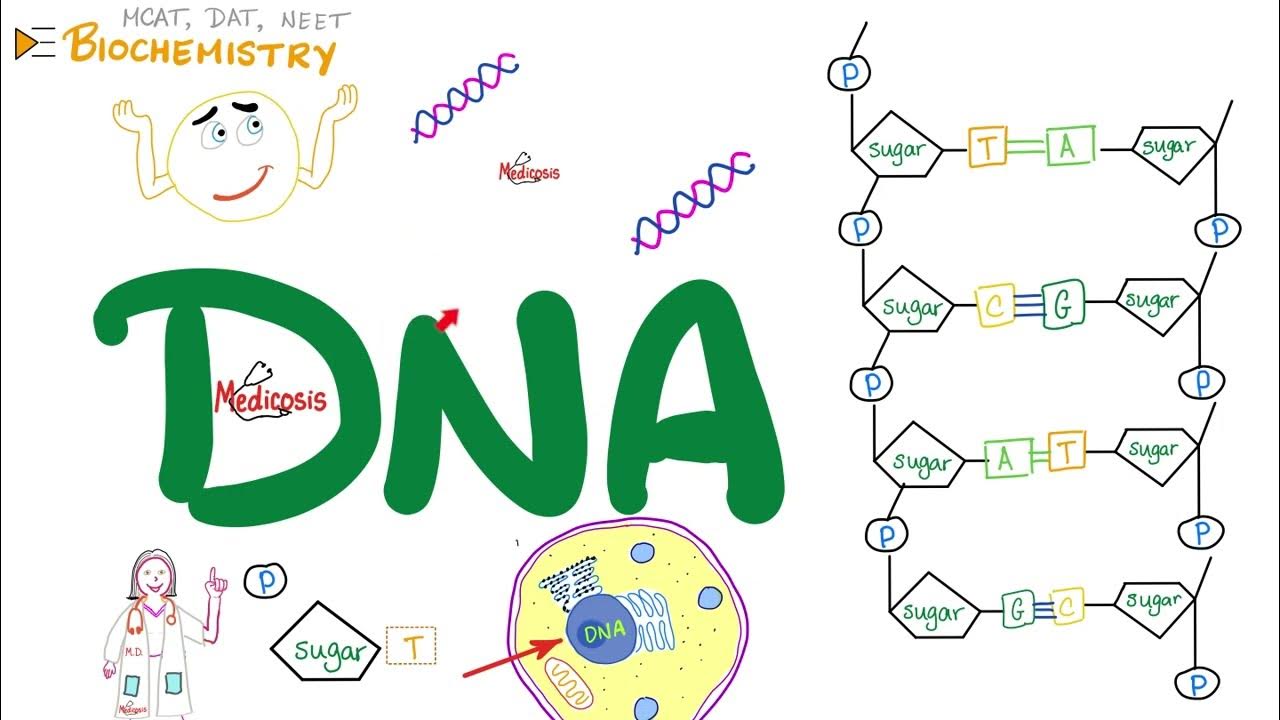
DNA 🧬 Structure & Function - Nucleosides & Nucleotides - Biochemistry & Biology Series
Síntese Proteica (Parte 2) - Tradução | Prof. Samuel Cunha

Simulasi Bermain Peran Sintesa Protein Kelas XII MIPA 1 smawar

IMAT Biology Lesson 4.6 | Reproduction + Inheritance | Transcription
5.0 / 5 (0 votes)

