BELAJAR BAHASA INDONESIA | Sejarah Perkembangan Bahasa Indonesia
Summary
TLDRThis video, presented by Muhammad Ihsan Nur Jaman, explores the history and development of the Indonesian language. It covers its evolution from Old Malay, its role as a unifying language during the colonial era, and its rise as the national language through significant milestones like the Youth Pledge and Indonesian Language Congress. The video also discusses the language's importance both nationally and internationally, highlighting its cultural significance, role in education, and function as the official language of Indonesia, as outlined in the 1945 Constitution.
Takeaways
- 📜 Indonesian language developed from Old Malay, evidenced by ancient inscriptions across Nusantara.
- 🌏 Old Malay spread alongside the arrival of Islam and was widely accepted as a lingua franca for trade and inter-kingdom communication.
- 🗣️ Language evolution absorbed influences from Sanskrit, Persian, Arabic, and European languages, resulting in diverse dialects and sociolects.
- 🏛️ On May 18, 1928, Old Malay was officially recognized as the second official language alongside Dutch by the People's Council.
- ✊ The 1928 Youth Pledge declared Indonesian as the language of national unity, reinforcing its role as a unifying symbol.
- 🇯🇵 During Japanese occupation, the use of Dutch was discouraged, and Indonesian was strategically used to facilitate administration.
- 📝 Indonesian Language Congresses occur every five years, with the first in Solo (1938) and the 12th in Jakarta (2023), focusing on development and standardization.
- 💡 Nationally, Indonesian serves as a symbol of pride, a marker of identity, and a tool for interethnic communication across diverse language groups.
- 🎓 As the state language, Indonesian is mandatory in government documentation, official meetings, education, and national communication.
- 📚 Indonesian also functions as a medium for developing culture, science, technology, and literature, ensuring knowledge is accessible in the national language.
Q & A
What is considered the origin of the Indonesian language?
-The Indonesian language originated from Old Malay, which served as the linguistic embryo that eventually developed into modern Indonesian.
How was Old Malay used during the Srivijaya Kingdom era?
-During the Srivijaya Kingdom, Old Malay was used for religious propagation and as a medium of communication in trade between different communities and kingdoms.
Why did Old Malay spread widely in the Indonesian archipelago?
-Old Malay spread alongside the spread of Islam and was easily accepted as a lingua franca for communication between different ethnic groups, traders, and kingdoms.
What external influences shaped the development of Old Malay?
-Old Malay absorbed elements from Sanskrit, Persian, Arabic, and European languages due to cultural, religious, and trade interactions.
What was the significance of the Youth Pledge (Sumpah Pemuda) in 1928 for the Indonesian language?
-The Youth Pledge officially recognized Indonesian as the unifying language of the nation, emphasizing its role as the national language for all Indonesians.
How did the Japanese occupation influence the development of the Indonesian language?
-During the Japanese occupation, Japanese authorities replaced Dutch with Japanese, but in practice, Indonesian was promoted as a practical tool for administration, which helped strengthen its use.
What is the purpose of the Indonesian Language Congress, and how often is it held?
-The Indonesian Language Congress is held every five years to discuss, develop, and standardize the language. It aims to improve Indonesian language policies and promote literacy and international recognition.
What are the national functions of the Indonesian language?
-Nationally, Indonesian serves as a symbol of pride, a marker of national identity, a means of communication across diverse ethnic groups, and as a unifying tool for the nation.
What are the official functions of Indonesian as the state language?
-As the state language, Indonesian is used officially in government documentation, meetings, education from elementary to higher education, national communication, and the development of culture, science, and technology.
How does using Indonesian help in communication between speakers of different regional languages?
-Indonesian serves as a common language that prevents misunderstandings caused by regional language differences, allowing people from different areas to communicate effectively. For example, words like 'gedang' can mean different fruits in different regional languages.
What are the three subthemes discussed in the 12th Indonesian Language Congress in 2003?
-The three subthemes were: revitalization of regional languages and literature, promotion of Indonesian language and literature literacy, and the internationalization of the Indonesian language.
Why is it important to replace foreign terms with Indonesian equivalents in technology and daily communication?
-Using Indonesian equivalents, such as 'unggah' and 'unduh' or 'daring' and 'luring', promotes national pride, strengthens the language, and makes it more relevant in modern contexts, particularly in education and technology.
Outlines

此内容仅限付费用户访问。 请升级后访问。
立即升级Mindmap

此内容仅限付费用户访问。 请升级后访问。
立即升级Keywords

此内容仅限付费用户访问。 请升级后访问。
立即升级Highlights

此内容仅限付费用户访问。 请升级后访问。
立即升级Transcripts

此内容仅限付费用户访问。 请升级后访问。
立即升级浏览更多相关视频

102 Pendidikan Agama Islam Pertemuan 4

Hakikat, Fungsi, Kedudukan, dan Ragam Bahasa Indonesia - Bahasa Indonesia

Sejarah Terbentuknya Bahasa Indonesia

sejarah dan perkembangan bahasa indonesia - materi kuliah Bahasa Indonesia
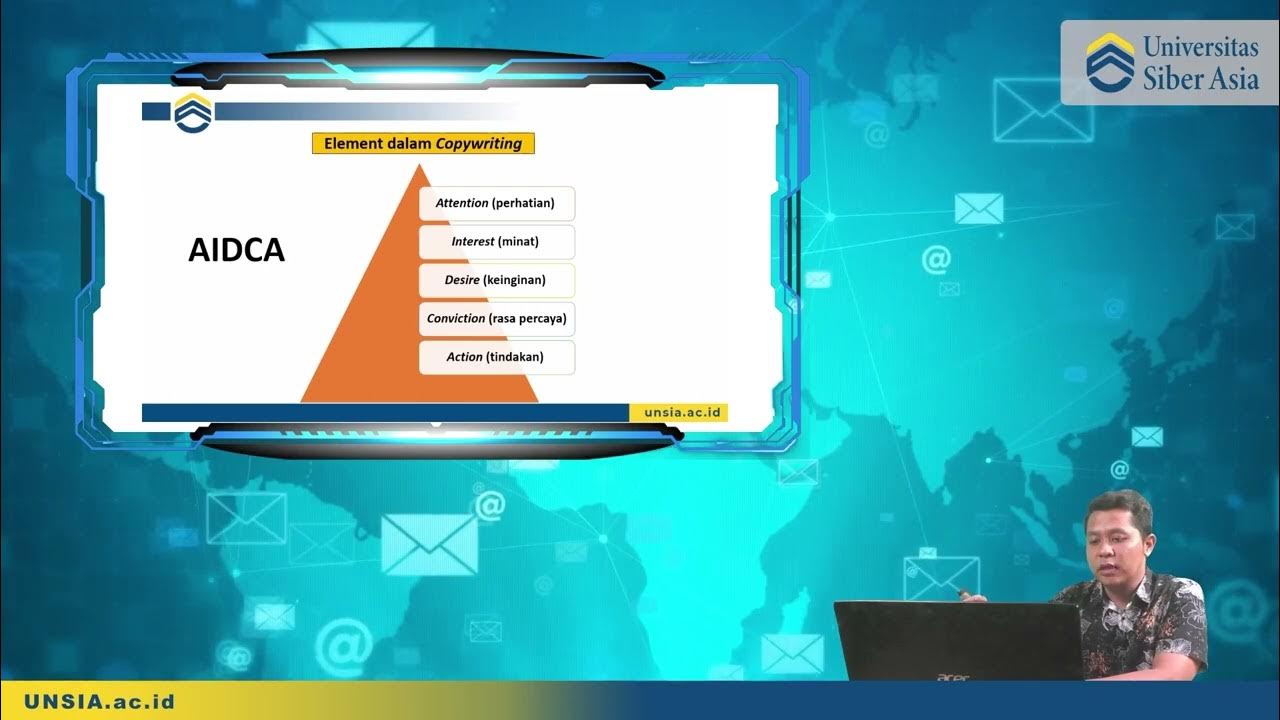
Pertemuan 2 - Copywriting Digital - Muhammad Nur Ichsan, S.I.Kom., M.I.Kom

Bahasa Indonesia (Bab 1, Pertemuan 2 dan 3)
5.0 / 5 (0 votes)

