Hydraulic model testing Solids transport in waste water pipes
Summary
TLDRThis video demonstrates the transport of various solids in wastewater pipelines using a model test. It examines how different particles—broken glass, smooth and rough stones, small metal parts, and mixed solids—behave at varying flow velocities in horizontal and vertical pipes. The experiment highlights the flow rates required to move each type of solid, showing that heavier or irregularly shaped particles need higher velocities, especially in vertical risers. Key insights include how particle size, shape, and density influence settling and transport, emphasizing the importance of maintaining adequate flow to prevent blockages and ensure efficient pipeline operation.
Takeaways
- 💧 The experiment demonstrates how different solids behave in pipelines at varying flow velocities, simulating wastewater transport.
- 🛠️ The model setup includes horizontal and vertical pipes, a pump, measuring equipment, gate valves, and a collection basket for solids.
- 🪨 Solids tested include broken glass, smooth round stones, rough stones, steel nuts/bolts, and mixed solids.
- 🚦 Solids remain stationary at low flow velocities and begin moving only after reaching specific thresholds.
- 🔹 Broken glass starts moving around 0.4 m/s and is fully transported through the vertical riser at ~0.7 m/s.
- 🔹 Smooth round stones begin moving at ~0.4 m/s and require ~0.8 m/s to be fully transported vertically.
- 🔹 Rough-surfaced stones require slightly higher velocities than smooth stones to move and be transported.
- 🔹 Steel nuts and bolts need higher flow velocities, starting at ~0.6 m/s and fully moving at ~1.7 m/s.
- 🔹 Mixed solids separate according to density and shape, with glass and stones moving first, followed by heavier metal parts.
- ⚡ Particle settling speed depends on size, shape, and density; coarser, spherical particles settle faster than fine particles or fibers.
- ⬆️ Vertical pipe transport requires higher flow velocities than horizontal pipe transport.
- 📊 Minimum flow velocities depend on pipe cross-section and orientation, highlighting the need for careful pipeline design.
Q & A
What is the main purpose of the wastewater solids transport model test?
-The main purpose is to investigate and demonstrate the behavior of different solids in a pipeline at various flow velocities, and to understand the conditions required to prevent deposits and blockages.
What types of solids are tested in the pipeline model?
-The solids tested include pieces of broken glass, round smooth stones, stones with rough surfaces, small steel parts like nuts and bolts, and mixed solids composed of these materials.
How is the pipeline model set up for the test?
-The setup includes a horizontal pipe, a vertical pipe riser, a pump in a water tank that circulates water, measuring equipment, gate valves to adjust flow velocity, and a metal basket to collect transported solids.
At what flow velocity do broken glass pieces start to move in the horizontal pipe?
-Broken glass pieces start to move at approximately 0.4 meters per second in the horizontal pipe.
How do round smooth stones behave differently from broken glass in the test?
-Round smooth stones start moving slightly at about 0.4 meters per second, move along the horizontal pipe, but come to rest in the bend at the base of the vertical pipe, and require a higher flow velocity of around 0.8 meters per second to be transported fully through the vertical pipe.
What is the effect of surface roughness on stone transport in the pipeline?
-Rough stones tend to start moving at slightly higher velocities than smooth stones, and some require higher flow velocities (around 0.8 meters per second) to be transported through the vertical pipe riser, showing that surface texture affects transport efficiency.
At what flow velocity do steel parts such as nuts and bolts begin moving?
-Steel parts begin to move at approximately 0.6 meters per second and require around 1.7 meters per second for complete transport through the vertical pipe riser.
How does the flow velocity required for transporting solids differ between horizontal and vertical pipes?
-The flow velocity required for transporting solids in vertical pipe risers is higher than that needed in horizontal pipes due to gravity and the vertical lift.
What factors influence the settling speed of particles in wastewater?
-Particle size, shape, density, and surface texture all influence settling speed. Coarse, nearly spherical gravel settles faster than fine sand or organic fibers.
In the test with mixed solids, which materials are transported first and at what velocities?
-In mixed solids, glass pieces and stones begin to move at approximately 0.4–0.45 meters per second, with glass transported first through the vertical pipe at about 0.55–0.7 meters per second, while nuts and bolts are transported last at around 1.7 meters per second.
Why is it important to study the transport of different solids in wastewater pipelines?
-Studying the transport helps prevent blockages and sediment deposits, ensures efficient pipeline design, and informs the minimum flow velocities needed to keep various solids in suspension and moving through the system.
Outlines

This section is available to paid users only. Please upgrade to access this part.
Upgrade NowMindmap

This section is available to paid users only. Please upgrade to access this part.
Upgrade NowKeywords

This section is available to paid users only. Please upgrade to access this part.
Upgrade NowHighlights

This section is available to paid users only. Please upgrade to access this part.
Upgrade NowTranscripts

This section is available to paid users only. Please upgrade to access this part.
Upgrade NowBrowse More Related Video

KSB pump_ Hydraulic model testing Solids transport in waste water pipes

Water Resource Recovery Facility 3D Virtual Tour

Pengolahan Limbah - Karakteristik Limbah Cair (Part 1/4)

Text to Image generation using Stable Diffusion || HuggingFace Tutorial Diffusers Library

Wastewater treatment
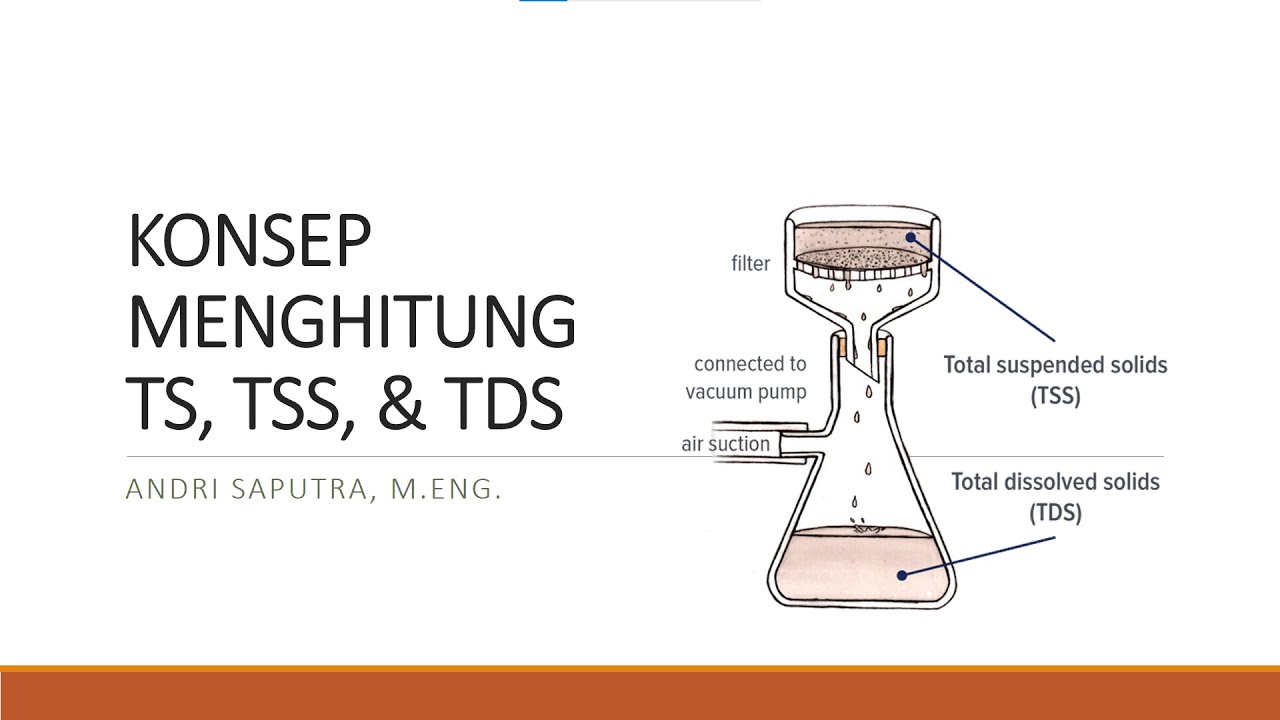
KONSEP MENGHITUNG TOTAL PADATAN (TS), TOTAL PADATAN TERSUSPENSI (TSS), TOTAL PADATAN TERLARUT (TDS)
5.0 / 5 (0 votes)
