Secrets of the Stone Age (2/2) | DW Documentary
Summary
TLDRThis script explores the Neolithic Age, highlighting the early sedentary cultures in the Middle East and their stone structures. Archaeological discoveries near Petra, Jordan, reveal a society with farming and livestock, but no clear social hierarchy. The well-planned settlement at Baya, with its egalitarian housing, suggests a society that managed to live harmoniously in a confined space. The script also delves into their burial practices and the possible reasons for the settlement's abandonment, including climate change events that affected the Mediterranean region.
Takeaways
- 🏰 The human race has been constructing stone structures for thousands of years, with the origins and purposes of these structures being a subject of study.
- 🌾 About ten thousand years ago, humans became sedentary, cultivating crops and raising livestock, which marked the beginning of the Neolithic Age.
- 🎨 Neolithic people appreciated aesthetics and material goods, similar to modern humans, and their legacy is still evident today.
- 🔍 Our knowledge of the Neolithic period is derived from archaeological discoveries, with large stone tombs being key evidence.
- 🗺 The oldest evidence of sedentary cultures has been found in regions now known as Jordan, Syria, Palestine, Northern Iraq, and Southern Anatolia.
- 🏞️ The region was likely more humid and forested in the past, providing a suitable environment for early settlements.
- 👩🔬 Archaeologist Marion Benz and her team are excavating a site in southwestern Jordan, which was discovered over 20 years ago.
- 🏘️ The Baya site, part of the larger archaeological area, indicates a farming society with specialized farming and livestock breeding methods.
- 🏚️ The settlement at Baya appears to have been autonomous with no clear social hierarchy, which is considered a significant social accomplishment.
- 🏺 Neolithic tombs and graves have been found at the site, providing insights into burial practices and the community's beliefs.
- 🧬 Genetic analysis may help determine relationships among the deceased, although the availability of DNA from the remains is uncertain.
- 🤔 The reasons for the settlement's abandonment remain unclear, with possibilities ranging from environmental depletion to climate change events.
Q & A
What is the significance of stone structures in human history?
-Stone structures have been built by humans for ages and are significant as they represent the origins of human construction and the capabilities of early civilizations to move and work with large stones.
Why did humans become sedentary around ten thousand years ago?
-Humans became sedentary to grow crops and raise livestock, which allowed for a more stable food source and the development of settled communities.
What is the connection between Neolithic people and modern society in terms of material goods?
-Neolithic people were the first to become heavily dependent on material goods, similar to how modern society values and relies on material possessions.
How has archaeological evidence helped in understanding the Neolithic Age?
-Archaeological discoveries, such as large stone tombs and settlements, provide key insights into the lifestyle, social structures, and farming practices of Neolithic people.
What is the oldest evidence of sedentary cultures found in which regions?
-The oldest evidence of sedentary cultures has been found in regions that are now Jordan, Syria, Palestine, Northern Iraq, and Southern Anatolia.
What was the significance of the archaeological discovery near the ruins of Petra in Jordan?
-The discovery of prehistoric settlements near Petra was significant as it provided new insights into early farming societies and their social structures.
What challenges does the archaeological team face in reaching the excavation site at Baya?
-The team faces challenges such as hiking through a gorge that can sometimes be blocked by rainwater or snow, and reaching a plateau 1200 meters above sea level.
What does the uniform size of houses at the Baya site suggest about the society?
-The uniform size of houses suggests that the society at Baya was egalitarian, with no significant differences in social status among its members.
How did the Neolithic people at Baya develop their farming and breeding practices?
-They developed specialized methods of farming and breeding livestock, possibly due to overpopulation in the surrounding areas or a need for self-sufficiency.
What did the Neolithic tombs reveal about the community's burial practices?
-The tombs revealed that adults and children were buried together in collective sites, and that some individuals were buried with a rich assortment of burial items, indicating social customs and beliefs about the afterlife.
What factors might have contributed to the abandonment of the Baya settlement?
-The abandonment could be due to depletion of local resources, a major drought, or a significant climate phenomenon that affected living conditions in the Mediterranean region around 6200 BC.
How do archaeologists analyze the data from the Baya site to understand the community's social structure?
-Archaeologists document the original state of the site, analyze the layout of houses, and study burial practices to determine the presence of social hierarchy and the community's social organization.
What is the significance of the climate phenomenon around 6200 BC in relation to the Neolithic Age?
-The climate phenomenon, involving the collapse of an ice dam in North America, led to a significant drop in temperature and precipitation in the Mediterranean region, which could have threatened early Neolithic communities and influenced their decisions to abandon settlements like Baya.
Outlines

This section is available to paid users only. Please upgrade to access this part.
Upgrade NowMindmap

This section is available to paid users only. Please upgrade to access this part.
Upgrade NowKeywords

This section is available to paid users only. Please upgrade to access this part.
Upgrade NowHighlights

This section is available to paid users only. Please upgrade to access this part.
Upgrade NowTranscripts

This section is available to paid users only. Please upgrade to access this part.
Upgrade NowBrowse More Related Video

Pré-Historia (PALEOLÍTICO, NEOLÍTICO E IDADE DOS METAIS) Parte 2
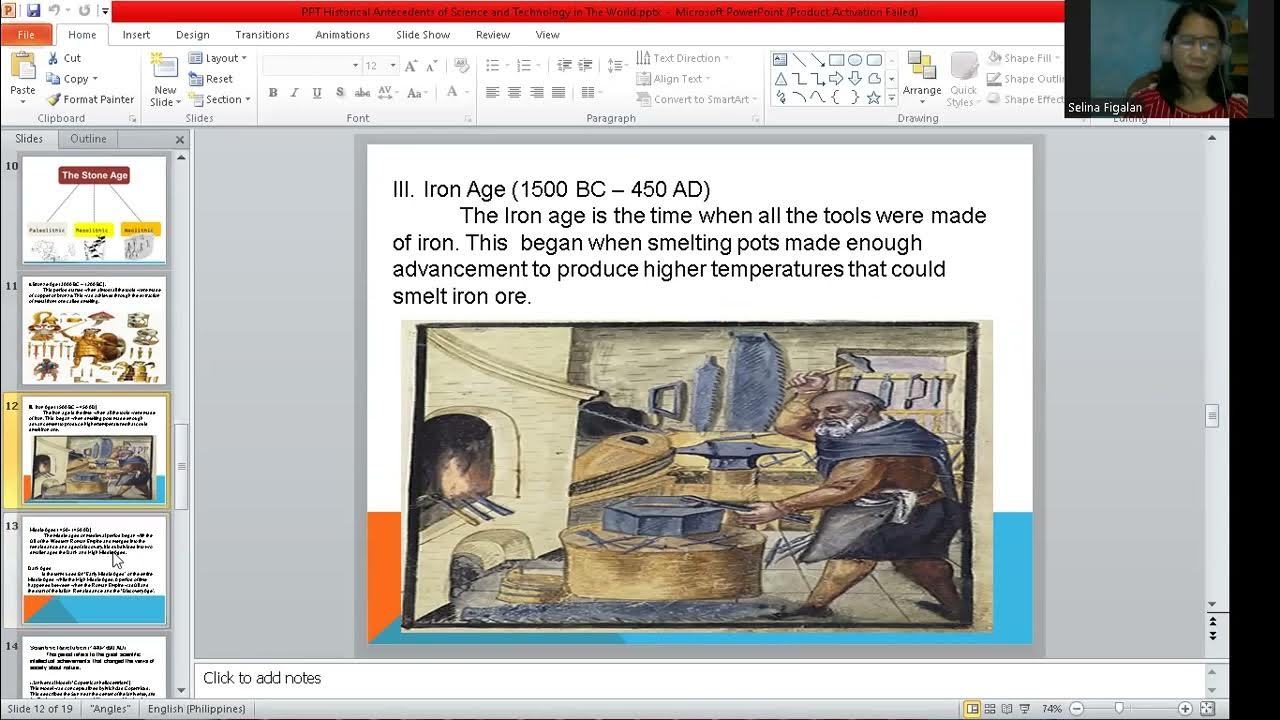
Historical Antecedents of Science and Technology in the World
LA PREHISTORIA PARA NIÑOS | Vídeos Educativos para Niños

MASA PRAAKSARA || |Periodisasi Secara Arkeologis
The Stone Age Man | Life Millions Of Years Ago | The Dr Binocs Show | Peekaboo Kidz

How to Create Trending Historical Documentaries Using Kling AI 3D Animation (A-Z Guide)
5.0 / 5 (0 votes)
