Wastewater Instructional Video: Trickling Filters and RBCs
Summary
TLDRThis video provides an in-depth look at the operation and maintenance of trickling filters and rotating biological contactors (RBCs) in wastewater treatment. It explains how these biological systems use microorganisms to remove organic matter and, in some cases, ammonia. Key components such as the structure, media, distribution, and underdrain systems are described, along with different filter classifications: standard rate, high rate, and roughing. The video also covers RBC design, process control testing, and the importance of operator vigilance. Finally, it highlights how treated wastewater flows into a secondary clarifier, completing the biological treatment stage efficiently and safely.
Takeaways
- 😀 Proper maintenance of trickling filters (TFs) and rotating biological contactors (RBCs) reduces pollution and operating costs.
- 😀 TFs and RBCs are aerobic biological processes that remove colloidal and dissolved organic matter, and sometimes ammonia, from wastewater.
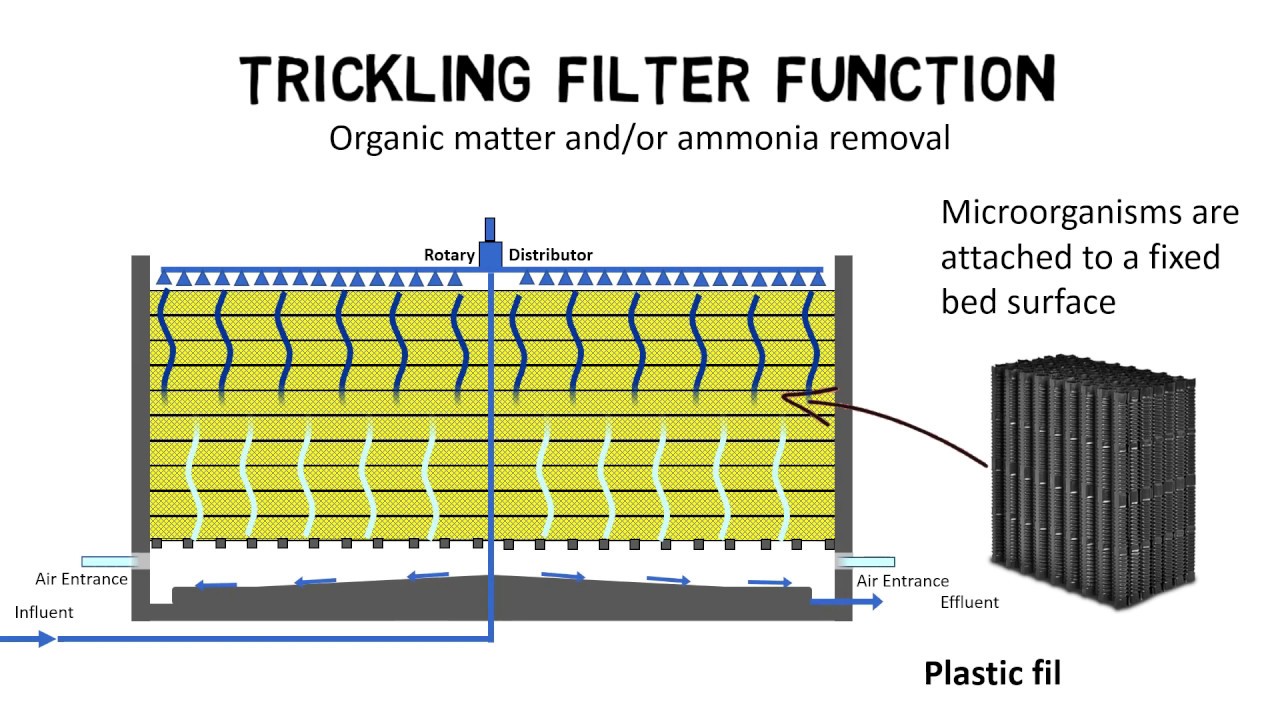
- 😀 The four main components of a trickling filter are the retaining structure, media, distribution system, and underdrain system.
- 😀 Trickling filter media can be stacked (plastic sections) or random dump (rock or plastic), providing surface area for microbial growth.
- 😀 The distribution system, either rotating or fixed orifice, ensures even wastewater distribution over the filter media and requires regular maintenance.
- 😀 The underdrain system supports the media, collects treated wastewater, allows airflow, and must remain free of debris to prevent septic conditions.
- 😀 Trickling filters are classified into standard rate, high rate, and roughing filters, each with different hydraulic and organic loading capacities.
- 😀 RBCs rotate high-density plastic discs partially submerged in wastewater to achieve the same treatment as TFs, with multiple stages for efficiency.
- 😀 Operators must perform process control testing (DO, pH, BOD, TSS, temperature) and maintain logs and visual inspections to ensure proper performance.
- 😀 After biological treatment, wastewater flows into a secondary clarifier where remaining solids settle before moving to the next treatment stage.
Q & A
What is the main function of trickling filters and rotating biological contactors (RBCs) in wastewater treatment?
-Trickling filters and RBCs are biological treatment units designed to remove organic matter, including colloidal and dissolved solids, from wastewater by using microorganisms that consume the organic material.
Why is regular maintenance crucial for trickling filters and RBCs?
-Regular maintenance is essential to ensure that the systems operate efficiently, prevent septic conditions, reduce pollution, and extend the lifespan of the equipment. It also helps maintain proper aeration and flow through the system.
What components make up a trickling filter system?
-A trickling filter consists of four main components: the retaining structure, the media, the distribution system, and the under drain system.
What materials are commonly used to construct the retaining structure of a trickling filter?
-The retaining structure of a trickling filter is usually made of concrete or special ceramic-coated steel.
How does the media in a trickling filter function?
-The media provides surface area for microorganisms to grow on, which feed on the organic matter in the wastewater. Media types include stacked or random dump types made from materials like rock or plastic.
What role does the distribution system play in a trickling filter?
-The distribution system evenly distributes wastewater over the media. It can be either rotating or fixed, with rotating distributors powered by the jet action of the wastewater.
Why is it important to keep the distribution system's orifices clean?
-It is important to keep the orifices clean to ensure proper wastewater distribution and prevent blockages that could affect the trickling filter’s performance.
What are the different types of trickling filters, and how do they differ in operation?
-The three main types of trickling filters are standard rate filters, high rate filters, and roughing filters. Standard rate filters operate with intermittent dosing, high rate filters use recirculation, and roughing filters handle higher loadings for initial BOD reduction before further treatment.
How do rotating biological contactors (RBCs) differ from trickling filters?
-The main difference is that RBCs rotate the media through the wastewater, whereas trickling filters distribute the wastewater over the media. RBCs also use high-density plastic discs placed on rotating shafts.
What process control tests should operators perform to ensure the proper functioning of trickling filters and RBCs?
-Operators should perform process control tests on dissolved oxygen, pH, BOD, total suspended solids, temperature, and key disc conditions in the clarifier. Visual inspections and microscopic examinations of the biofilm are also important.
Outlines

Этот раздел доступен только подписчикам платных тарифов. Пожалуйста, перейдите на платный тариф для доступа.
Перейти на платный тарифMindmap

Этот раздел доступен только подписчикам платных тарифов. Пожалуйста, перейдите на платный тариф для доступа.
Перейти на платный тарифKeywords

Этот раздел доступен только подписчикам платных тарифов. Пожалуйста, перейдите на платный тариф для доступа.
Перейти на платный тарифHighlights

Этот раздел доступен только подписчикам платных тарифов. Пожалуйста, перейдите на платный тариф для доступа.
Перейти на платный тарифTranscripts

Этот раздел доступен только подписчикам платных тарифов. Пожалуйста, перейдите на платный тариф для доступа.
Перейти на платный тарифПосмотреть больше похожих видео
Trickling filter design guideline - How do trickling filters work?

Trickling Filters
Bioreactors | Design, Principle, Parts, Types, Applications, & Limitations | Biotechnology Courses
INSTALASI PENGOLAHAN AIR LIMBAH PRODUKSI JUTAAN AYAM!! BEGINILAH PROSESNYA #wwtp #ipal

Lecture 03: Course outline.
3D animation of tertiary sewage treatment process at the Eastern Treatment Plant
5.0 / 5 (0 votes)

