Hukum Faraday | Induksi Elektromagnetik | Part 1 | Fisika Dasar
Summary
TLDRThis video covers the concept of electromagnetic induction, focusing on Faraday's Law. It explains how electromagnetic induction occurs when there is a change in magnetic flux, leading to induced voltage or electromotive force (EMF). The video explores key concepts such as magnetic flux, its units, and how changes in flux lead to induced currents. It also delves into how to calculate induced EMF using Faraday's Law, highlighting its application in real-life scenarios, and explains the principles behind Lenz’s Law, which governs the direction of induced currents. The session also includes practical examples and problem-solving.
Takeaways
- ⚡ Electromagnetic induction occurs when a voltage (EMF) is generated due to a changing magnetic flux over time.
- 🧲 Magnetic flux (ΦB) is the total magnetic field lines passing through a given area, calculated as ΦB = B × A × cosθ.
- 📏 The unit of magnetic flux is Weber (Wb), and it is similar to electric flux but with magnetic fields.
- 🔄 Faraday's experiment demonstrates that moving a magnet near a coil induces an electric current if the circuit is closed.
- 📉 Faraday's Law formula: EMF (ε) = -N × dΦB/dt, where N is the number of coil turns and the negative sign represents Lenz's Law.
- 🛡️ Lenz's Law states that the induced current always opposes the change in magnetic flux that caused it.
- 📐 Magnetic flux can change due to variations in magnetic field strength (B), area (A), or the angle (θ) between field and area.
- 🚶 In a moving conductor within a magnetic field, EMF can be calculated as ε = B × L × v, where L is the length of the conductor and v is its velocity.
- 🔌 If the induced circuit is closed, the induced EMF generates a current: I = ε / R, where R is the resistance of the circuit.
- ✋ The direction of induced current and Lorentz force can be determined using the right-hand rule or principles from Lenz's Law.
- 📊 Practical examples include calculating changes in flux when a wire moves through a homogeneous magnetic field and predicting induced current direction.
- 💡 The combination of electricity and magnetism forms the foundation for understanding electromagnetic phenomena and is essential for applications like electric generators and motors.
Q & A
What is electromagnetic induction?
-Electromagnetic induction is the phenomenon where a voltage or electromotive force (EMF) is generated in a conductor due to a changing magnetic flux through it.
How is magnetic flux defined?
-Magnetic flux is the total number of magnetic field lines passing through a given surface area. For a uniform magnetic field, it is calculated as Φ = B × A × cos(θ), where B is the magnetic field strength, A is the area, and θ is the angle between the field and the surface normal.
What unit is used to measure magnetic flux?
-Magnetic flux is measured in Weber (Wb).
What was the key observation in Faraday's experiment?
-Faraday observed that moving a magnet towards or away from a coil induces an electric current in the coil, even without a battery, due to the changing magnetic flux.
State Faraday's Law of Induction.
-Faraday's Law of Induction states that the induced EMF in a coil is equal to the negative rate of change of magnetic flux through the coil multiplied by the number of turns: ε = -N (dΦ/dt).
What does the negative sign in Faraday's Law represent?
-The negative sign indicates that the induced EMF creates a current whose magnetic field opposes the change in the original magnetic flux, according to Lenz's Law.
What are the three factors that can cause a change in magnetic flux?
-A change in magnetic flux can occur due to: 1) a change in the magnetic field strength (B), 2) a change in the area of the conductor exposed to the field (A), or 3) a change in the angle (θ) between the field and the surface.
How do you calculate the induced EMF for a moving conductor in a uniform magnetic field?
-For a conductor of length L moving with velocity v perpendicular to a uniform magnetic field B, the induced EMF is ε = B × L × v.
How can the direction of induced current be determined?
-The direction of induced current can be determined using Lenz's Law, which states that the current will flow in such a way as to oppose the change in magnetic flux, or using the right-hand rule for the orientation of the conductor and magnetic field.
What is the relationship between induced current and the Lorentz force?
-The induced current in a conductor moving through a magnetic field experiences a Lorentz force, which can be calculated as F = I × L × B, where I is the induced current, L is the conductor length, and B is the magnetic field strength. This force acts to oppose the motion of the conductor, consistent with Lenz's Law.
Why does a closed circuit matter in electromagnetic induction?
-A closed circuit allows the induced EMF to drive a current, whereas in an open circuit only the EMF is present but no continuous current flows.
What is the significance of a homogeneous magnetic field in calculating flux?
-A homogeneous magnetic field has the same strength and direction throughout the area it passes. This simplifies flux calculation to a direct multiplication of B, area A, and cos(θ), without needing to integrate over the surface.
Outlines

Этот раздел доступен только подписчикам платных тарифов. Пожалуйста, перейдите на платный тариф для доступа.
Перейти на платный тарифMindmap

Этот раздел доступен только подписчикам платных тарифов. Пожалуйста, перейдите на платный тариф для доступа.
Перейти на платный тарифKeywords

Этот раздел доступен только подписчикам платных тарифов. Пожалуйста, перейдите на платный тариф для доступа.
Перейти на платный тарифHighlights

Этот раздел доступен только подписчикам платных тарифов. Пожалуйста, перейдите на платный тариф для доступа.
Перейти на платный тарифTranscripts

Этот раздел доступен только подписчикам платных тарифов. Пожалуйста, перейдите на платный тариф для доступа.
Перейти на платный тарифПосмотреть больше похожих видео
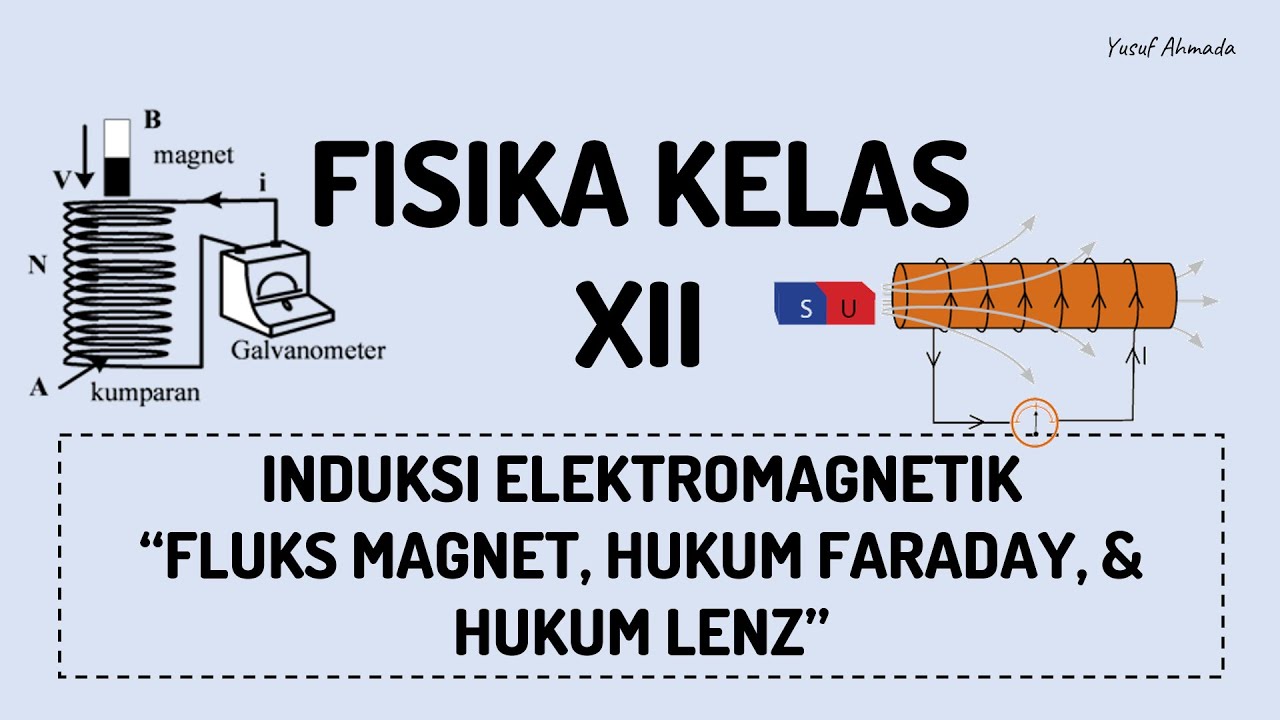
FISIKA KELAS XII | INDUKSI ELEKTROMAGNETIK - Fluks Magnet, Hukum Faraday, dan Hukum Lenz

GAYA GERAK LISTRIK | KELAS XII | FISIKA ITU MUDAH [Nabila Ratna Az-Zahra]

INDUKSI ELEKTROMAGNETIK || KEMAGNETAN || DINAMO || TRANSFORMATOR || IPA || KELAS 9
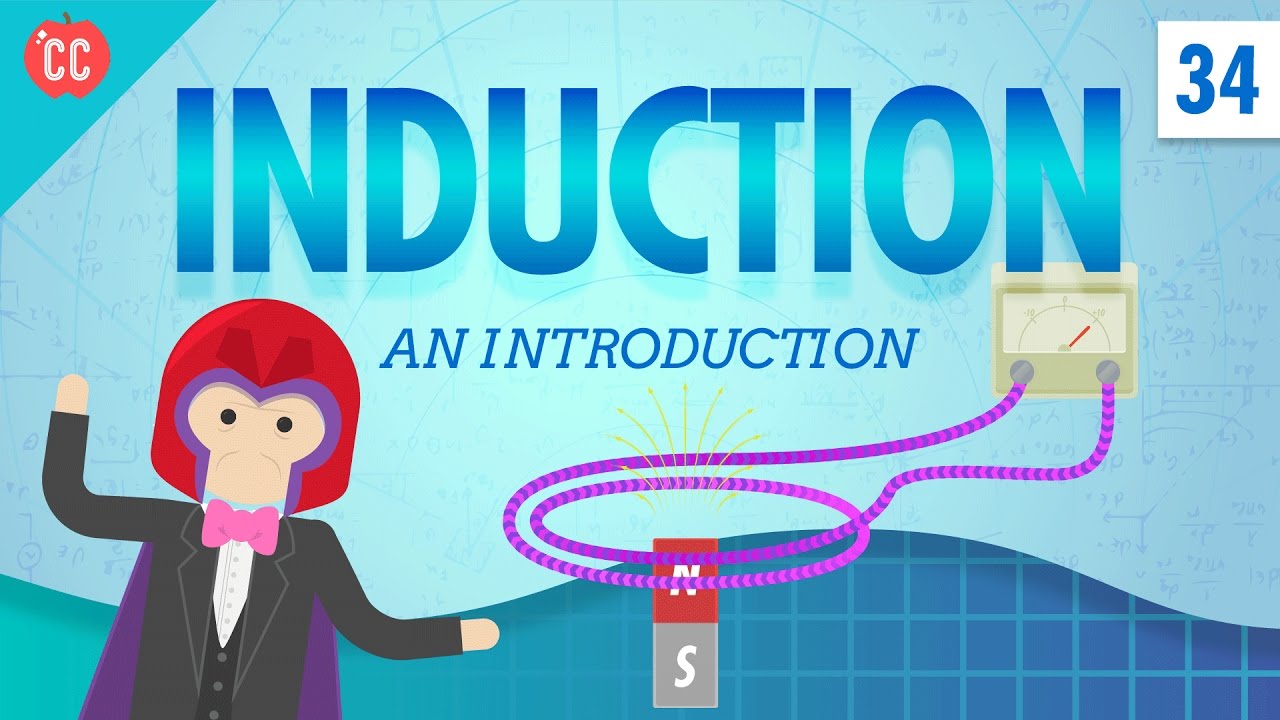
Induction - An Introduction: Crash Course Physics #34
Generation of AC Voltage - AC Circuits - Basic Electrical Engineering

Induksi Elektromagnetik part 1
5.0 / 5 (0 votes)

