Kesetimbangan Kimia : Tetapan Kesetimbangan Berdasarkan Tekanan Parsial (Kp) dan Hubungan Kp & Kc
Summary
TLDRThe video explains how equilibrium constants can be expressed in terms of partial pressures, known as KP, using both homogeneous and heterogeneous reactions. It illustrates the concept with examples such as the synthesis and decomposition of ammonia, detailing how to calculate total moles, partial pressures, and ultimately KP. The video also demonstrates solving equilibrium problems step by step, including determining the partial pressures at equilibrium and applying stoichiometry. Additionally, it covers the relationship between KP and KC, including the mathematical conversion using Δn and temperature in Kelvin. This guide provides a clear, practical approach to mastering gas-phase equilibrium calculations.
Takeaways
- 😀 The equilibrium constant can be expressed in terms of concentration or partial pressure.
- 😀 The partial pressure of a gas is directly proportional to its mole quantity, which can be calculated using the formula: (mol of gas / total moles) × total pressure.
- 😀 In a closed system, the total pressure is the sum of the partial pressures of all gases present.
- 😀 For a given reaction, the equilibrium constant based on partial pressures (Kp) is calculated by multiplying the partial pressures of products raised to their coefficients, divided by the partial pressures of reactants raised to their coefficients.
- 😀 In homogeneous equilibrium reactions, all substances are in the same phase (e.g., all gases), and the Kp expression includes the partial pressures of all involved gases.
- 😀 In heterogeneous equilibrium reactions, only gases and solutions are considered in the Kp expression, while solids and liquids are excluded.
- 😀 When calculating Kp, the partial pressures of each gas are determined using the mole fraction formula and the total pressure of the system.
- 😀 The relationship between Kp and Kc is given by the equation: Kp = Kc × (RT)^(Δn), where Δn is the change in the number of moles of gas between products and reactants.
- 😀 Example problems involve calculating the equilibrium constant by first determining the partial pressures of gases at equilibrium, then applying the equilibrium constant formula.
- 😀 The conversion from Celsius to Kelvin is crucial when working with temperature in equilibrium constant calculations, as the gas constant R requires Kelvin units.
- 😀 When given a system with both reactants and products at equilibrium, the Kp value can be calculated by substituting the appropriate partial pressures into the equilibrium expression.
Q & A
What is the equilibrium constant based on partial pressure (Kp)?
-Kp is the equilibrium constant expressed in terms of the partial pressures of the gases involved in a chemical reaction. It is calculated using the partial pressures of the products divided by the partial pressures of the reactants, each raised to the power of their respective coefficients in the balanced equation.
How is partial pressure related to the number of moles in a gas?
-Partial pressure of a gas is directly proportional to its number of moles. The formula to calculate the partial pressure of a gas is: (moles of the gas / total moles of all gases) * total pressure.
What is the formula for calculating the partial pressure of a gas?
-The formula to calculate the partial pressure of a gas is: (moles of the gas / total moles of all gases) * total pressure.
How do you determine the equilibrium constant (Kp) for a reaction involving gases?
-The equilibrium constant (Kp) is determined by the ratio of the partial pressures of the products to the reactants, each raised to the power of their respective coefficients in the balanced equation. For example, for the reaction N2 + 3H2 ⇌ 2NH3, Kp = (P_NH3^2) / (P_N2 * P_H2^3).
What is the relationship between Kp and Kc?
-Kp (based on partial pressure) and Kc (based on concentration) are related by the equation: Kp = Kc * (RT)^Δn, where R is the gas constant, T is the temperature in Kelvin, and Δn is the change in the number of moles of gas between products and reactants.
What does the term Δn represent in the equation relating Kp and Kc?
-Δn represents the difference in the number of moles of gaseous products and reactants. It is calculated by subtracting the total number of moles of gas on the reactant side from the total number of moles of gas on the product side of the reaction.
How do you calculate the total moles in a gas mixture?
-The total number of moles in a gas mixture is the sum of the moles of all gases present. For example, if the mixture contains 0.1 mol of gas A, 0.15 mol of gas B, and 0.25 mol of gas C, the total moles would be 0.1 + 0.15 + 0.25 = 0.5 mol.
What happens in a heterogeneous equilibrium involving gases and solids?
-In a heterogeneous equilibrium, the partial pressures of only the gaseous or liquid components are considered. Solids and pure liquids do not appear in the equilibrium constant expression because their concentrations are constant.
How do you calculate the equilibrium constant for a reaction involving gases and solids?
-When calculating the equilibrium constant for a reaction involving gases and solids, only the gases are included in the expression for Kp. For example, in the reaction CO(g) + I2O5(s) ⇌ I2(g) + 5CO2(g), the solid I2O5 is not included in the Kp expression.
What is the significance of the stoichiometric coefficients in the equilibrium constant expression?
-The stoichiometric coefficients indicate the powers to which the partial pressures of the gases are raised in the equilibrium constant expression. For example, if the coefficient of a reactant is 3, its partial pressure is raised to the power of 3 in the Kp formula.
Outlines

Этот раздел доступен только подписчикам платных тарифов. Пожалуйста, перейдите на платный тариф для доступа.
Перейти на платный тарифMindmap

Этот раздел доступен только подписчикам платных тарифов. Пожалуйста, перейдите на платный тариф для доступа.
Перейти на платный тарифKeywords

Этот раздел доступен только подписчикам платных тарифов. Пожалуйста, перейдите на платный тариф для доступа.
Перейти на платный тарифHighlights

Этот раздел доступен только подписчикам платных тарифов. Пожалуйста, перейдите на платный тариф для доступа.
Перейти на платный тарифTranscripts

Этот раздел доступен только подписчикам платных тарифов. Пожалуйста, перейдите на платный тариф для доступа.
Перейти на платный тарифПосмотреть больше похожих видео
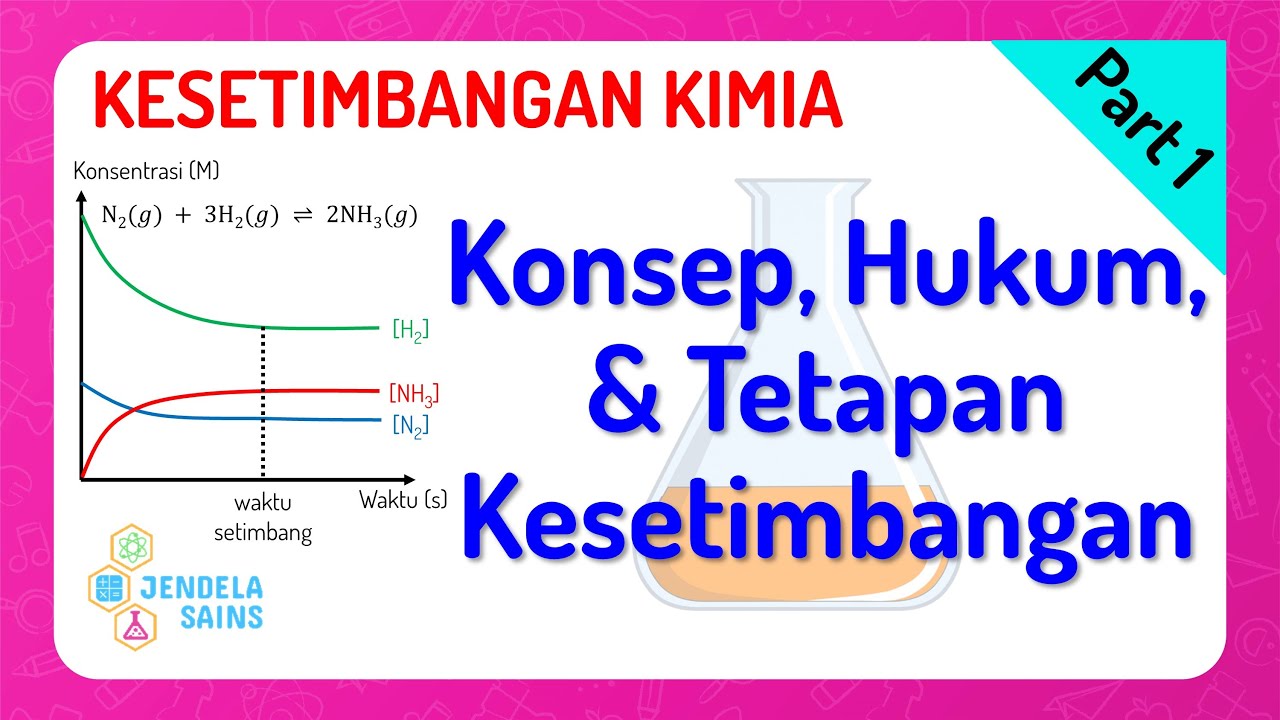
Kesetimbangan Kimia • Part 1: Konsep, Hukum, Tetapan Kesetimbangan Kc dan Kp

Menghitung Tetapan Kesetimbangan Berdasarkan Tekanan (Kp) | Kesetimbangan Kimia | Kelas 11

Constante de Equilíbrio: Kp e Kc
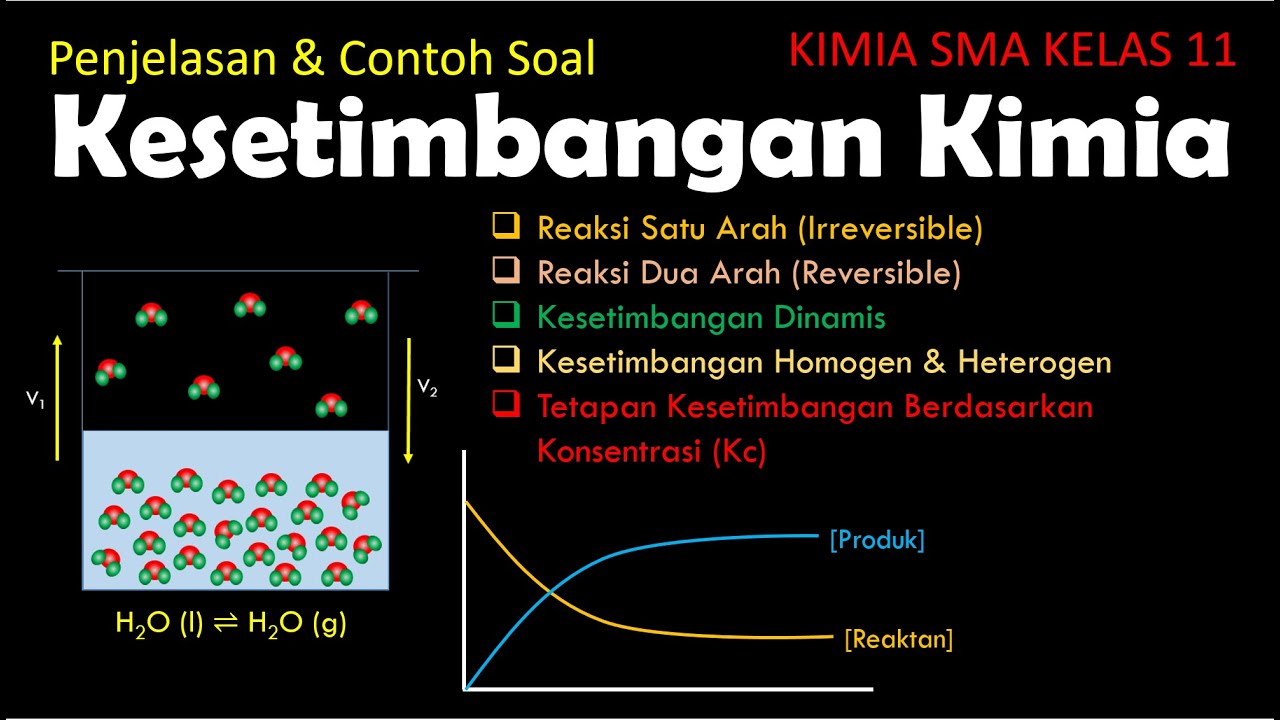
KESETIMBANGAN KIMIA ( KIMIA SMA KELAS 11 )
Part 1 Kesetimbangan Kimia: Reaksi Irreversible, Reaksi Reversible dan Konsep Kesetimbangan Dinamis.

PENGERTIAN DAN TETAPAN KESETIMBANGAN (Kc)
5.0 / 5 (0 votes)

