T cell Activation and differentiation (FL-Immuno/31)
Summary
TLDRT-cell activation is a complex process involving two critical signals. First, antigen-presenting cells (APCs) process and present antigens on MHC II molecules, which naïve CD4+ T-cells recognize. This triggers the first signal, followed by a co-stimulatory signal, often through the B7-CD28 interaction, which prevents T-cell inactivity. Activated T-cells proliferate, secrete interleukin-2, and differentiate into effector and memory T-cells. A similar process occurs for CD8+ T-cells, but they respond to MHC I molecules. These T-cells protect the body by attacking infected cells and remembering pathogens for faster response in the future.
Takeaways
- 😀 Activation of T-cells is a complex process involving multiple steps, but can be simplified into key stages.
- 😀 There are two main types of mature T-cells: CD4+ and CD8+ T-cells, both of which are initially naive.
- 😀 Naive CD4+ T-cells first recognize antigen-presenting cells (APCs) that display antigen fragments via MHC2 peptide complexes.
- 😀 Antigen presentation is a key process where APCs engulf, digest, and present antigens on their surface using MHC2 molecules.
- 😀 The first signal in T-cell activation occurs when the TCR binds to the antigen and the CD4 co-receptor binds to MHC2 molecules on the APC.
- 😀 Full T-cell activation requires a second signal, called co-stimulation, which enhances the first signal and prevents inactivity (anergy).
- 😀 The most important co-stimulatory molecules are CD28 on T-cells and B7 on APCs.
- 😀 Activated T-cells secrete interleukin-2 (IL-2), which binds to its own receptor on the same T-cell, promoting its proliferation and differentiation.
- 😀 Proliferation and differentiation of T-cells result in the generation of effector T-cells and memory T-cells.
- 😀 CD4+ effector T-cells can differentiate into various subsets, such as T-helper cells, while memory T-cells provide long-term immunity.
- 😀 The activation of CD8+ T-cells follows a similar process to CD4+ T-cells, but these cells recognize antigen presented by MHC1 molecules.
- 😀 Once activated, CD8+ T-cells differentiate into cytotoxic T-cells that target and destroy infected cells, as well as memory T-cells for future immunity.
Q & A
What are the two main types of T cells discussed in the transcript?
-The two main types of T cells discussed are CD4+ T cells (helper T cells) and CD8+ T cells (cytotoxic T cells).
What is the significance of the two-signal process in T cell activation?
-The two-signal process is crucial for full T cell activation. The first signal involves the binding of the T cell receptor (TCR) to the antigen, and the second signal involves co-stimulation to prevent T cell inactivation (anergy).
How do antigen-presenting cells (APCs) contribute to T cell activation?
-APCs engulf antigens through phagocytosis, digest them into peptide fragments, and display these fragments on their surface using MHCII molecules. This presentation is crucial for recognizing and activating T cells.
What role do MHC molecules play in T cell activation?
-MHC (Major Histocompatibility Complex) molecules present peptide fragments from antigens on the surface of APCs. CD4+ T cells recognize these fragments on MHCII molecules, while CD8+ T cells recognize antigens on MHC1 molecules.
Why is co-stimulation important for T cell activation?
-Co-stimulation is essential to ensure full T cell activation. Without it, the T cells that recognize the antigen remain inactive, a state known as anergy. Co-stimulatory molecules like CD28 and B7 facilitate this second signal.
What are some examples of co-stimulatory molecules mentioned in the transcript?
-Examples of co-stimulatory molecules include CD28 on T cells and B7 on APCs. Other co-stimulatory molecules include CD2 and CD45.
What happens after T cells receive both activation signals?
-After receiving both signals, T cells undergo rapid proliferation and differentiation. They generate effector cells (e.g., helper T cells or cytotoxic T cells) and memory cells that can respond more quickly in future encounters with the same antigen.
What is the function of IL-2 in T cell activation?
-IL-2 is a cytokine secreted by activated T cells that binds to receptors on the same T cell. It functions in autocrine signaling, promoting T cell proliferation and the generation of effector and memory cells.
What is the difference between the activation of CD4+ and CD8+ T cells?
-Both CD4+ and CD8+ T cells undergo a similar activation process, but CD4+ T cells recognize antigens presented on MHCII molecules, while CD8+ T cells recognize antigens on MHC1 molecules. CD8+ T cell activation also relies on cytokines produced by helper T cells.
What is the importance of memory T cells?
-Memory T cells are crucial for faster immune responses in case of future encounters with the same pathogen. They can quickly proliferate and differentiate into effector cells, providing long-term immunity.
Outlines

Этот раздел доступен только подписчикам платных тарифов. Пожалуйста, перейдите на платный тариф для доступа.
Перейти на платный тарифMindmap

Этот раздел доступен только подписчикам платных тарифов. Пожалуйста, перейдите на платный тариф для доступа.
Перейти на платный тарифKeywords

Этот раздел доступен только подписчикам платных тарифов. Пожалуйста, перейдите на платный тариф для доступа.
Перейти на платный тарифHighlights

Этот раздел доступен только подписчикам платных тарифов. Пожалуйста, перейдите на платный тариф для доступа.
Перейти на платный тарифTranscripts

Этот раздел доступен только подписчикам платных тарифов. Пожалуйста, перейдите на платный тариф для доступа.
Перейти на платный тарифПосмотреть больше похожих видео
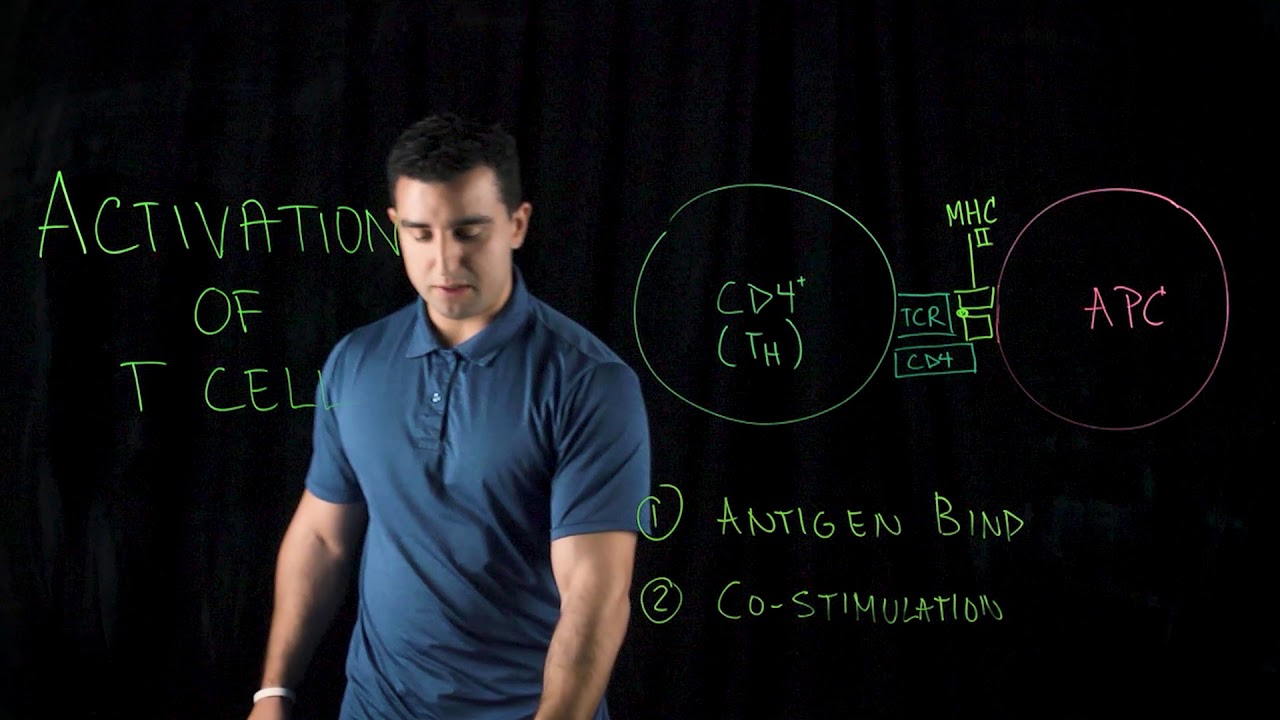
Activation of T Cells

110 Signaling Examples

ATIVAÇÃO DE LINFÓCITOS B (ENSINO SUPERIOR) - IMUNOLOGIA
Peripheral T cell Tolerance - Clonal Deletion and Anergy (FL-Immuno/78)

Imunosupresan (1): Aktivasi dan Diferensiasi Sel Limfosit T

B cell Activation and Differentiation (PART 1): T Independent Activation (FL-Immuno/48)
5.0 / 5 (0 votes)

