Equivalent Point Load - Adaptive Map Worked Example 1
Summary
TLDRIn this video, the process of calculating the equivalent point load and its point of application for a distributed force is demonstrated. The example features a force that starts at 14 kg/m at 3 meters from the beam's edge and decreases linearly to zero. Using integration, the force function is derived, and the equivalent point load (49 kN) is calculated. Additionally, the position of the point load (5.33 meters from the edge) is found. The video walks through the necessary steps to arrive at a statically equivalent system, providing a detailed and clear explanation of the integration process.
Takeaways
- 😀 The video discusses how to determine the equivalent point load and its point of application for a distributed force on a beam.
- 😀 The distributed force starts at 14 kilograms per meter and decreases linearly to zero over a span of 7 meters.
- 😀 The method used to solve the problem is the integration method, which involves finding the force function and applying definite integrals.
- 😀 The equation for the force function is derived from the linear distribution of the force and is given as F(x) = -2x + 20.
- 😀 To determine the magnitude of the equivalent point load (Feq), an integral of the force function is taken from x = 3 meters to x = 10 meters.
- 😀 After performing the integration, the equivalent point load (Feq) is calculated to be 49 kilonewtons.
- 😀 The point of application of the equivalent point load (x_eq) is found using the moment integral method, which involves another integration.
- 😀 The moment integral is calculated from x = 3 meters to x = 10 meters, resulting in a value of 261.33 when evaluated.
- 😀 The point of application (x_eq) is found by dividing the result of the moment integral by Feq, yielding a distance of 5.33 meters from the edge of the beam.
- 😀 A diagram is created to visually represent the equivalent point load of 49 kilonewtons applied 5.33 meters from the edge of the cantilever beam.
- 😀 The final result shows that the equivalent point load and its location provide a statically equivalent representation of the original distributed force.
Q & A
What is the goal of the video?
-The goal is to determine the magnitude and point of application of the equivalent point load for a distributed force acting on a beam.
What method is used to find the equivalent point load?
-The integration method is used to find the equivalent point load (Feq) and the point of application (Xeq).
How is the force function derived for the distributed load?
-The force function is derived from the equation of the line representing the distributed load. The slope of the line is negative, and it starts at 14 kN/m at 3 meters and drops to 0 at 10 meters. The equation is F(x) = -2x + 20.
How is the equivalent point load (Feq) calculated?
-Feq is calculated by integrating the force function (F(x) = -2x + 20) from x = 3 meters to x = 10 meters, resulting in a value of 49 kN.
What does the integration represent in this context?
-The integration represents the total force under the curve of the distributed load, which is equivalent to the total load acting at a single point.
How is the point of application (Xeq) of the equivalent point load determined?
-The point of application (Xeq) is determined by taking the moment integral, which is the product of the force function and the distance 'x', and dividing the result by the total equivalent force (Feq).
What is the value of Xeq, and what does it represent?
-The value of Xeq is 5.33 meters, which is the position where the equivalent point load of 49 kN should be applied for the system to be statically equivalent to the distributed force.
What does the equivalent point load of 49 kN represent?
-The equivalent point load of 49 kN represents the total force of the distributed load, acting at a single point located 5.33 meters from the start of the beam.
Why is the slope of the force function -2?
-The slope is -2 because the distributed force decreases linearly from 14 kN/m to 0 kN/m over a span of 7 meters (from 3 meters to 10 meters), leading to a slope of -2.
How does the final diagram illustrate the solution?
-The final diagram shows a cantilever beam with an equivalent point load of 49 kN applied 5.33 meters from the edge, which is statically equivalent to the original distributed load.
Outlines

Этот раздел доступен только подписчикам платных тарифов. Пожалуйста, перейдите на платный тариф для доступа.
Перейти на платный тарифMindmap

Этот раздел доступен только подписчикам платных тарифов. Пожалуйста, перейдите на платный тариф для доступа.
Перейти на платный тарифKeywords

Этот раздел доступен только подписчикам платных тарифов. Пожалуйста, перейдите на платный тариф для доступа.
Перейти на платный тарифHighlights

Этот раздел доступен только подписчикам платных тарифов. Пожалуйста, перейдите на платный тариф для доступа.
Перейти на платный тарифTranscripts

Этот раздел доступен только подписчикам платных тарифов. Пожалуйста, перейдите на платный тариф для доступа.
Перейти на платный тарифПосмотреть больше похожих видео
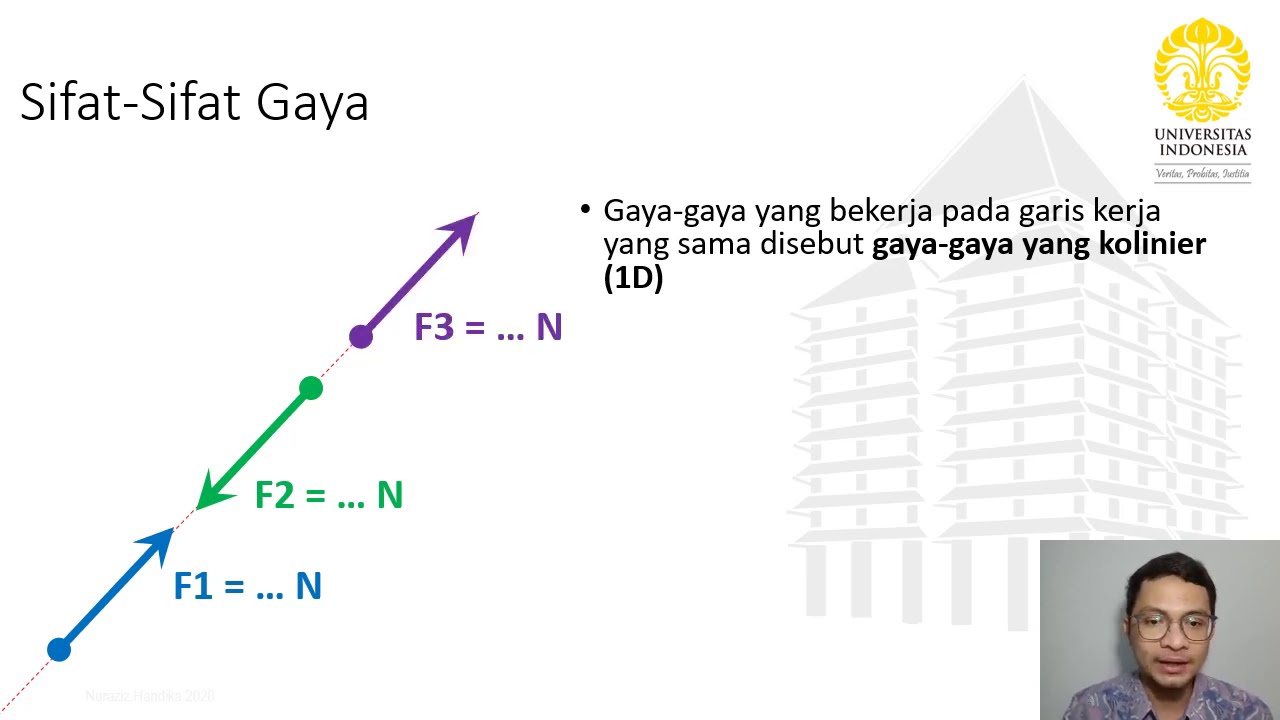
Kuliah Sifat-Sifat Gaya - Statika Kuliah 2(1) Vid

FEA 28: Distributed Loads with Isoparametric Elements

Drehmoment Drehzahl Kennlinie - Kurzschlussläufermotor - einfach und anschaulich erklärt

Mechanics of Materials: F1-1 (Hibbeler)
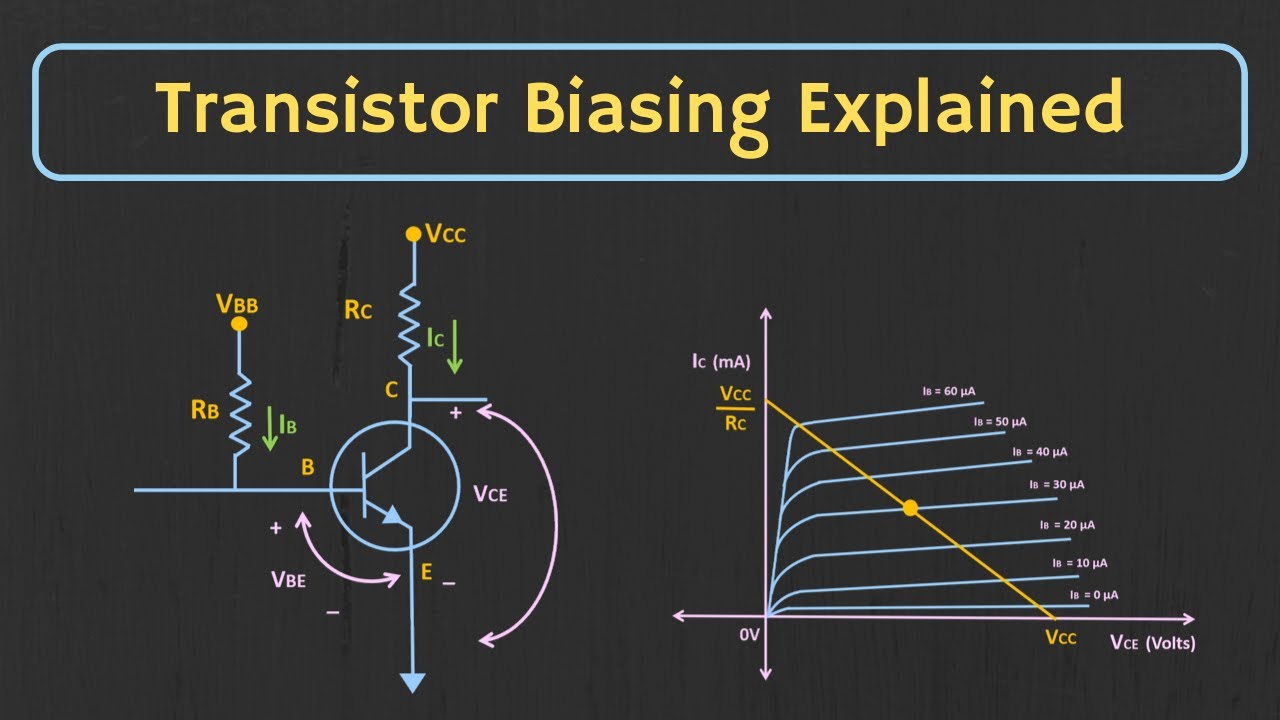
Transistor Biasing: What is Q-point? What is Load Line? Fixed Bias Configuration Explained
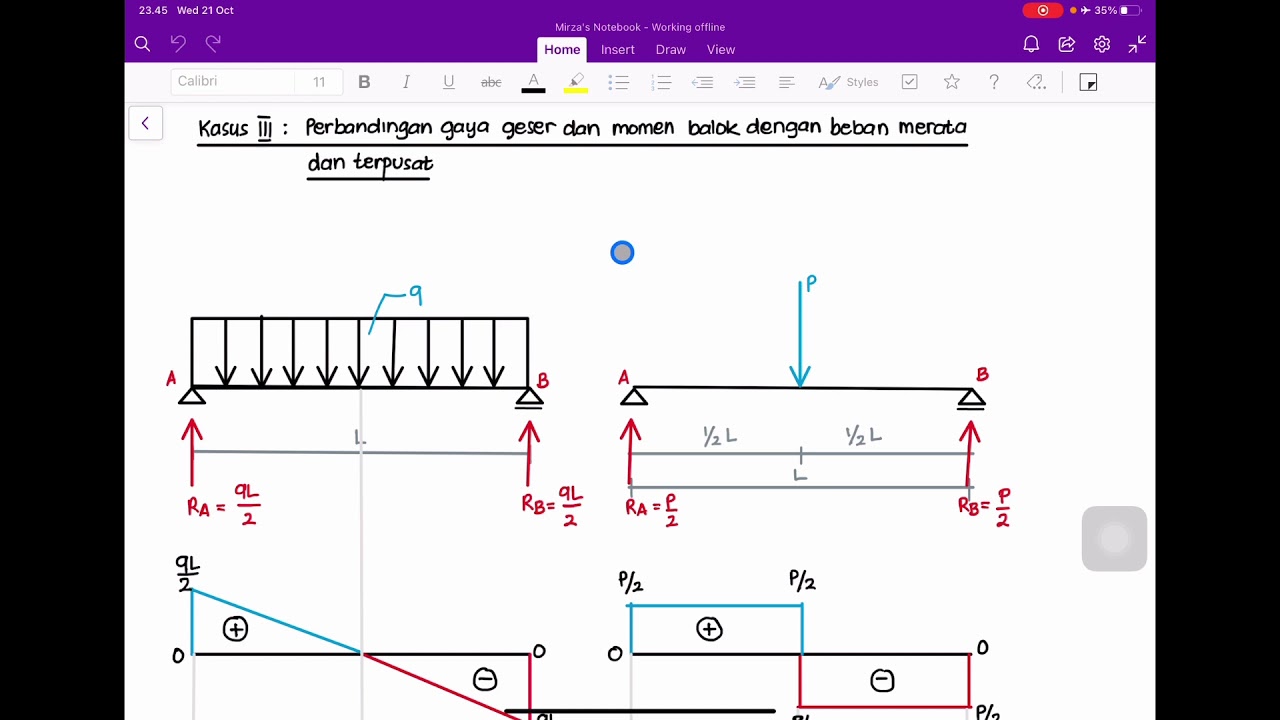
Mekanika Statis Tentu: Perbandingan Gaya Geser Dan Momen Pada Balok Dengan Beban Merata Dan Terpusat
5.0 / 5 (0 votes)

