Double integral 1 | Double and triple integrals | Multivariable Calculus | Khan Academy
Summary
TLDRThis video reviews the intuition behind definite integrals, showing how summing infinitely small rectangles under a curve calculates the area. It then extends this concept to three dimensions, explaining how to find the volume under a surface represented by a function of x and y. By slicing the surface into thin sheets along one axis, computing the area of each slice, and summing them with respect to the other axis, the video demonstrates the method of double integration. The explanation emphasizes visualizing the process, using projections onto the xy-plane and infinitesimal slices to build a clear understanding of calculating volumes under surfaces.
Takeaways
- 😀 Definite integrals calculate the area under a curve by summing infinitely small rectangles.
- 😀 The base of each rectangle is dx, and the height is the function value f(x) at that point.
- 😀 Taking the sum of infinitely many infinitesimally thin rectangles gives the exact area under a curve.
- 😀 A surface in 3D can be represented as a function of two variables: z = f(x, y).
- 😀 The domain of a 3D surface is the xy-plane, where each point corresponds to a height z.
- 😀 To find the volume under a surface, you can slice the surface along one axis to create thin slivers.
- 😀 For a fixed y, the area under the curve along x can be calculated using a 1D integral.
- 😀 Multiplying the area of each sliver by a small change in y (dy) gives the volume of that sliver.
- -
- 😀 Summing all slivers along the y-axis by integrating over y gives the total volume under the surface.
- -
- 😀 Double integrals extend the concept of single integrals to compute volumes over a 2D region.
- -
- 😀 Using rectangular bounds simplifies the calculation of volumes under surfaces.
- -
- 😀 The overall intuition is similar to 1D integration: slice → find area → add depth → sum slices.
Q & A
What is the basic intuition behind a definite integral in single-variable calculus?
-The definite integral represents the area under a curve. This is visualized by dividing the area into infinitely thin rectangles of width dx and height f(x), then summing their areas to find the total.
How do you calculate the area of a single rectangle under a curve?
-The area of a rectangle is calculated as base times height. In the context of integrals, the base is dx and the height is f(x) at that specific x-value, so the area is f(x) * dx.
How does the concept of a surface in 3D extend the idea of a function from 2D?
-In 2D, a function is y = f(x), mapping x to y. In 3D, a surface is represented as z = f(x, y), mapping a pair of coordinates (x, y) to a height z, which can be visualized as a bent plane or sheet in space.
What is the domain of a surface function z = f(x, y)?
-The domain is the set of all valid (x, y) pairs in the xy-plane for which the function is defined. For volume calculations, this domain is usually bounded.
How do we find the volume under a surface using the idea of slices?
-First, pick a constant y-value and consider a slice along the x-direction. Integrate f(x, y) over x to find the area of that slice. Then, multiply by a small change in y (dy) to get a thin volume element. Finally, integrate over y to sum all slices and obtain the total volume.
What does multiplying the area of a slice by dy represent?
-Multiplying by dy gives the volume of a thin sheet of the surface corresponding to that y-value, effectively giving a 3D volume element.
Why is it helpful to visualize the 'shadow' of a surface on the xy-plane?
-The shadow represents the projection of the surface onto the xy-plane, which defines the bounded region over which the integration will take place. This helps in understanding the limits of integration.
How is the area of a slice a function of y?
-The area of the slice depends on the y-value chosen because the height of the surface at each x-coordinate changes with y. Integrating over x gives a function of y representing the slice's area.
What is the formula for the total volume under a surface using iterated integrals?
-The total volume V under the surface z = f(x, y) over a rectangular region is given by: V = ∫ from y_min to y_max ( ∫ from x_min to x_max f(x, y) dx ) dy.
What is the key takeaway when moving from single-variable to double-variable integrals?
-The key idea is that double integration is an extension of single-variable integration: sum infinitely thin pieces along one axis to get a slice, then sum those slices along the second axis to get the total volume under a surface.
Why does the instructor emphasize intuition and visualization over formal definitions?
-Intuition and visualization help learners connect the familiar concept of area under a curve to the new concept of volume under a surface. It makes the abstract concept of double integration more accessible and understandable.
How do dx and dy function differently in double integrals?
-dx represents a tiny change along the x-axis used to calculate the area of a slice, while dy represents a tiny change along the y-axis used to extend that slice into a thin volume element. Together, they allow the summing of all volume elements over the surface.
Outlines

このセクションは有料ユーザー限定です。 アクセスするには、アップグレードをお願いします。
今すぐアップグレードMindmap

このセクションは有料ユーザー限定です。 アクセスするには、アップグレードをお願いします。
今すぐアップグレードKeywords

このセクションは有料ユーザー限定です。 アクセスするには、アップグレードをお願いします。
今すぐアップグレードHighlights

このセクションは有料ユーザー限定です。 アクセスするには、アップグレードをお願いします。
今すぐアップグレードTranscripts

このセクションは有料ユーザー限定です。 アクセスするには、アップグレードをお願いします。
今すぐアップグレード関連動画をさらに表示
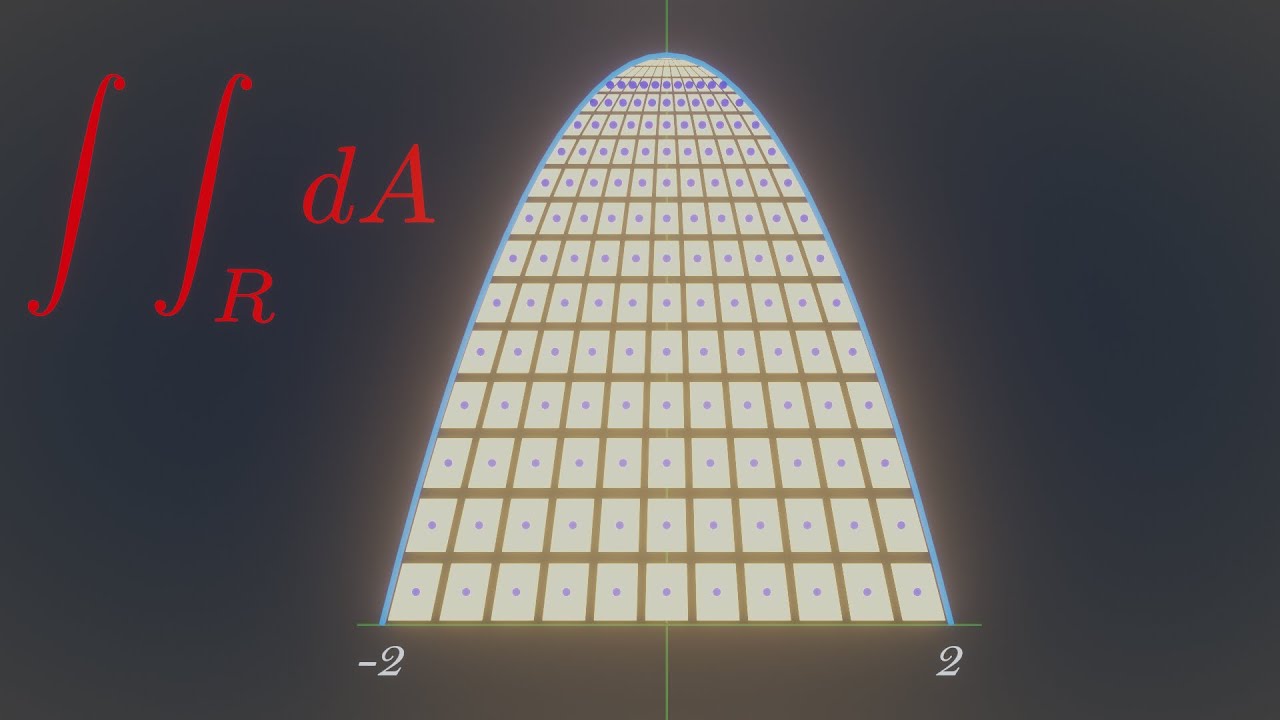
What is Double integral? Triple integrals? Line & Surface integral? Volume integral? #SoME2

KALKULUS | INTEGRAL | INTEGRAL TENTU

Kalkulus : Jumlah Riemann dan Limitnya
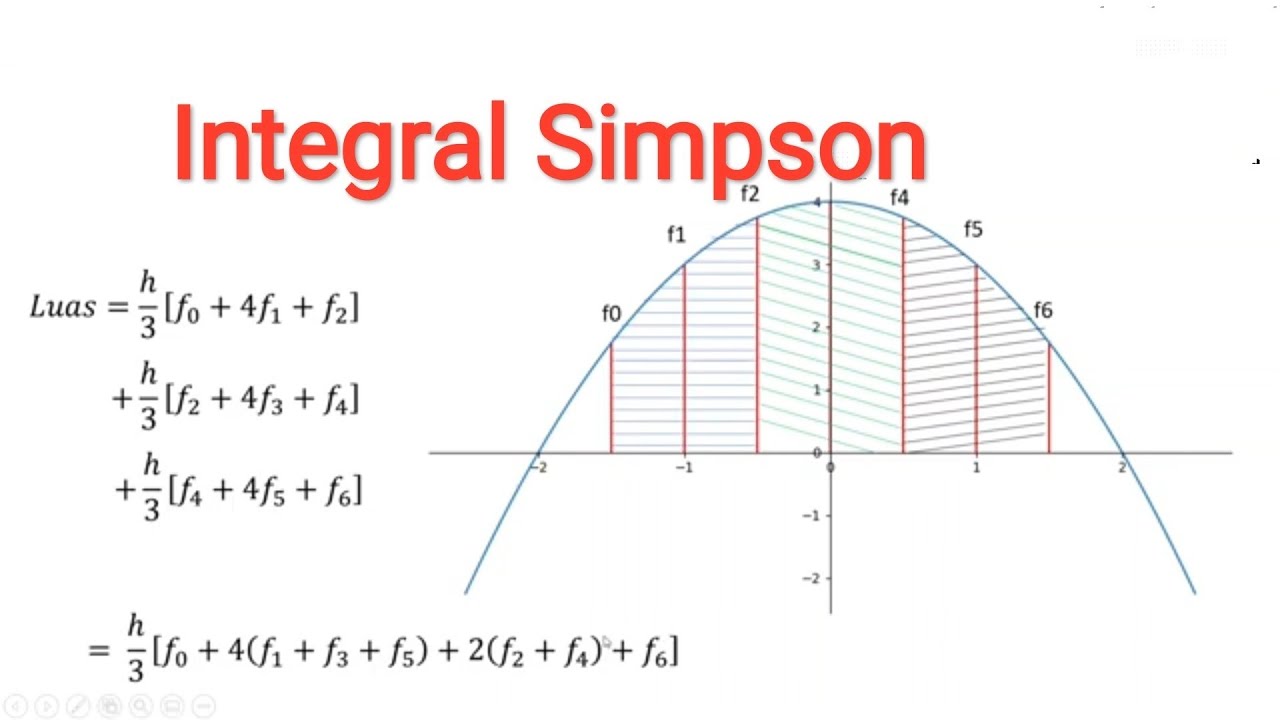
Integral Numerik dengan metode Simpson serta kode Pythonnya.
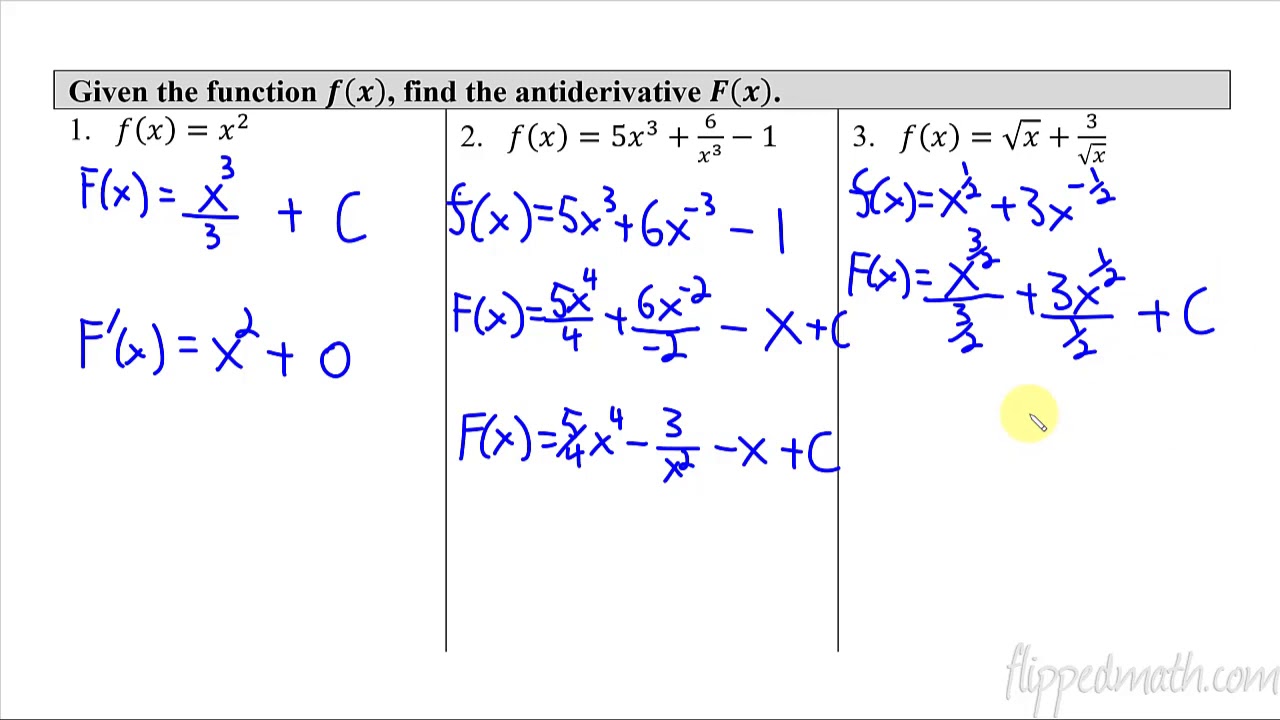
Calculus AB/BC – 6.7 The Fundamental Theorem of Calculus and Definite Integrals

Integral Tentu - Apa hubungannya dengan notasi sigma? | Integral Tentu (Part 1) | Kalkulus
5.0 / 5 (0 votes)

