Rangkaian Listrik Seri dan Paralel | Belajar IPA Bersama Dafa Lulu - 6 SD
Summary
TLDRA group of friends recreates a science experiment involving simple electrical circuits to uncover why their friend Boni lost a robotics competition. As they carefully build and test series and parallel circuits, they review the proper structure of a scientific experiment report, including objectives, materials, procedures, observations, and conclusions. Through their investigation, they discover that Boni’s report was incomplete, leading to mistakes in the robot’s electrical system. Beyond teaching the differences between series and parallel circuits, the story highlights the importance of careful observation, teamwork, learning from mistakes, and accepting defeat with a positive attitude to improve in future challenges.
Takeaways
- 😀 The video focuses on revisiting and correcting a previous experiment report about electrical circuits.
- 😀 It emphasizes the difference between series and parallel circuits based on how components are arranged.
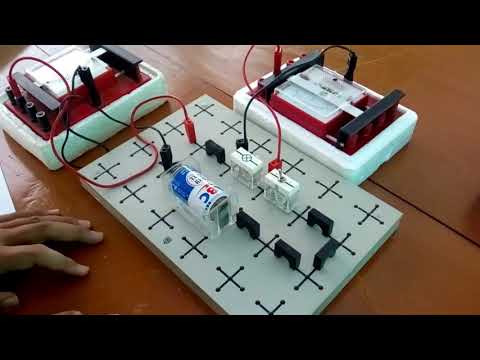
- 😀 The experiment aims to create simple series and parallel circuits using batteries, lamps, wires, and switches.
- 😀 Careful observation and recording of results are essential during experiments to ensure accurate reporting.
- 😀 In a series circuit, both lamps receive the same current, so they light up and turn off together when the switch is operated.
- 😀 In a parallel circuit, each branch has its own current path, so lamps can turn on or off independently based on their switches.
- 😀 The experiment highlights the importance of a complete and accurate report, as missing conclusions can affect the performance of projects, like Boni's robot.
- 😀 Correcting and reviewing the experiment report helps in understanding the practical differences between circuit types.
- 😀 Accepting mistakes and learning from them is portrayed as a crucial part of scientific learning and personal growth.
- 😀 Losing in a competition is not failure; it is a chance to learn, improve, and focus on doing better in the future.
- 😀 Collaboration and guidance from peers and mentors help ensure experiments are conducted and reported properly.
Q & A
What was the main problem with Boni's robot in the competition?
-Boni's robot had an issue where one of the robot's 'eyes' could die while the other remained on, which was caused by an incomplete or incorrect experimental report rather than just a hardware problem.
What topics had the students previously learned that were relevant to the experiment?
-The students had learned about atoms, electricity, electrical components, circuit requirements, and types of electrical circuits, which helped them understand and recreate the experiment.
What were the two types of circuits recreated in the experiment?
-The students recreated a series circuit and a parallel circuit, based on the arrangement of the components.
What materials were required to conduct the circuit experiments?
-The materials included four batteries, four lamps, wires, and a switch.
What was the purpose of the experiment according to the report?
-The purpose of the experiment was to practice making simple series and parallel electrical circuits and observe how electricity flows differently in each type.
What observation was made when the switch in a series circuit was turned on and off?
-When the switch in a series circuit was turned on, both lamps lit up simultaneously, and when turned off, both lamps went out, showing that the current flows through all components sequentially.
How did the parallel circuit behave differently from the series circuit?
-In the parallel circuit, because there are two separate branches, each lamp could be turned on or off independently without affecting the other lamp.
Why was Boni’s report considered incomplete?
-Boni's report was missing a complete conclusion, which led to misunderstanding the behavior of his robot and caused the functional problem in the competition.
What steps did the students take to recreate the experiment accurately?
-They first prepared a diagram of the circuits, ensured the report format was correct, gathered all necessary tools and materials, constructed the circuits, observed and recorded the results, and finally wrote a conclusion.
What was the key learning from observing series and parallel circuits?
-The key learning was that series circuits have the same current flow through all components, so all devices behave together, while parallel circuits have separate branches, allowing independent operation of each device.
How did the teacher help Boni understand his mistakes?
-The teacher explained that mistakes are normal, highlighted the missing conclusion in Boni's report, and emphasized that accepting loss and learning from errors is important for improvement.
What is the broader lesson about competition and learning from this experiment?
-The broader lesson is that losing does not equal failure; competitions are opportunities to learn from mistakes, improve skills, and be better prepared for future challenges.
Outlines

このセクションは有料ユーザー限定です。 アクセスするには、アップグレードをお願いします。
今すぐアップグレードMindmap

このセクションは有料ユーザー限定です。 アクセスするには、アップグレードをお願いします。
今すぐアップグレードKeywords

このセクションは有料ユーザー限定です。 アクセスするには、アップグレードをお願いします。
今すぐアップグレードHighlights

このセクションは有料ユーザー限定です。 アクセスするには、アップグレードをお願いします。
今すぐアップグレードTranscripts

このセクションは有料ユーザー限定です。 アクセスするには、アップグレードをお願いします。
今すぐアップグレード




5.0 / 5 (0 votes)

