Praktikum Morfologi Tumbuhan, Latihan V (Tutorial Membedah Bunga Tunggal dan Menentukan Rumus)
Summary
TLDRThis tutorial guides viewers through the process of dissecting a flower, identifying its parts, and understanding how to write its formula and draw its diagram accurately. The video covers the flower's morphology, including petal placement, the distinction between male and female reproductive organs, and the proper use of symbols for each part in flower formulas. Additionally, it explains the steps to represent the flower’s structure, both in terms of organ relationships (e.g., connected or separated) and diagramming conventions. Aimed at teaching proper floral dissection and diagramming, this video provides clear instructions for both beginners and advanced learners.
Takeaways
- 😀 Flowers are positioned in the axils of leaves, known as axillary flowers.
- 😀 The main floral organs include the calyx (sepals), corolla (petals), androecium (stamens), and gynoecium (pistil).
- 😀 The flower's formula can be written using symbols for calyx (K), corolla (C), androecium (A), and gynoecium (G).
- 😀 Sexual organs in the flower: the androecium is male (yellow), and the gynoecium is female (red).
- 😀 Symmetry is determined by rotating the flower and checking if the flower is radially symmetric (actinomorphic).
- 😀 Epicalyx (additional calyx) may also be present and should be counted separately from the main calyx.
- 😀 Some flower organs may be fused, such as the corolla with the gynoecium, and should be noted in the formula.
- 😀 The corolla has overlapping, fan-like petals that are not arranged in a simple sequence but are interlaced.
- 😀 When diagramming, start from the innermost organ (gynoecium) and work outward, following the layering from inside to outside.
- 😀 Diagrams should use concentric circles to represent different layers and indicate whether organs are free or fused.
- 😀 The final diagram should show connections between organs, especially when they are fused (e.g., corolla and gynoecium).
Q & A
1. What is meant by flos axillaris in the context of this flower?
-Flos axillaris refers to a flower that grows in the axil of a leaf. In the script, the flower is located at the leaf axil, which classifies it as axillary.
2. Why is the flower categorized as bisexual (hermaphrodite)?
-The flower is categorized as bisexual because it contains both male reproductive organs (andresium/stamens) and female reproductive organs (ginesium/pistil) within the same flower.
3. What type of symmetry does the flower exhibit and how is it determined?
-The flower exhibits actinomorphic symmetry (radial symmetry). This is determined by observing that the corolla can be rotated and divided into multiple equal symmetrical sections.
4. What is the difference between epicalyx and true calyx in this flower?
-The epicalyx consists of 7 free, hair-like structures located beneath the true calyx, while the true calyx consists of 5 sepals that are fused together in a tubular form.
5. How is fusion (connation) within the same organ represented in the floral formula?
-Fusion within the same organ is represented using curved parentheses. For example, K(5) indicates five fused sepals.
6. How is adhesion between different floral organs indicated?
-Adhesion between different floral organs is indicated using straight brackets or connecting lines, showing that organs such as the corolla, andresium, and ginesium are attached to each other.
7. Why is the andresium written as A∞ in the floral formula?
-The andresium is written as A∞ because the stamens are numerous and cannot be counted precisely, so the infinity symbol represents an indefinite large number.
8. What does the underline beneath G5 signify in the floral formula?
-The underline beneath G5 indicates that the ovary is superior, meaning it is positioned above the other floral parts on the receptacle.
9. What steps should be taken before dissecting a flower for analysis?
-Before dissecting, one should observe the flower's external morphology, determine its symmetry and sexual type, count the number of each organ, and note whether the organs are free or fused.
10. How many floral layers are present in this flower and why?
-There are five floral layers: epicalyx, calyx, corolla, andresium, and ginesium. The presence of an additional epicalyx increases the usual four layers to five.
11. How are free and fused organs represented in a floral diagram?
-Free organs are drawn with space between symbols, while fused organs are drawn touching each other to indicate attachment.
12. Why can the superior ovary not be clearly shown in the floral diagram?
-The superior ovary position cannot be clearly represented in the diagram, so it must be indicated in the floral formula and described separately.
Outlines

このセクションは有料ユーザー限定です。 アクセスするには、アップグレードをお願いします。
今すぐアップグレードMindmap

このセクションは有料ユーザー限定です。 アクセスするには、アップグレードをお願いします。
今すぐアップグレードKeywords

このセクションは有料ユーザー限定です。 アクセスするには、アップグレードをお願いします。
今すぐアップグレードHighlights

このセクションは有料ユーザー限定です。 アクセスするには、アップグレードをお願いします。
今すぐアップグレードTranscripts

このセクションは有料ユーザー限定です。 アクセスするには、アップグレードをお願いします。
今すぐアップグレード関連動画をさらに表示

Use Case Diagram Tutorial : Draw using just [4 Key Components]

SHUT DOWN POINT | Break Even Point Diagram | Class-12 | ISC | Economics#shubhamsambhallega

How to construct a metric bolt and nut from just the M value

Termokimia (5) | Menentukan Perubahan Entalpi berdasarkan data Energi Ikatan | Kimia Kelas 11
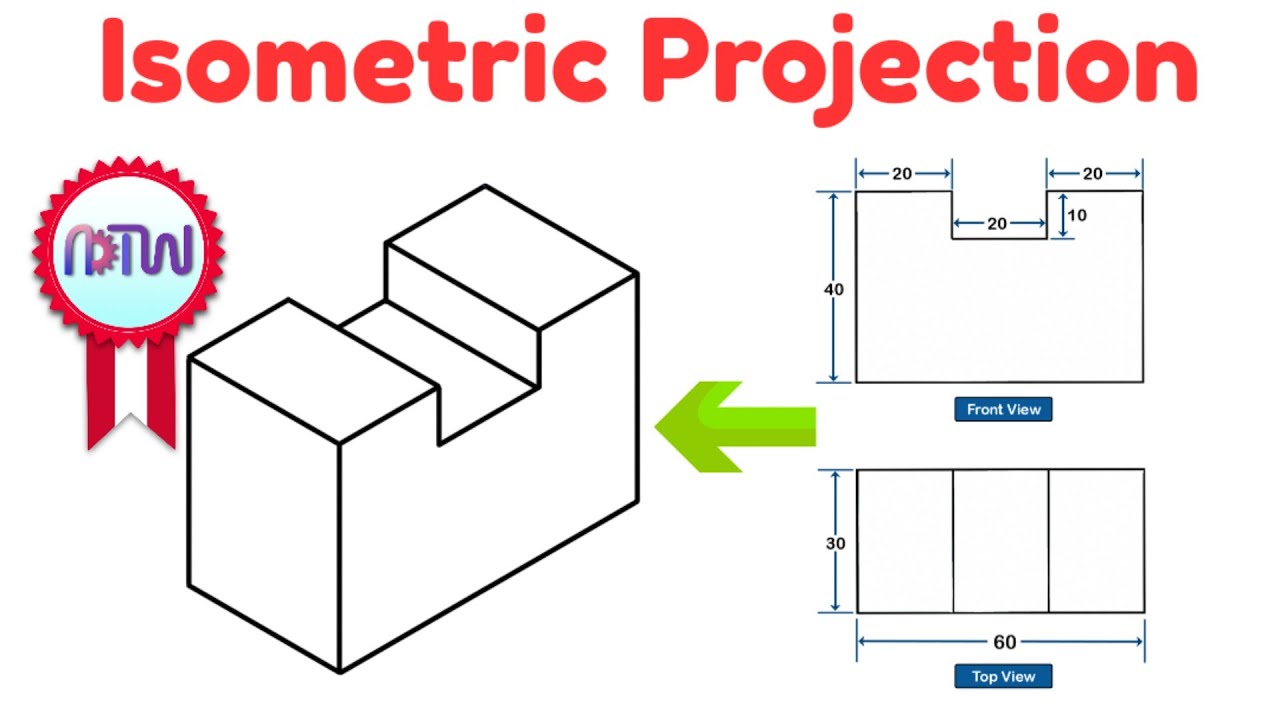
Isometric Projection in Engineering Drawing | isometric projection 3D from orthographic view

How to Draw Bohr-Rutherford Diagrams - Phosphorous
5.0 / 5 (0 votes)

