Why Europe is Stepping Back From Its Electric Car Push | Vantage with Palki Sharma | N18G
Summary
TLDRThe video explores the current challenges facing electric vehicles (EVs) in Europe and globally. While EVs were once heralded as the future, economic realities, consumer demand, and fierce competition from China have slowed their adoption. Despite government policies like Europe's 2035 ban on petrol and diesel cars, automakers like Ford and luxury brands struggle with high production costs and slow sales. The transition to electric vehicles is proving slower and more complicated than anticipated, but EVs are not disappearing—they remain the future, though their path is now uncertain.
Takeaways
- 😀 Europe initially set a hard deadline of 2035 to ban all petrol and diesel cars as part of their green deal to achieve zero emissions.
- 😀 There is now a rethink in Europe, with the possibility of softening the 2035 ban, allowing some petrol and hybrid vehicles to remain on the road after the deadline.
- 😀 The softening of the ban would require car makers to reduce emissions by 90%, instead of eliminating them completely, leaving a 10% allowance for non-electric vehicles.
- 😀 Major car-making countries like Germany and Italy are pushing for this softer approach due to concerns about consumer demand and economic impacts.
- 😀 The high cost of electric vehicles (EVs) makes them unaffordable for many buyers, limiting the adoption rate and challenging the enforcement of a total ban on petrol and diesel cars.
- 😀 Intense competition from China, which dominates the EV market due to heavy subsidies, makes it difficult for European manufacturers to match the prices of Chinese EVs.
- 😀 The shift towards electric vehicles could result in significant job losses in the car industry, prompting governments to reconsider rapid changes.
- 😀 Global EV sales growth is slowing, with only a 6% increase in November, the lowest since 2024, indicating a cooling in consumer enthusiasm for EVs.
- 😀 A new survey reveals that half of global car buyers plan to buy petrol or diesel vehicles, while only 14% are interested in fully electric cars, further reflecting the shift in consumer sentiment.
- 😀 Ford has announced a major retreat from electric vehicles, taking a 20 billion dollar hit, and is refocusing on petrol and hybrid cars instead.
- 😀 Even luxury brands like Porsche and Mercedes-Benz are struggling to scale up EV sales, despite having a wealthy customer base.
- 😀 While electric vehicles are not disappearing, the transition to EVs is proving to be slower, more expensive, and more politically sensitive than initially anticipated.
Q & A
What is the main issue with the current electric vehicle (EV) market in Europe?
-The main issue is the slow adoption of electric vehicles due to high prices, limited consumer demand, and the increasing competition from cheaper Chinese-made EVs.
Why might Europe soften its 2035 ban on petrol and diesel cars?
-Europe may soften the ban due to concerns over consumer demand, the high cost of EVs, intense competition from China, and fears of job losses in the automotive industry.
What does the 'softening' of the ban on petrol and diesel cars involve?
-The softening of the ban would involve reducing emissions by 90% instead of achieving a complete ban. This would allow some petrol and hybrid vehicles to remain on the road post-2035.
Which countries are pushing for a softer approach to the 2035 ban, and why?
-Germany and Italy are pushing for a softer approach because they are home to major car manufacturers like Volkswagen, BMW, Stellantis, and Renault, which are facing economic challenges with the full transition to EVs.
What is the role of China in the global electric vehicle market?
-China dominates the global EV market, producing more than half of the world's electric vehicles. Chinese companies benefit from government subsidies, which help reduce costs and make their EVs more affordable than those from European manufacturers.
How has the global electric vehicle sales growth been in recent months?
-Global EV sales grew by just 6% in November, marking the slowest growth rate since early 2024, reflecting a shift in consumer sentiment away from electric vehicles.
What does the recent survey say about global car buyers' preferences?
-The survey indicates that half of global car buyers now plan to purchase petrol or diesel vehicles, while only 14% are interested in fully electric cars, signaling a cooling enthusiasm for EVs.
How has Ford responded to the challenges in the EV market?
-Ford has announced a major retreat from electric vehicles, citing a $20 billion loss from its EV investments. The company is shifting focus back to petrol and hybrid vehicles and has put its flagship electric vehicle project on hold.
Even luxury car brands like Porsche and Mercedes-Benz are struggling with EV sales. Why?
-Despite having a wealthy customer base, luxury brands like Porsche and Mercedes-Benz are finding it difficult to scale up electric vehicle sales due to high production costs and challenges in meeting demand.
What does the script suggest about the future of electric vehicles?
-The script suggests that while electric vehicles remain a key part of the future of transport, the transition is proving to be slower, more costly, and more politically sensitive than originally anticipated.
Outlines

このセクションは有料ユーザー限定です。 アクセスするには、アップグレードをお願いします。
今すぐアップグレードMindmap

このセクションは有料ユーザー限定です。 アクセスするには、アップグレードをお願いします。
今すぐアップグレードKeywords

このセクションは有料ユーザー限定です。 アクセスするには、アップグレードをお願いします。
今すぐアップグレードHighlights

このセクションは有料ユーザー限定です。 アクセスするには、アップグレードをお願いします。
今すぐアップグレードTranscripts

このセクションは有料ユーザー限定です。 アクセスするには、アップグレードをお願いします。
今すぐアップグレード関連動画をさらに表示
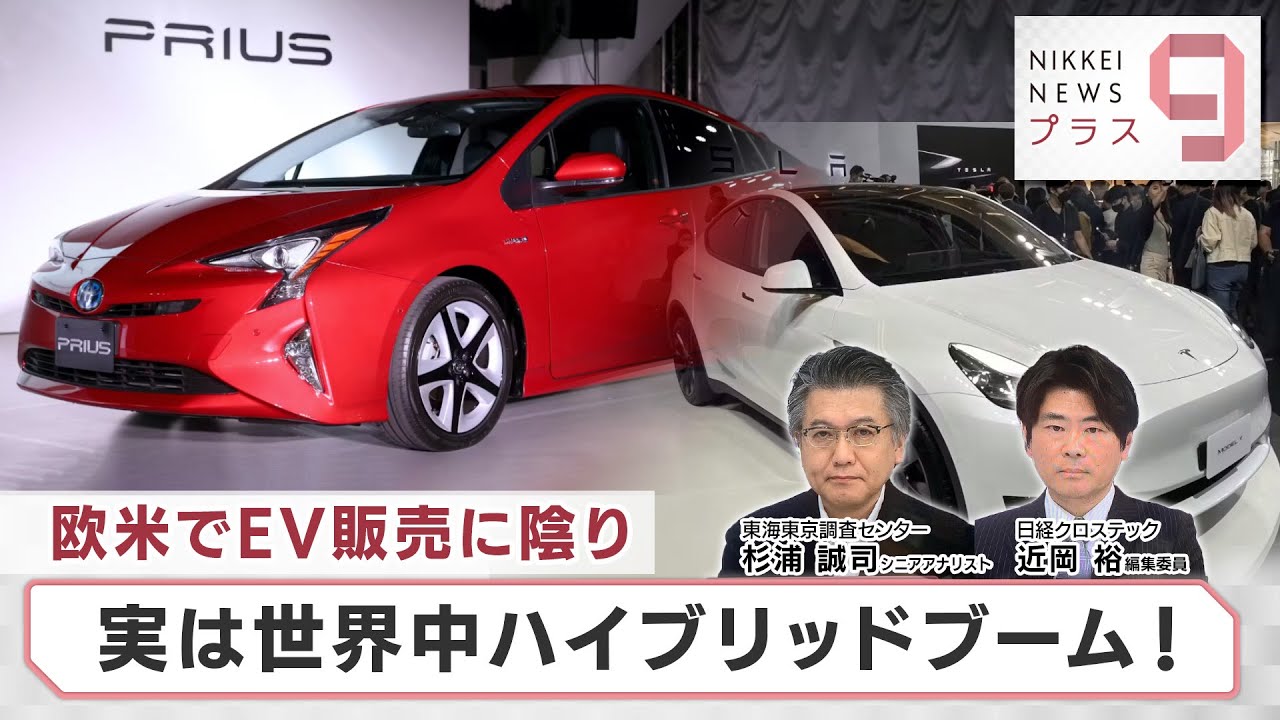
欧米でEV販売に陰り 実は世界中ハイブリッドブーム!【日経プラス9】(2024年2月14日)

How Do Electric Vehicles Work?

O FUTURO DOS CARROS NO BRASIL: ELÉTRICO, HÍBRIDO OU ETANOL?

Volkswagen to Shut German Plants for the 1st Time in its 87-yr History | Vantage with Palki Sharma

China’s booming EV industry | BBC News

A condensed history of Chinese EV company BYD
5.0 / 5 (0 votes)

