EndoM3 V2
Summary
TLDRThis video explores the pivotal role of growth hormone (GH) in human growth and metabolism. Craig Harrison explains how GH, a 191-amino acid protein from the anterior pituitary, stimulates cell division, protein synthesis, and bone lengthening via IGF-1. The presentation covers GH secretion patterns influenced by sleep, exercise, nutrition, and stress, its signaling mechanisms, and the indirect mitogenic effects through IGF-1. It also highlights GH’s counter-regulatory effects on glucose metabolism and fat breakdown. The summary underscores how proper GH and IGF-1 activity promote height, muscle mass, and organ growth, while imbalances can lead to conditions like dwarfism or gigantism.
Takeaways
- 📈 Growth hormone (GH) is a 191-amino-acid protein produced by the anterior pituitary and is the most abundant hormone from this gland.
- 🧬 GH stimulates growth primarily by promoting cell division, protein synthesis, and bone lengthening, especially in the vertebral column and legs.
- ⏱ Most GH circulates freely in plasma with a short half-life of 10–20 minutes, but binding to GH binding protein (GHBP) increases its stability.
- 👶 GH is abundant in mid-fetal life but has minimal growth effect until after 1–2 years of age, when it becomes the key hormone for growth.
- ⚡ GH secretion follows a circadian rhythm, peaking during sleep and triggered by factors such as exercise, stress, low postprandial glucose, and high amino acids.
- 🧪 GH acts indirectly through insulin-like growth factor 1 (IGF-1), produced mainly by the liver, which mediates most of GH's growth-promoting effects.
- 🏋️ Exercise significantly increases GH secretion by anterior pituitary somatotrophs, enhancing growth and metabolism.
- 📉 Excess GH can lead to gigantism, whereas insufficient GH can cause dwarfism.
- 🛡 GH also has anti-insulin or glucose counter-regulatory effects, including increasing gluconeogenesis, inhibiting glucose uptake in muscle and fat, and promoting lipolysis.
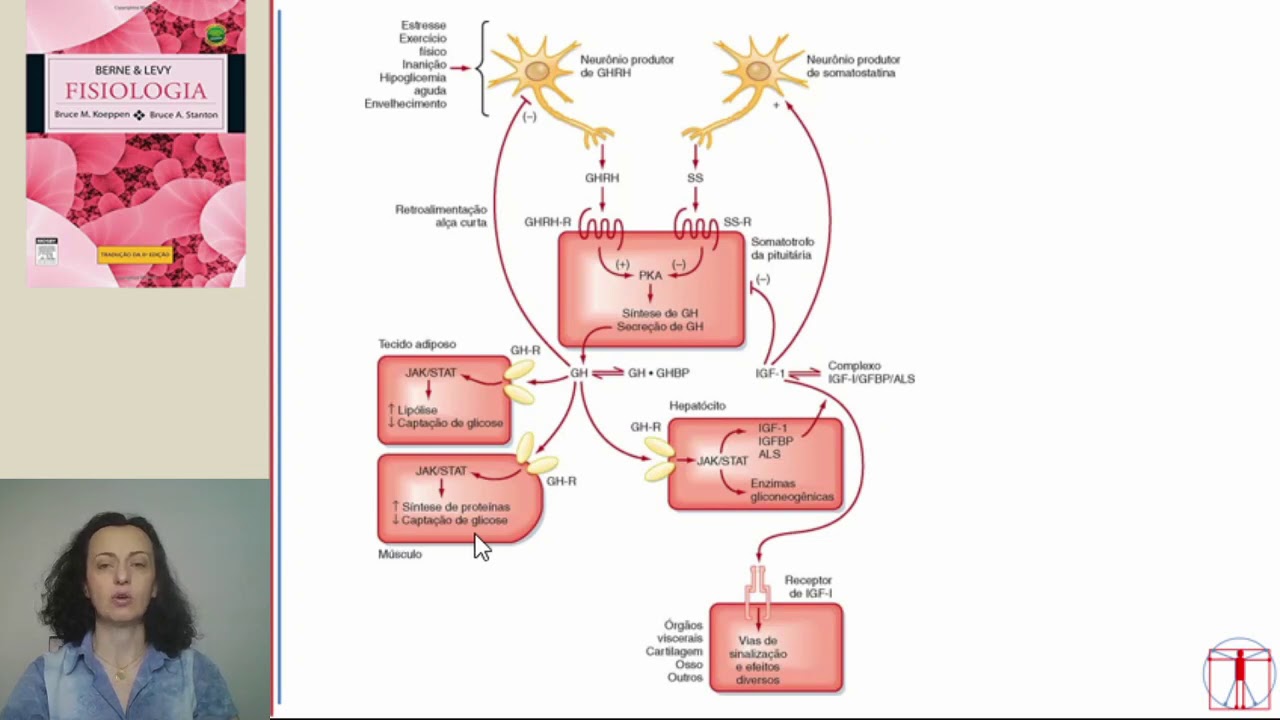
- 🔄 GH secretion is regulated by negative feedback: IGF-1 produced in response to GH inhibits further GH release from both the hypothalamus and anterior pituitary.
- 🦴 In children and adolescents, GH via IGF-1 promotes bone lengthening and mineralization, increases muscle mass, and stimulates growth of internal organs (except the brain).
- 🧠 GH signaling involves binding to cell-surface receptors and activating JAK2/STAT pathways, which regulate gene transcription for growth and metabolism.
Q & A
What is the primary role of the endocrine system in growth?
-The endocrine system controls growth through multiple hormones that stimulate or inhibit growth, influencing cell division, protein synthesis, and bone development, with additional regulation by genetics and environmental factors like nutrition.
What is growth hormone and where is it produced?
-Growth hormone (GH) is a 191 amino acid protein, the most abundant hormone secreted by the anterior pituitary. It circulates freely in plasma or bound to growth hormone binding protein (GHBP), which increases its half-life.
How does growth hormone promote bone growth?
-GH stimulates chondrocyte maturation and division in epiphyseal plates, widening the plates and providing more material for bone formation, which leads to bone lengthening, particularly in the vertebral column and legs.
What are the main triggers and inhibitors of GH secretion?
-GH secretion is triggered by sleep, exercise, stress, low blood glucose, and high amino acids. It is inhibited by somatostatin, high blood glucose, hypoglycemia, elevated free fatty acids, IGF-1, and age.
How does GH exert its effects on target tissues?
-GH binds to specific receptors on target cells, activating JAK2 and STAT signaling pathways that regulate gene transcription. Most of GH's mitogenic effects are indirect, mediated by IGF-1 produced in response to GH.
What is IGF-1 and what role does it play in growth?
-Insulin-like growth factor 1 (IGF-1) is a hormone primarily produced by the liver in response to GH. It promotes cell division, cartilage formation, skeletal growth, and protein synthesis in muscle and other tissues, acting both systemically and locally.
What are the metabolic functions of growth hormone?
-GH increases lipolysis in adipose tissue, decreases glucose uptake in muscle and fat, and stimulates gluconeogenesis in the liver. These counter-regulatory effects help maintain blood glucose levels.
How does the GH/IGF-1 axis demonstrate feedback regulation?
-IGF-1 produced by the liver in response to GH inhibits both the hypothalamus and anterior pituitary, reducing GHRH and GH secretion, maintaining homeostasis through negative feedback.
What experimental evidence shows the effect of GH on growth?
-In a 600-day rat study, daily GH injections led to rats weighing more than twice the control group. Initially, GH increased both tissue weight and height, and after epiphyseal fusion, it continued to increase tissue weight.
What are the clinical consequences of GH imbalances?
-Excess GH can cause gigantism, while GH deficiency can lead to dwarfism. In some populations, short stature results from IGF-1 deficiency despite normal GH levels, highlighting the importance of the GH/IGF-1 axis.
Why does GH secretion peak during sleep?
-GH follows a circadian rhythm with a major spike during early sleep, particularly the first few hours, which supports rapid growth in children during puberty.
Does GH directly affect all its target cells?
-No, most of GH's mitogenic effects are mediated indirectly through IGF-1, though GH can directly influence metabolism by promoting lipolysis and reducing glucose uptake independently of IGF-1.
Outlines

Cette section est réservée aux utilisateurs payants. Améliorez votre compte pour accéder à cette section.
Améliorer maintenantMindmap

Cette section est réservée aux utilisateurs payants. Améliorez votre compte pour accéder à cette section.
Améliorer maintenantKeywords

Cette section est réservée aux utilisateurs payants. Améliorez votre compte pour accéder à cette section.
Améliorer maintenantHighlights

Cette section est réservée aux utilisateurs payants. Améliorez votre compte pour accéder à cette section.
Améliorer maintenantTranscripts

Cette section est réservée aux utilisateurs payants. Améliorez votre compte pour accéder à cette section.
Améliorer maintenantVoir Plus de Vidéos Connexes

ADENO-HIPÓFISE: HORMÔNIO DO CRESCIMENTO (GH) | MK Fisiologia

How To Increase Growth Hormone Naturally - Maximise HGH
Endocrinologia 3 - Hormônio do Crescimento
Insulin-like growth factor (IGF-1) - Somatomedin C - GH- Dwarfism, Gigantism, Acromegaly - Endocrine

GROWTH HORMONE: The ULTIMATE Guide (Uses, Dosages, Biggest Mistakes)
Kelenjar Hipofisis ( Pituitari )
5.0 / 5 (0 votes)

