10 Most Expected Questions For NEET 2026, Biotechnology : Principles and Processes, Class 12th
Summary
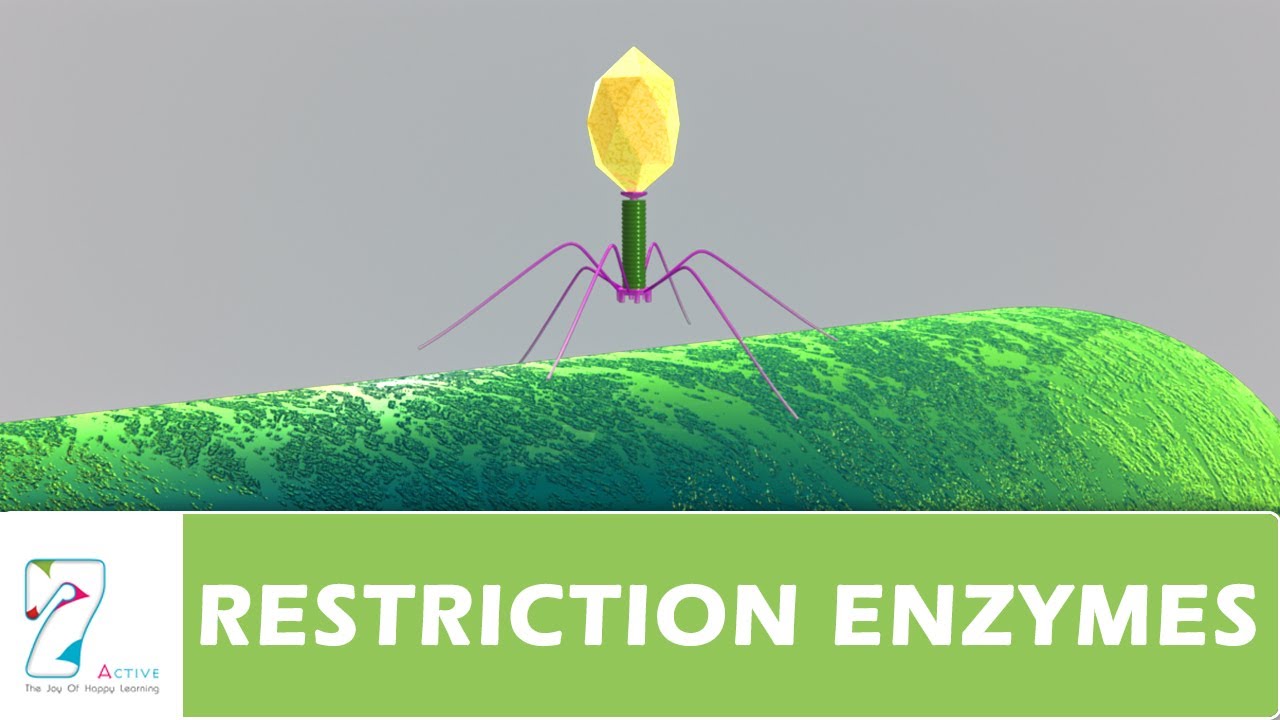
TLDRThis video provides a detailed explanation of restriction enzymes, focusing on their types, mechanisms, and significance in DNA manipulation, especially for NEET preparation. It covers endonucleases and exonucleases, highlighting how endonucleases cut at palindromic sequences within the sugar-phosphate backbone while exonucleases cut from DNA ends. The video also explains EcoRI's recognition sequence (GAATTC) and its cleavage site, the formation of complementary sticky ends, and the importance of using the same restriction enzyme for vector and foreign DNA to ensure successful ligation. Key concepts like enzyme nomenclature, recognition sequences, and practical cloning applications are emphasized for exam-focused learning.
Takeaways
- 😀 EcoRI is a restriction endonuclease that recognizes the palindromic sequence 'GAATTC' and cuts between G and A.
- 😀 Restriction endonucleases, like EcoRI, cut DNA at specific sites, either within the sequence (endonucleases) or at the ends (exonucleases).
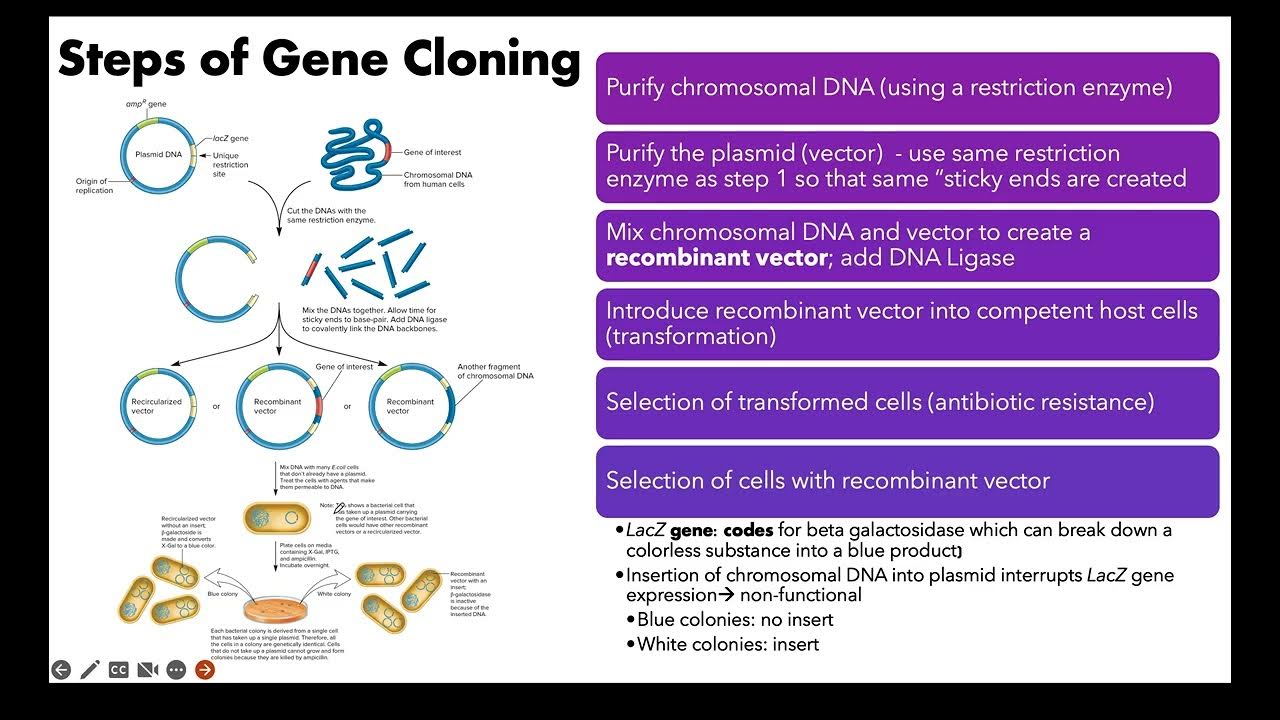
- 😀 EcoRI generates sticky ends after cutting DNA, which are complementary and can be ligated together using DNA ligase.
- 😀 Restriction enzymes are named based on the genus, species, and strain of the bacteria from which they are derived, e.g., EcoRI stands for *Escherichia coli* strain R1.
- 😀 In NEET 2026, questions related to restriction enzymes, their recognition sequences, and the process of DNA cutting are highly likely.
- 😀 Statement-based questions may ask about the recognition sequence, cutting patterns, or the functional roles of restriction enzymes like EcoRI.
- 😀 Assertion-reasoning questions are expected, where students may need to explain the rationale behind using the same restriction enzyme for both foreign DNA and vector DNA.
- 😀 Palindromic sequences play a crucial role in restriction enzyme activity, with EcoRI recognizing a six-base pair sequence.
- 😀 EcoRI and similar restriction enzymes cut away from the center of the palindromic sequence, generating overhanging sticky ends.
- 😀 If different restriction enzymes are used for foreign and vector DNA, complementary sticky ends will not form, preventing ligation.
- 😀 The key to successful DNA manipulation in molecular biology involves using compatible sticky ends created by the same restriction enzyme for both DNA sources.
Q & A
What is the role of restriction enzymes in DNA manipulation?
-Restriction enzymes, such as EcoR1, cut DNA at specific sequences, allowing scientists to isolate and manipulate specific DNA fragments. These enzymes recognize palindromic sequences and cut between specific bases, creating sticky ends which can be used for DNA recombination.
What is the difference between exonucleases and endonucleases?
-Exonucleases cut nucleotides from the ends of DNA strands, while endonucleases cut DNA at specific internal locations. Restriction enzymes like EcoR1 are a type of endonuclease, cutting at specific recognition sequences.
What is EcoR1, and what is its recognition sequence?
-EcoR1 is a restriction enzyme that cuts DNA at the recognition sequence GAATTC. It cuts between the G and A bases, creating sticky ends that are important for DNA ligation in recombinant DNA technology.
Why are sticky ends important in recombinant DNA technology?
-Sticky ends are crucial because they allow different DNA fragments to be joined together more easily. When two DNA fragments with complementary sticky ends are brought together, they can be ligated using DNA ligase, facilitating the creation of recombinant DNA.
What are the expected types of questions that could appear on NEET 2026 related to restriction enzymes?
-Questions on NEET 2026 are likely to be statement-based, focusing on the function and recognition sequences of restriction enzymes, such as EcoR1. There could also be assertion-reason type questions related to how restriction enzymes cut DNA and the importance of sticky ends.
What is the significance of the naming convention for restriction enzymes?
-The naming convention for restriction enzymes includes three parts: the first letter represents the genus, the second part represents the species, and the third part represents the strain. For example, EcoR1 stands for Escherichia coli, strain RY13.
How do restriction enzymes generate sticky ends?
-Restriction enzymes generate sticky ends by making asymmetric cuts in the DNA, resulting in overhanging single-stranded regions. These sticky ends can then pair with complementary ends of other DNA fragments, allowing for ligation and recombination.
What is the role of DNA ligase in recombinant DNA technology?
-DNA ligase is an enzyme that joins DNA fragments together by forming phosphodiester bonds between the sugar-phosphate backbones. It is essential for linking DNA fragments with complementary sticky ends during the process of recombinant DNA technology.
What is the difference between cutting DNA with one restriction enzyme versus two different enzymes?
-When using the same restriction enzyme to cut both the vector and foreign DNA, complementary sticky ends are produced, allowing for easier ligation. If different enzymes are used, the sticky ends may not be compatible, making it difficult to join the DNA fragments.
What type of questions about EcoR1 could be expected in NEET?
-NEET might ask about the recognition sequence of EcoR1 (GAATTC), the position where it cuts (between G and A), and the general function of the enzyme in DNA manipulation. It could also include questions about the enzyme's source, nomenclature, and recognition sequence length.
Outlines

Cette section est réservée aux utilisateurs payants. Améliorez votre compte pour accéder à cette section.
Améliorer maintenantMindmap

Cette section est réservée aux utilisateurs payants. Améliorez votre compte pour accéder à cette section.
Améliorer maintenantKeywords

Cette section est réservée aux utilisateurs payants. Améliorez votre compte pour accéder à cette section.
Améliorer maintenantHighlights

Cette section est réservée aux utilisateurs payants. Améliorez votre compte pour accéder à cette section.
Améliorer maintenantTranscripts

Cette section est réservée aux utilisateurs payants. Améliorez votre compte pour accéder à cette section.
Améliorer maintenant


5.0 / 5 (0 votes)

