Linguagem C - Aula 3.1 - Entenda variáveis e atrubuição de dados - operador = em C (2022)
Summary
TLDRThis video lesson introduces fundamental concepts of programming, focusing on variables, constants, data types, and memory management in C/C++. Viewers learn how to declare and name variables correctly, understand the differences between integers, floating-point numbers, doubles, and characters, and handle text using strings. The tutorial also covers the importance of initialization, assignment using the '=' operator, and the use of constants with '#define'. Through practical examples with user input and output, the video demonstrates how variables store and update data while constants remain fixed, providing a clear foundation for further study of mathematical operations and programming logic.
Takeaways
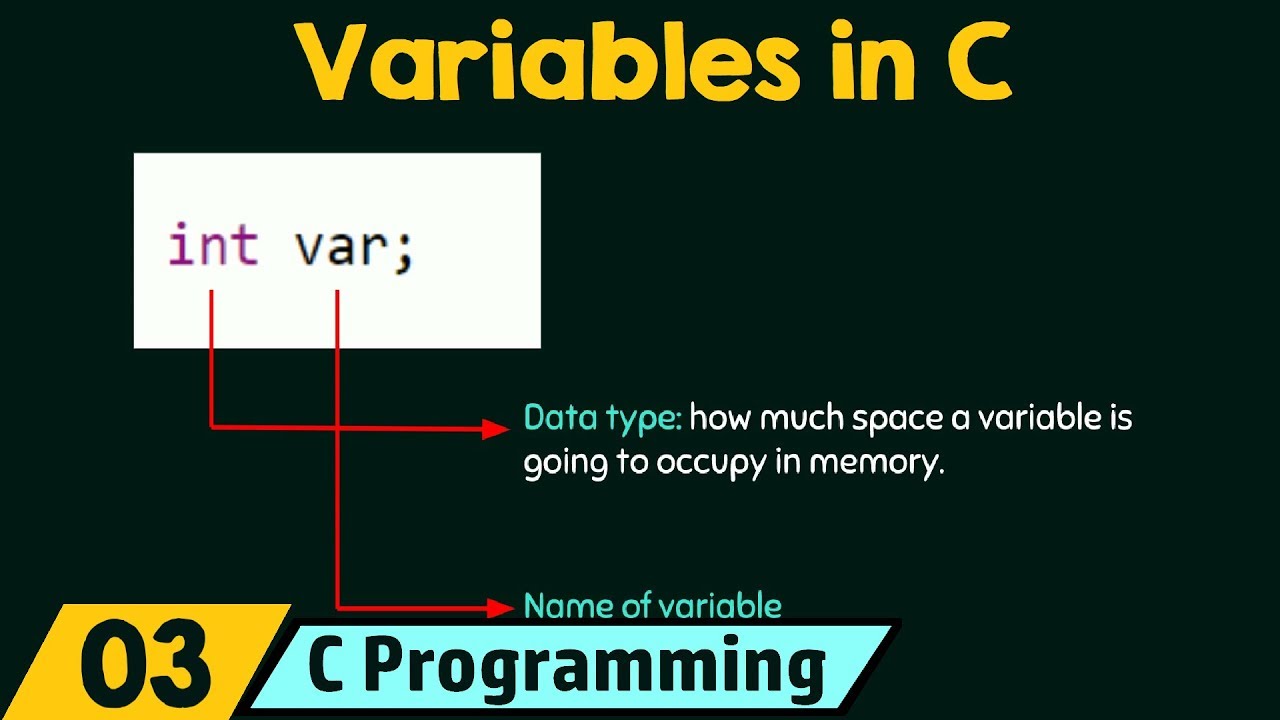
- 😀 Variables are spaces in memory used to store data. Before using them, you must declare them to reserve memory space.
- 😀 Data types are essential for specifying the kind of data stored in a variable, such as 'int' for integers, 'float' for decimal numbers, 'double' for higher precision decimals, and 'char' for characters.
- 😀 Variables must follow naming conventions: they can't start with a number, must use letters or underscores, and can't have special characters or spaces.
- 😀 An integer in memory typically occupies either 16 bits or 32 bits depending on the architecture, and it has a specific range of values it can hold.
- 😀 'float' and 'double' are used to store decimal numbers, with 'double' providing greater precision than 'float'.
- 😀 Constants are similar to variables but cannot be altered once defined. Use '#define' to declare constants in code.
- 😀 The 'equal' sign ('=') is used for assigning values to variables. Without assigning a value, the content of the variable is unpredictable.
- 😀 When declaring variables, you should initialize them to ensure they contain known values when the program starts.
- 😀 The 'char' data type stores single characters, and the 'string' data type stores multiple characters, requiring you to specify the maximum number of characters it will hold.
- 😀 Using formatted output, you can display the content of variables with specific formats (e.g., '%.2f' for floating-point numbers with two decimal places).
- 😀 The script highlights how to take user input and display it, emphasizing that you can modify the values stored in variables throughout the program's execution.
Q & A
What is the purpose of declaring variables in a program?
-Declaring variables is necessary to reserve space in memory for storing data. Without declaring variables, the program wouldn't know where to store values or how much memory to allocate.
What are the common rules for naming variables in programming?
-Variable names must start with a letter or an underscore, not a number. They cannot contain special characters or spaces and should avoid using reserved keywords. Additionally, variable names can be in uppercase or lowercase, but should not include accents or special symbols.
What are the differences between the data types 'int' and 'float'?
-'int' is used for storing whole numbers (integers), while 'float' is used for numbers with decimal points. The 'float' type allows the representation of numbers with fractional values, while 'int' only stores whole numbers.
What is the range of values that an 'int' type variable can hold in 32-bit architecture?
-In a 32-bit system, an 'int' can hold values from -2,147,483,648 to 2,147,483,647. This range depends on the architecture and how much memory the compiler allocates for the variable.
What is the advantage of using the 'double' data type over 'float'?
-The 'double' type provides higher precision than 'float'. It occupies more memory (64 bits) and can represent numbers with greater accuracy, which is crucial for scientific and precise applications.
What is the significance of constants in programming?
-Constants are variables whose values cannot be changed once set. They are useful when you need to store values that should remain unchanged throughout the execution of the program, such as mathematical constants or configuration values.
How are constants declared in C/C++?
-In C/C++, constants are declared using the '#define' directive. For example, '#define PI 3.14' would create a constant named 'PI' with a value of 3.14.
What does the 'printf' function do in the context of the script?
-'printf' is used to display output to the user. It prints formatted messages, such as the values of variables, to the screen. For instance, '%d' is used to print integers, and '%f' is used for floating-point numbers.
What is the role of the '=' operator in variable assignment?
-The '=' operator is used to assign a value to a variable. It takes the expression on the right side and stores it in the variable on the left side. This process is known as assignment.
Why is it important to initialize variables when declaring them?
-Initializing variables ensures that they have a known value before being used in the program. Without initialization, the variable may contain unpredictable data, leading to errors or unexpected behavior in the program.
Outlines

Cette section est réservée aux utilisateurs payants. Améliorez votre compte pour accéder à cette section.
Améliorer maintenantMindmap

Cette section est réservée aux utilisateurs payants. Améliorez votre compte pour accéder à cette section.
Améliorer maintenantKeywords

Cette section est réservée aux utilisateurs payants. Améliorez votre compte pour accéder à cette section.
Améliorer maintenantHighlights

Cette section est réservée aux utilisateurs payants. Améliorez votre compte pour accéder à cette section.
Améliorer maintenantTranscripts

Cette section est réservée aux utilisateurs payants. Améliorez votre compte pour accéder à cette section.
Améliorer maintenantVoir Plus de Vidéos Connexes


5.0 / 5 (0 votes)

