Penjelasan Teori Warna
Summary
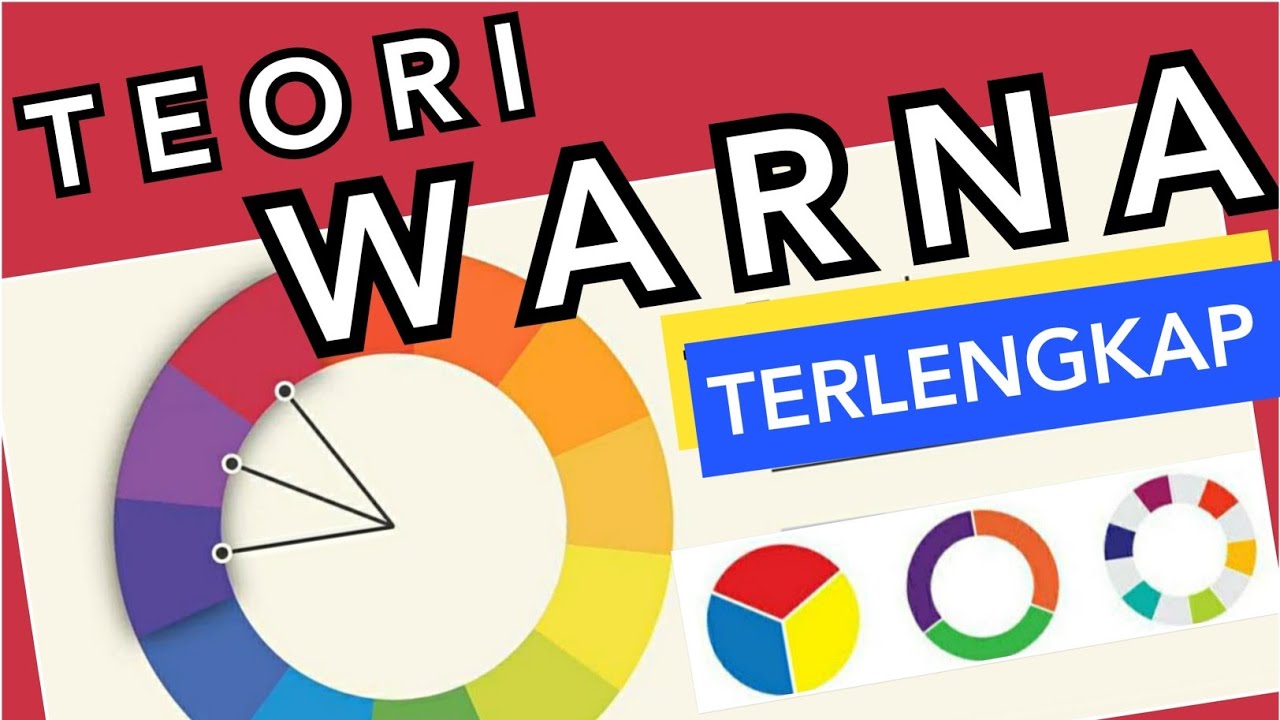
TLDRThis video dives deep into the fundamentals of color theory, explaining key concepts such as the definition of color, the work of theorists like Breester and Prank, and different types of colors including primary, secondary, and tertiary. It also explores color relationships, including complementary and analogous colors, and how different color combinations can create harmony or contrast in artwork. Additionally, it covers practical topics like pastel colors, warm and cool hues, and the importance of balanced color composition in design. This educational video aims to enrich viewers' understanding of color dynamics for creative applications.
Takeaways
- 😀 Colors are identified by their wavelength in the spectrum of white light.
- 😀 Color theory includes various models and concepts, such as the Breester and Prank theories, as well as additive and subtractive color theories.
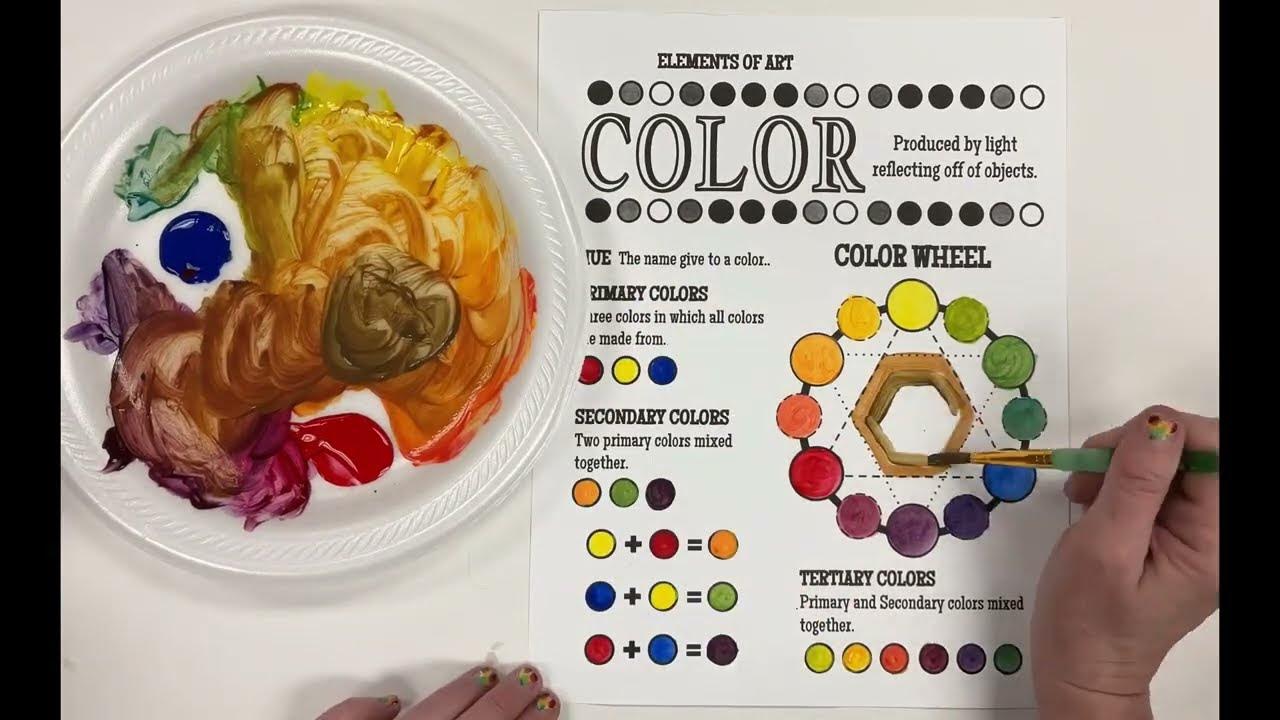
- 😀 Primary colors (Red, Blue, and Yellow) are the foundation of all other colors and are essential for color mixing.
- 😀 Secondary colors (Orange, Green, and Violet) are created by mixing two primary colors together.
- 😀 Intermediate colors are those found between primary and secondary colors, like Red-Violet or Yellow-Green.
- 😀 Tertiary colors are created by mixing primary and secondary colors, such as Brown-Red or Brown-Yellow.
- 😀 Complementary colors are opposite each other on the color wheel and enhance each other’s presence.
- 😀 Monochromatic colors are variations of a single color, mixed with white or black to create lighter or darker shades.
- 😀 Polychromatic colors are secondary colors that have been mixed with white or black.
- 😀 Analogous colors are similar in hue and lie next to each other on the color wheel, creating a harmonious effect.
- 😀 Warm colors (like red and yellow) evoke a sense of warmth, while cool colors (like blue and green) give a sense of calm and distance.
- 😀 Pastel colors are lighter, softer versions of colors, created by adding white to the base color.
- 😀 Color composition in art involves balancing elements of color in terms of position, proportion, rhythm, and accents to create harmony.
Q & A
What is the definition of color according to the video?
-Color is defined as a specific spectrum of light within a perfect white light. Its identity is determined by the wavelength of the light.
Who are the key figures mentioned in the video regarding color theory?
-The video mentions several figures who have contributed to color theory, including Brester, Prank, and Moon Cell.
What are the primary colors in color theory?
-The primary colors mentioned in the video are Magenta (a reddish-purple), Cyan (a bluish-green), and Yellow. These colors are the foundational building blocks for creating other colors.
What is the difference between primary and secondary colors?
-Primary colors are the base colors (Magenta, Cyan, Yellow) that cannot be made by mixing other colors. Secondary colors are created by mixing two primary colors, such as Orange (Red + Yellow), Green (Yellow + Blue), and Violet (Blue + Red).
What are intermediate colors, and how are they created?
-Intermediate colors are those that lie between primary and secondary colors on the color wheel. They are created by mixing a primary color with a secondary color, such as Red-Violet, Red-Orange, Yellow-Green, etc.
How are tertiary colors formed?
-Tertiary colors are formed by mixing a primary color with a secondary color. Examples include Brown-Red (Red + Green), Brown-Yellow (Yellow + Violet), and Brown-Blue (Blue + Orange).
What is the relationship between complementary colors?
-Complementary colors are opposite each other on the color wheel. Though they appear contrasting, they enhance each other and create visual harmony when used together.
What does a monochromatic color scheme entail?
-A monochromatic color scheme uses variations of one base color, mixing it with black or white to create different tints and shades. Examples are a range of colors in the red, yellow, or blue spectrum, altered by the addition of black or white.
What is the concept of analogous colors in color theory?
-Analogous colors are colors that are next to each other on the color wheel. They share similar hues and produce a harmonious, balanced look when used together. For example, Yellow and Yellow-Green are analogous.
What is the difference between warm and cool colors?
-Warm colors, such as Red, Orange, and Yellow, evoke warmth and energy. Cool colors like Blue, Green, and Violet are calming and give a sense of distance or coolness.
Outlines

Cette section est réservée aux utilisateurs payants. Améliorez votre compte pour accéder à cette section.
Améliorer maintenantMindmap

Cette section est réservée aux utilisateurs payants. Améliorez votre compte pour accéder à cette section.
Améliorer maintenantKeywords

Cette section est réservée aux utilisateurs payants. Améliorez votre compte pour accéder à cette section.
Améliorer maintenantHighlights

Cette section est réservée aux utilisateurs payants. Améliorez votre compte pour accéder à cette section.
Améliorer maintenantTranscripts

Cette section est réservée aux utilisateurs payants. Améliorez votre compte pour accéder à cette section.
Améliorer maintenant



5.0 / 5 (0 votes)

