Lecture 3.1: Introduction to Capacitors (General Physics 2)
Summary
TLDRIn this Grade 12 physics lecture, students are introduced to capacitors, a fundamental passive component in electronic circuits. The lecture covers the working principle of capacitors, their ability to store electric charge, and their role in devices like phones and laptops. Capacitors consist of two plates separated by a dielectric material, and their energy storage capacity is measured in capacitance. The instructor explains various types of capacitors, their construction, and formulas for calculating charge, voltage, and energy. The lecture also touches on dielectric constants and energy density, with a motivational quote tying the components of electronics to personal growth.
Takeaways
- 😀 Capacitors are essential passive components in electronic circuits that store electric charge and potential energy.
- 😀 The basic structure of a capacitor consists of two conducting plates separated by a dielectric material.
- 😀 Capacitors function by storing energy when a power supply causes electrons to flow between the plates, creating a potential difference.
- 😀 Capacitors can act as temporary batteries because they can store and release electric potential energy.
- 😀 The capacitance (C) of a capacitor is the ratio of charge (Q) to voltage (V), and is measured in farads (F).
- 😀 The formula for capacitance is: C = Q / V, and the charge on a capacitor is calculated as Q = C * V.
- 😀 Different types of capacitors include electrolytic, ceramic, mica, paper, film, and non-polarized capacitors, each with specific applications.
- 😀 Capacitors are constructed using the formula C = k * ε₀ * A / d, where k is the dielectric constant, A is the plate area, and d is the distance between plates.
- 😀 The dielectric constant affects the capacitance and varies depending on the material used between the plates.
- 😀 Capacitors store energy, and the energy (U) stored is given by U = 1/2 * C * V², or U = Q² / 2C.
- 😀 Energy density in capacitors measures how much energy is stored per unit volume, with the formula u = 1/2 * ε₀ * E².
Q & A
What is the primary function of a capacitor in an electronic circuit?
-The primary function of a capacitor is to store electric charge and electric potential energy in an electronic circuit.
How does a capacitor work in an electronic circuit?
-A capacitor works by charging, where electrons flow from one plate to another, creating a difference in potential across the plates. This process stores electric energy in the capacitor.
What are the key components of a capacitor?
-A capacitor consists of two conducting plates separated by a dielectric material.
What does the capacitance of a capacitor measure?
-Capacitance measures how much charge a capacitor can hold per volt. It is determined by the ratio of the charge (Q) to the voltage (V) and is measured in Farads (F).
What is the formula for calculating capacitance?
-The formula for capacitance is C = Q/V, where C is capacitance, Q is the charge, and V is the voltage.
What are some common types of capacitors?
-Common types of capacitors include electrolytic, ceramic, mica, paper, film, and non-polarized capacitors.
How does the dielectric constant (K) affect the capacitance of a capacitor?
-The dielectric constant (K) of the material between the plates of a capacitor affects the capacitance. A higher dielectric constant increases the capacitance by allowing more charge to be stored for the same voltage.
What is the equation for calculating the capacitance with the dielectric constant effect?
-The capacitance with the dielectric constant effect is calculated as Ck = K * C₀, where K is the dielectric constant, and C₀ is the capacitance without the dielectric material.
What are the units used for energy density in capacitors?
-The units used for energy density in capacitors are Joules per cubic meter (J/m³).
How is the energy stored in a capacitor calculated?
-The energy stored in a capacitor can be calculated using the formula U = 1/2 * C * V², where U is the energy, C is the capacitance, and V is the voltage.
Outlines

Cette section est réservée aux utilisateurs payants. Améliorez votre compte pour accéder à cette section.
Améliorer maintenantMindmap

Cette section est réservée aux utilisateurs payants. Améliorez votre compte pour accéder à cette section.
Améliorer maintenantKeywords

Cette section est réservée aux utilisateurs payants. Améliorez votre compte pour accéder à cette section.
Améliorer maintenantHighlights

Cette section est réservée aux utilisateurs payants. Améliorez votre compte pour accéder à cette section.
Améliorer maintenantTranscripts

Cette section est réservée aux utilisateurs payants. Améliorez votre compte pour accéder à cette section.
Améliorer maintenantVoir Plus de Vidéos Connexes

Low frequency response of common emitter amplifier
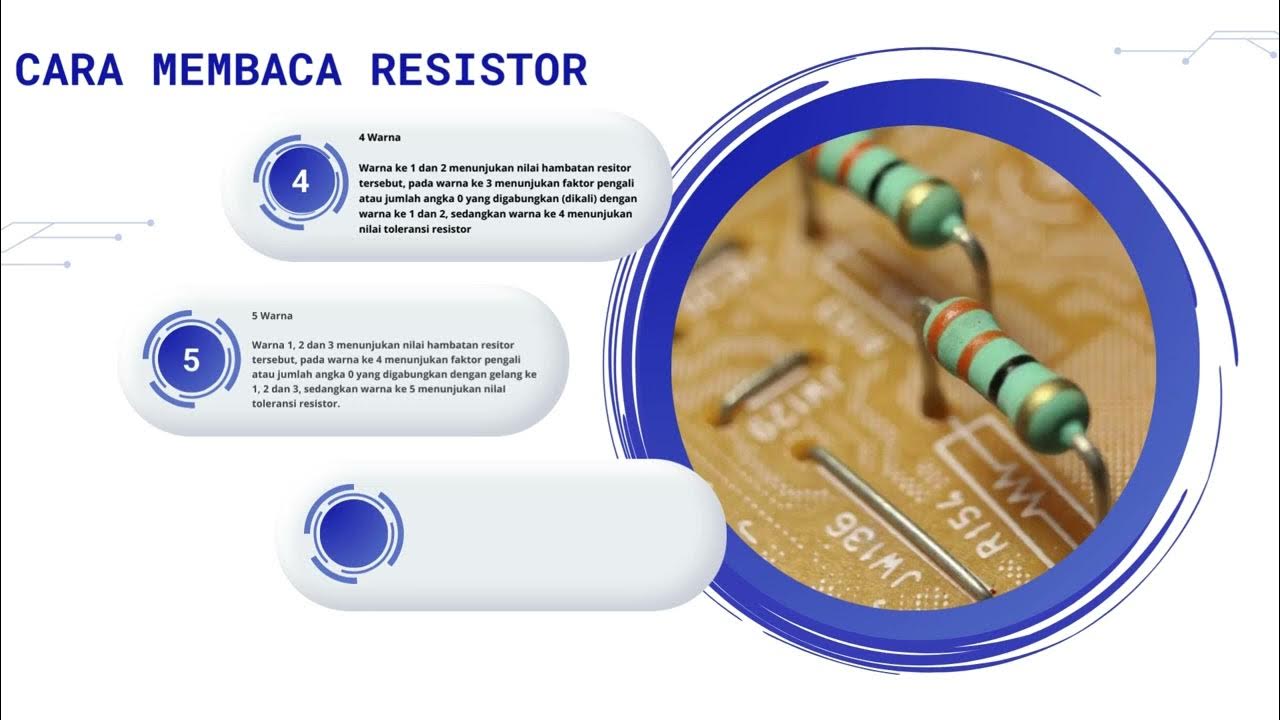
Modul 3 subtopik 2.1. Jenis, Fungsi dan Cara Kerja Komponen Elektronika
What are the Classifications of Electronic Components | Passive & Active Components | EDC

All electronic components names, functions, testing, pictures and symbols - smd components
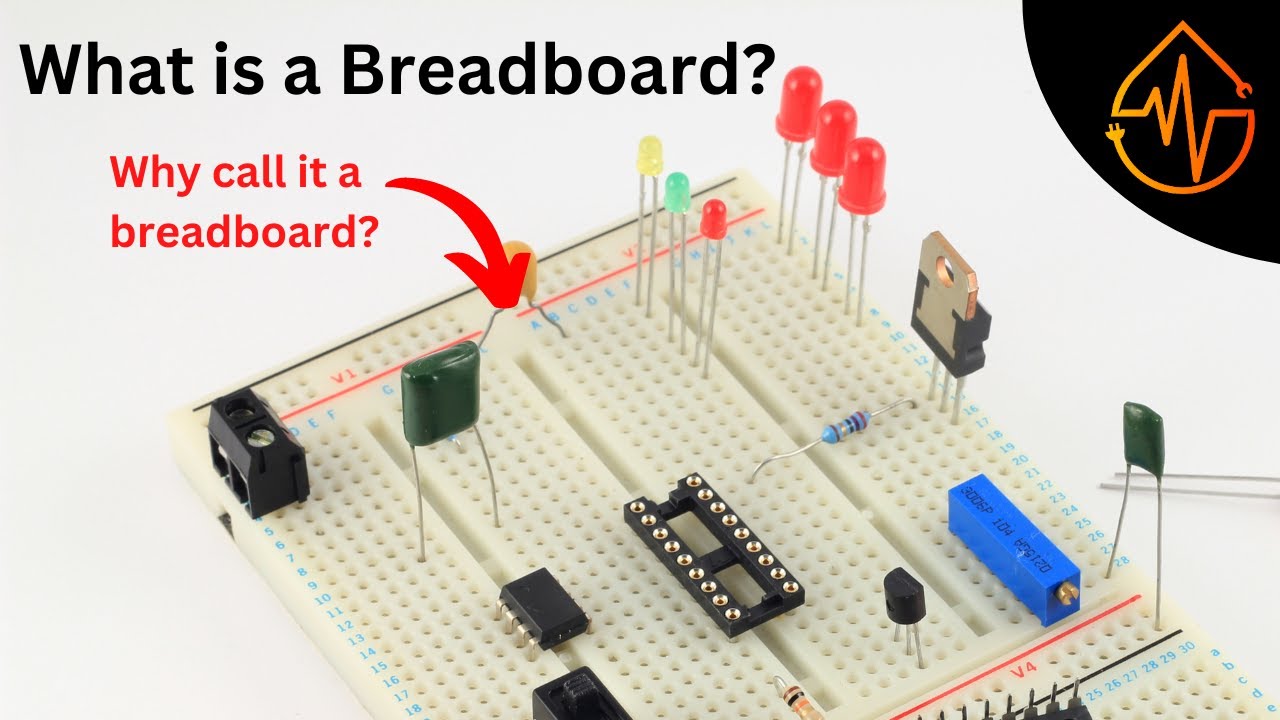
Breadboard - Explained in Depth

Complete beginner's guide to using a breadboard
5.0 / 5 (0 votes)

