The Only Smart Money Concepts (SMC) Trading Video You'll Ever Need...
Summary
TLDRThis video provides a comprehensive guide to advanced trading strategies, focusing on momentum candles, supply and demand zones, fair value gaps (FVGs), and liquidity grabs. It explains how to identify strong momentum candles, draw high-quality supply and demand zones, and combine them with market structure for reliable trade setups. The tutorial also covers how to spot FVGs for mid-move entries and use liquidity grabs to follow smart money. Viewers learn practical entry, stop-loss, and target strategies, emphasizing patience, candlestick confirmations, and risk management. Overall, it equips traders with a layered framework to improve decision-making and capitalize on market imbalances effectively.
Takeaways
- 📈 Momentum candles are identified by a real body at least twice the size of previous candles, signaling strong market imbalance.
- 🟢 Demand zones are drawn around the candle preceding a strong bullish momentum candle and indicate potential future support.
- 🔴 Supply zones are drawn around the candle preceding a strong bearish momentum candle and indicate potential future resistance.
- 🏗 High-quality supply and demand zones are confirmed by combining them with market structure analysis, such as breaks of previous highs or lows.
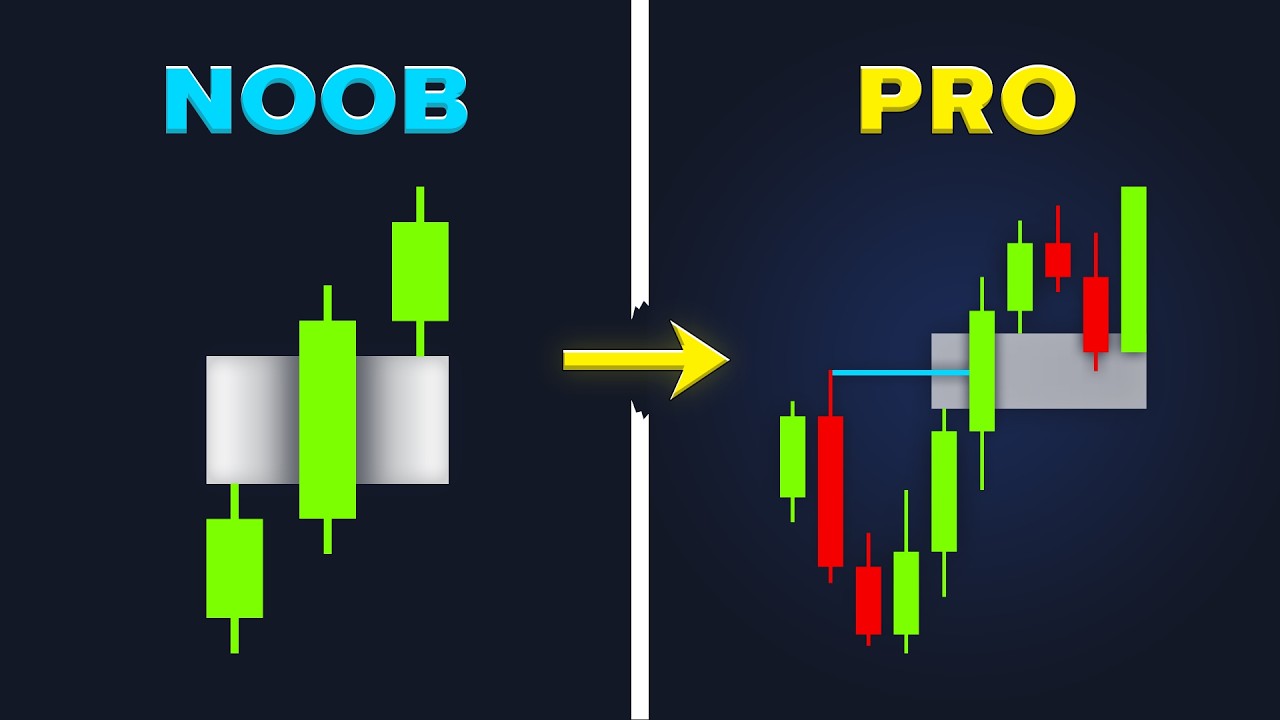
- ⚡ Fair Value Gaps (FVGs) are temporary market inefficiencies created by momentum candles and can serve as potential entry points.
- 📊 To identify a bullish FVG, measure the gap between the high of the preceding candle and the low of the following candle after a strong bullish momentum candle.
- 💥 Liquidity grabs occur when smart money triggers stop-loss orders to create liquidity, often leading to market reversals.
- 🎯 Entry strategies include waiting for price confirmation at supply/demand zones, FVGs, or liquidity grabs, often using candlestick patterns or momentum signals.
- -
- 🛑 Stop-loss placement is generally below demand zones or FVGs for bullish trades, and above supply zones for bearish trades.
- ⏱ Patience is crucial in trading; forcing entries before price reaches key zones often results in losses.
- 🎢 Targets can be set just below resistance, above break of structure, or using risk-to-reward ratios for safer exits.
- 💡 Combining momentum candles, supply/demand zones, fair value gaps, liquidity grabs, and market structure creates a comprehensive framework for high-probability trades.
Q & A
What defines a momentum candle and why is it important in trading?
-A momentum candle is defined as a candle whose real body is at least twice the size of the previous candles, sometimes even 5–10 times larger. It indicates strong market momentum and an imbalance between buyers and sellers, helping traders identify potential areas of supply or demand.
How do you identify a demand zone using momentum candles?
-To identify a demand zone, locate a strong bullish momentum candle and then draw a zone around the previous candle (including wicks). This zone represents an area where buying pressure previously dominated, suggesting price may rise upon return.
What constitutes a high-quality demand zone?
-A high-quality demand zone occurs at a strong low that follows a break of structure, confirmed by a strong bullish momentum candle. These zones are more likely to attract buyers when revisited.
What is a fair value gap (FVG) and how is it formed?
-A fair value gap is a temporary market inefficiency created by strong momentum candles. It forms when there is a gap between the highest point of the candle before the momentum candle and the lowest point of the candle after it, reflecting an imbalance between buyers and sellers.
How can traders use bullish and bearish fair value gaps?
-Bullish FVGs are used to anticipate price reversals or support during an uptrend, while bearish FVGs indicate potential resistance during a downtrend. Traders enter positions when price revisits the FVG, ideally confirmed by a candlestick or price action signal.
What is a liquidity grab in trading and why is it significant?
-A liquidity grab occurs when smart money pushes price to trigger stop-loss orders, creating liquidity that they then use to take large positions. These reversals are significant because they provide traders with clear entry points and allow for precise risk management.
How do you identify a liquidity grab on a chart?
-Look for a candle that briefly wicks beyond a known support or resistance level and quickly reverses. A hammer candle wicking below support is a classic bullish liquidity grab, indicating that smart money absorbed selling pressure to push the price up.
What is the recommended method for setting stop-loss and target levels when trading supply and demand zones?
-Stop-loss can be placed just below the demand zone or below the confirming candlestick pattern. Targets are often set just below resistance for longs or above support for shorts, or using a fixed risk-to-reward ratio (e.g., 2:1).
Why is patience emphasized when trading supply and demand zones?
-Patience is critical because price may take time to return to the supply or demand zone. Forcing trades can lead to entering at suboptimal levels and increase the likelihood of losses. Waiting for price confirmation increases trade probability and risk management effectiveness.
How does combining market structure with supply and demand zones improve trading accuracy?
-Market structure explains how and why price moves, while supply and demand zones indicate imbalances. Combining both allows traders to identify higher-quality zones where reversals are more likely, improving entry precision and reducing false signals.
What is a high-quality supply zone and how is it determined?
-A high-quality supply zone forms at a strong high, typically after a break of structure confirmed by a strong bearish momentum candle. These zones are likely to attract sellers when price returns, offering potential short-trade opportunities.
How can fair value gaps be used when the price does not reach the demand or supply zone?
-Fair value gaps provide alternative entry points within a move, even if price does not reach the supply or demand zone. Traders can use these gaps to enter positions at points of temporary imbalance, often confirmed by candlestick patterns, ensuring trade opportunities are not missed.
Outlines

Esta sección está disponible solo para usuarios con suscripción. Por favor, mejora tu plan para acceder a esta parte.
Mejorar ahoraMindmap

Esta sección está disponible solo para usuarios con suscripción. Por favor, mejora tu plan para acceder a esta parte.
Mejorar ahoraKeywords

Esta sección está disponible solo para usuarios con suscripción. Por favor, mejora tu plan para acceder a esta parte.
Mejorar ahoraHighlights

Esta sección está disponible solo para usuarios con suscripción. Por favor, mejora tu plan para acceder a esta parte.
Mejorar ahoraTranscripts

Esta sección está disponible solo para usuarios con suscripción. Por favor, mejora tu plan para acceder a esta parte.
Mejorar ahoraVer Más Videos Relacionados


5.0 / 5 (0 votes)

