GUGATAN DALAM PTUN
Summary
TLDRThis lecture provides a detailed exploration of the procedural aspects of administrative court law in Indonesia (hukum acara peradilan tata usaha negara). It covers the key elements of filing a lawsuit, including the importance of a written petition, ensuring the case aligns with administrative law, and understanding time limits for filing. Additionally, it emphasizes the need for lawsuits to challenge administrative decisions that conflict with laws or principles of good governance. The session also highlights court jurisdiction and the critical steps to ensure the validity and timeliness of legal actions in administrative courts.
Takeaways
- 😀 A lawsuit in the administrative court procedure is a written petition requesting a ruling against an administrative body or officer.
- 😀 The purpose of a lawsuit is to annul or declare invalid an administrative decision or to demand a new decision be issued.
- 😀 A lawsuit must be submitted to the administrative court for a ruling, and it must be processed through the court's clerical system.
- 😀 Key components of a lawsuit include a written petition containing a demand against an administrative body or officer.
- 😀 Before filing a lawsuit, it is crucial to ensure that the contested administrative decision meets the criteria of an administrative decision (e.g., written, issued by an administrative body, and causing legal effects).
- 😀 A lawsuit can only be filed if the contested administrative decision contradicts existing laws or general principles of good governance.
- 😀 The lawsuit must be filed within the appropriate time limit, which varies depending on the type of administrative decision.
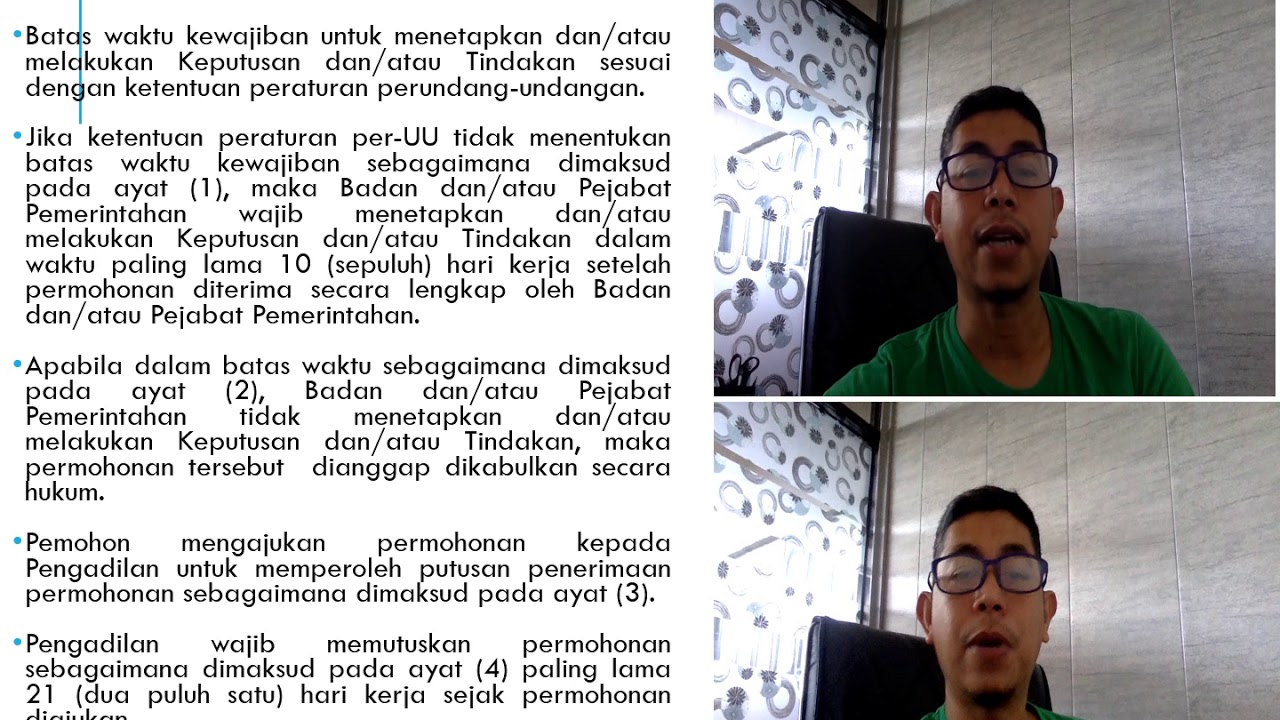
- 😀 If no decision is made within the prescribed time, the lawsuit can be filed after the expiration of the specified time.
- 😀 The lawsuit must be filed in the proper administrative court, which could be based on the residence of the defendant or the plaintiff, or the jurisdiction of PTUN Jakarta for cases involving foreign parties.
- 😀 Understanding the key elements (such as the object of the lawsuit, legal grounds, timeliness, and jurisdiction) is crucial to ensure the lawsuit is valid and stands a good chance of success.
Q & A
What is the definition of a lawsuit in the context of administrative law?
-A lawsuit in administrative law, as per Indonesia's Law No. 51/2009, is a formal request that contains claims against a state body or official. It is filed in an administrative court to seek a ruling, which could either invalidate an administrative decision or demand the issuance of a new decision.
What are the key elements of a lawsuit in administrative law?
-The key elements of a lawsuit include a written petition (permohonan tertulis) that targets a decision made by a state body or official, which is filed in an administrative court to seek a ruling. The lawsuit's objective is typically to either invalidate or request the issuance of a new administrative decision.
What does the term 'written petition' mean in the context of an administrative lawsuit?
-The 'written petition' refers to a formal request in which the plaintiff outlines their claim against a state body or official. The petition typically demands the invalidation of an administrative decision or requests the issuance of a new one.
What does it mean when a lawsuit is filed 'to seek a ruling'?
-Filing a lawsuit 'to seek a ruling' means that the plaintiff is requesting a judgment from the administrative court to resolve the issue. The ruling can either invalidate an existing administrative decision or require the issuance of a new decision.
What are the four main factors to consider before filing a lawsuit in an administrative court?
-The four main factors to consider are: 1) Ensuring the administrative decision is eligible for litigation (i.e., it is an object of dispute in administrative court); 2) Confirming the decision contradicts existing laws or principles of good governance; 3) Ensuring the lawsuit is filed within the applicable time frame; and 4) Determining the correct jurisdiction, i.e., where the lawsuit should be filed.
What does it mean for an administrative decision to be 'eligible for litigation'?
-An administrative decision is 'eligible for litigation' if it meets certain criteria: it must be a written decision issued by a state body or official, it must involve legal actions within the scope of administrative law, and it must have legal consequences for individuals or legal entities.
How can one determine if an administrative decision contradicts laws or principles of good governance?
-To determine if an administrative decision contradicts laws or principles of good governance, one must assess whether the decision violates any existing laws, regulations, or principles such as transparency, accountability, and fairness that are fundamental to good governance.
What is the significance of 'tenggang waktu' (time limits) in the context of filing an administrative lawsuit?
-Time limits ('tenggang waktu') are crucial because they dictate when a lawsuit can be filed. For positive administrative decisions, the time limit starts from when the decision is received or announced. For negative decisions (e.g., where no decision is made within a specified period), the time limit starts after the expiration of the designated period for decision-making.
What is the difference between a 'positive' and 'negative' administrative decision in terms of the time limit for filing a lawsuit?
-A 'positive' administrative decision refers to a situation where a decision is made, and the time limit for filing a lawsuit starts from when the decision is received or announced. A 'negative' administrative decision occurs when no decision is made within the time limit specified by law, and the lawsuit time limit begins after the expiration of this period.
What should be considered when determining the 'jurisdiction' for filing an administrative lawsuit?
-Jurisdiction refers to the appropriate administrative court where the lawsuit should be filed. The lawsuit is generally filed in the administrative court where the defendant (state body or official) is located, or where the plaintiff resides. If either party is located outside Indonesia, the jurisdiction is typically the administrative court in Jakarta.
Outlines

Esta sección está disponible solo para usuarios con suscripción. Por favor, mejora tu plan para acceder a esta parte.
Mejorar ahoraMindmap

Esta sección está disponible solo para usuarios con suscripción. Por favor, mejora tu plan para acceder a esta parte.
Mejorar ahoraKeywords

Esta sección está disponible solo para usuarios con suscripción. Por favor, mejora tu plan para acceder a esta parte.
Mejorar ahoraHighlights

Esta sección está disponible solo para usuarios con suscripción. Por favor, mejora tu plan para acceder a esta parte.
Mejorar ahoraTranscripts

Esta sección está disponible solo para usuarios con suscripción. Por favor, mejora tu plan para acceder a esta parte.
Mejorar ahoraVer Más Videos Relacionados

Macam Macam Pengadilan di Indonesia❓Kalian Wajib Tau‼️

Kuliah Hukum Acara peratun sesi 1

PENGANTAR HUKUM ACARA PERDATA || Kuliah Hukum Acara Perdata Part 1
Keputusan Tata Usaha Negara Fiktif Negatif Fiktif Positif

Apa itu Hukum Tata Negara ? (Kaitannya dengan Ilmu lain) | Dasar Hukum

Matkul Hukum tata negara
5.0 / 5 (0 votes)

