Matematika SMA - Vektor (2) - Operasi Vektor Matematika, Penjumlahan Vektor (Y)
Summary
TLDRIn this educational video, Kak Yoga delves into the fundamentals of vector operations, covering scalar multiplication, vector addition, subtraction, and linear combinations. The tutorial emphasizes both analytical and graphical approaches, including the triangle and parallelogram methods, and demonstrates how to calculate resultant vectors using components. Through step-by-step examples, viewers learn to apply vector operations in different dimensions and configurations, such as polygons. The video encourages hands-on practice by illustrating problem-solving strategies and tips for visualizing vectors, making complex concepts more accessible and engaging for students aiming to master vector mathematics effectively.
Takeaways
- 😀 Scalar multiplication of a vector changes its magnitude, and its direction depends on the sign of the scalar (positive for same direction, negative for opposite direction).
- 😀 Two vectors are always parallel if one is a non-zero scalar multiple of the other.
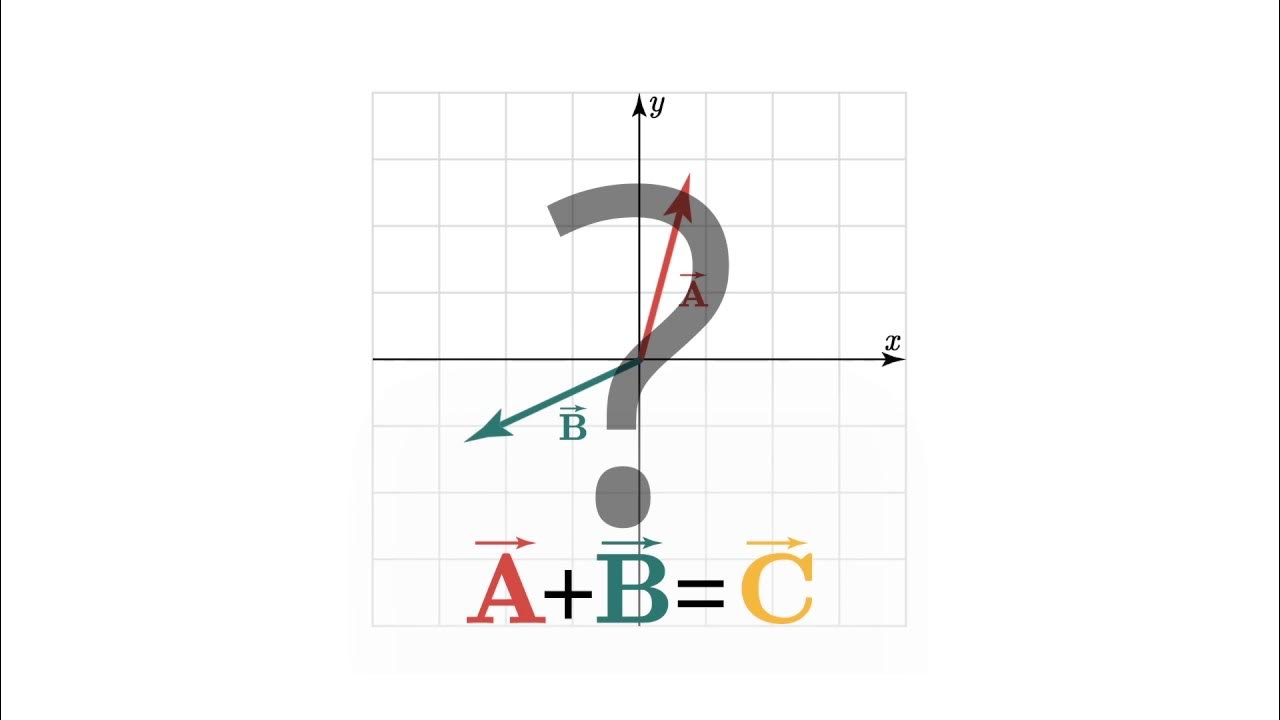
- 😀 Vector addition can be done analytically by summing corresponding components or visually using the triangle or parallelogram methods.
- 😀 The triangle method of vector addition involves connecting vectors head-to-tail, and the result is drawn from the starting point to the end point.
- 😀 The parallelogram method requires positioning two vectors tail-to-tail and drawing a parallelogram; the diagonal represents the resultant vector.
- 😀 Vector subtraction can be interpreted as adding the negative of a vector, effectively reversing its direction before adding.
- 😀 Complex vector expressions can be simplified by combining like terms in a linear combination of vectors.
- 😀 Analytical methods for vectors are often more accurate than visual methods, especially for digital or component-based calculations.
- 😀 In linear combinations of vectors, vectors can be creatively combined in any order as long as directions are consistent, similar to following sides of a polygon.
- 😀 Visual representation of vectors is useful for understanding direction and magnitude, but calculation through components ensures precision in results.
- 😀 For multidimensional problems (up to 3D), vector operations such as addition, subtraction, and scalar multiplication follow the same principles by extending to the third component.
Q & A
What is scalar multiplication of a vector and how does it affect the vector's direction?
-Scalar multiplication involves multiplying a vector by a scalar (number). If the scalar is positive, the vector's direction remains the same. If the scalar is negative, the vector's direction reverses. The magnitude of the vector is multiplied by the absolute value of the scalar.
How can you determine if two vectors are parallel using scalars?
-Two vectors are parallel if one vector can be expressed as a non-zero scalar multiple of the other. If there is no non-zero scalar that satisfies this, the vectors are not parallel.
What is the method to perform vector addition geometrically using the triangle rule?
-In the triangle rule, two vectors are placed head-to-tail. The resultant vector is drawn from the tail of the first vector to the head of the second vector. This method works sequentially for more than two vectors by repeating the process.
How does the parallelogram rule for vector addition work?
-In the parallelogram rule, two vectors start from the same point. A parallelogram is formed with these vectors as adjacent sides. The diagonal of the parallelogram from the starting point represents the resultant vector.
What is the component method for vector addition?
-The component method involves adding corresponding components of the vectors. For 2D vectors, the x-components are added together, and the y-components are added together to find the resultant vector. For 3D vectors, the z-components are also added similarly.
How do you calculate a resultant vector from multiple scaled vectors?
-First, multiply each vector by its scalar. Then sum the vectors component-wise. For example, for vectors 3A + 5A, you add the x, y, (and z if applicable) components of each scaled vector to get the resultant.
How is vector subtraction interpreted and calculated?
-Vector subtraction, such as B - A, can be interpreted as adding the negative of vector A to vector B (B + (-A)). Graphically, this reverses the direction of A and then adds it to B using either the triangle or parallelogram method.
What are the steps to solve vector problems analytically before drawing diagrams?
-1. Convert vectors into components. 2. Apply scalars to the components if needed. 3. Add or subtract corresponding components to find the resultant. 4. Use these components to accurately plot the vectors and the resultant on a diagram.
What is a linear combination of vectors and how can it be visualized?
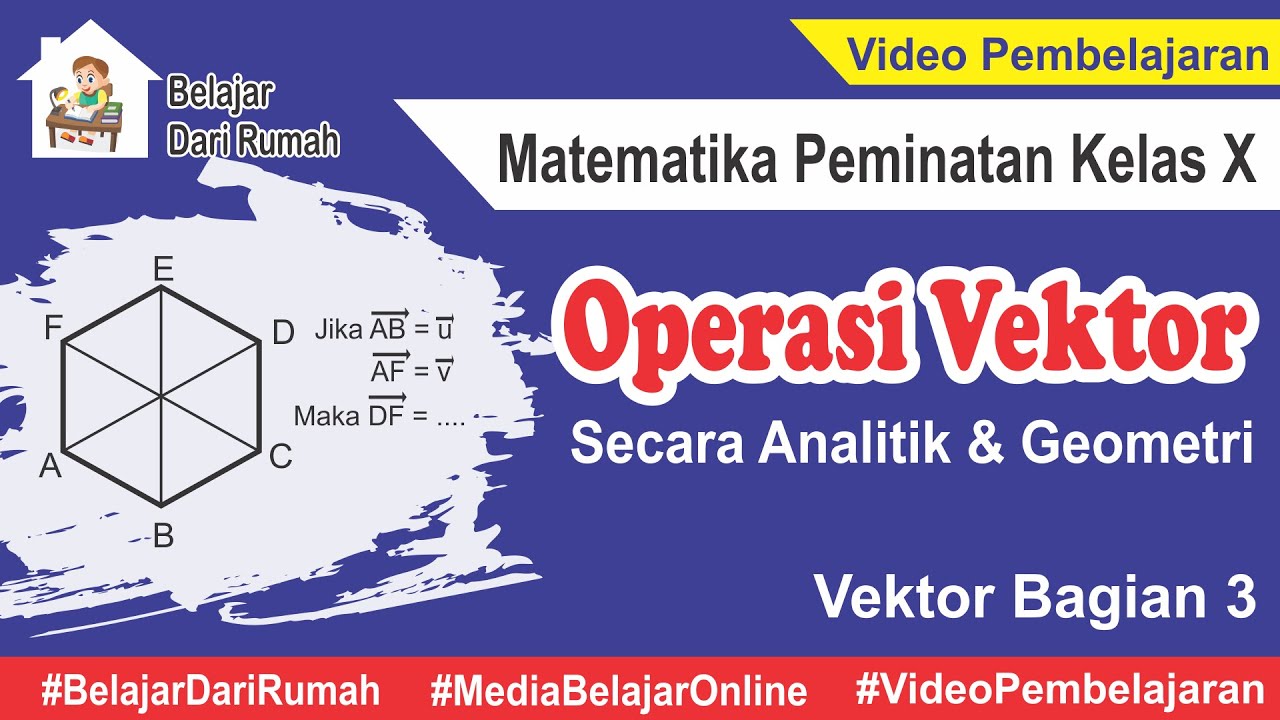
-A linear combination of vectors involves multiplying vectors by scalars and then adding them together. It can be visualized as moving along the sides of a polygon (triangle, quadrilateral, etc.), following the vectors in sequence, to reach a resultant vector from start to finish.
How do you handle sequences of vectors in a polygon when determining a resultant?
-To find the resultant vector in a polygon, ensure the vectors are ordered from start to finish. Sum the vectors in sequence, taking care to reverse directions when necessary. The resultant is the vector from the starting point to the final point.
Why is it helpful to solve vector problems analytically before drawing?
-Solving vector problems analytically first helps determine precise component values, ensuring the diagram is accurate. It prevents errors in direction and magnitude and makes plotting and understanding the resultant vector easier.
Outlines

Esta sección está disponible solo para usuarios con suscripción. Por favor, mejora tu plan para acceder a esta parte.
Mejorar ahoraMindmap

Esta sección está disponible solo para usuarios con suscripción. Por favor, mejora tu plan para acceder a esta parte.
Mejorar ahoraKeywords

Esta sección está disponible solo para usuarios con suscripción. Por favor, mejora tu plan para acceder a esta parte.
Mejorar ahoraHighlights

Esta sección está disponible solo para usuarios con suscripción. Por favor, mejora tu plan para acceder a esta parte.
Mejorar ahoraTranscripts

Esta sección está disponible solo para usuarios con suscripción. Por favor, mejora tu plan para acceder a esta parte.
Mejorar ahora


5.0 / 5 (0 votes)

